British Aircraft Corporation: The Legacy of a Titan in Aviation History
The British Aircraft Corporation (BAC) stands as one of the most significant names in the history of flight. Formed in 1960 through a government-pressured merger of several major aviation entities, BAC became a powerhouse of engineering, responsible for some of the most iconic aircraft and missile systems to ever grace the skies. From supersonic passenger travel to advanced military strike fighters, the company's influence shaped the modern aerospace landscape.
The corporation was established by merging English Electric Aviation Ltd., Vickers-Armstrongs (Aircraft), the Bristol Aeroplane Company, and Hunting Aircraft. This consolidation brought together diverse expertise, allowing BAC to inherit a vast array of existing designs while forging new paths in both civil and military aviation.
Key Facts
- Founded: 1960
- Defunct: 29 April 1977 (Merged into British Aerospace)
- Headquarters: City of Westminster, London, United Kingdom
- Major Successors: British Aerospace (BAe)
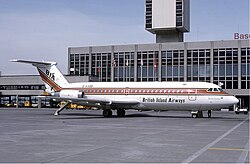
- Notable Aircraft: Concorde, BAC One-Eleven, Panavia Tornado, SEPECAT Jaguar
- Key Merger Partners: Hawker Siddeley and Scottish Aviation
The Evolution of BAC Aircraft
In its early years, BAC focused on marketing its inherited designs under its new identity. While many aircraft retained their original manufacturer names—such as the Vickers VC10—the BAC One-Eleven became the first model to officially bear the BAC name. Launched as a private venture in 1961, the One-Eleven proved to be a commercial lifesaver for the company during a decade marked by frequent government contract cancellations.
Supersonic Ambitions and the Concorde
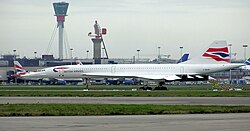
One of BAC's most ambitious endeavors was the development of the Concorde. This project was the result of merging the efforts of Bristol (working on the Bristol 223) and the French company Sud Aviation. While the Concorde became an "aviation icon," it faced commercial challenges due to the rise of more efficient wide-body subsonic aircraft like the Boeing 747. Despite this, the Concorde remains a marvel of engineering, with the aircraft G-BOAB alone flying for over 22,000 hours.
Military Might and the TSR-2 Controversy
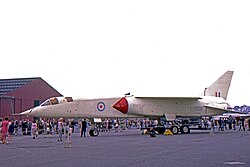
BAC was deeply involved in high-stakes military development. The TSR-2, a tactical strike and reconnaissance jet, was one of the company's most high-profile projects. However, the program became a victim of rising costs and inter-service rivalry. In 1965, the British government withdrew its order, leading to the destruction of remaining airframes and documentation—a move widely regarded as a devastating blow to the British aircraft industry.
International Collaborations and New Ventures
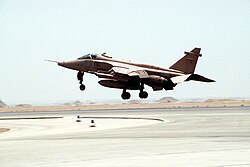
Recognizing the scale of modern aerospace, BAC frequently engaged in international partnerships. This led to the creation of SEPECAT, a joint venture with France to produce the Jaguar strike fighter. The Jaguar saw successful service with the French Air Force and various export customers including India, Nigeria, and Oman.
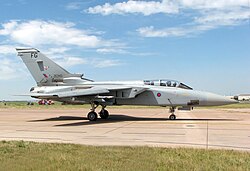
Another major success was the Panavia Tornado. Formed through the Panavia Aircraft GmbH consortium—which included BAC, MBB, Fiat, and Fokker—the Tornado was a multi-role combat aircraft. The project successfully delivered hundreds of aircraft to the RAF, including the Tornado GR1 and the Tornado F3.
Defense Exports to Saudi Arabia
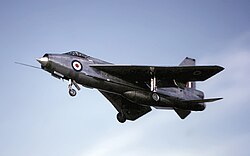
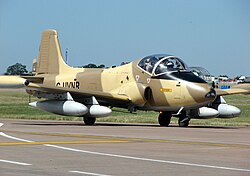
BAC also played a vital role in international defense contracts. In the 1960s, the company secured significant deals with Saudi Arabia, providing English Electric Lightnings, Strikemasters, and Thunderbird surface-to-air missiles. This partnership represented a massive investment, with total spending by the Royal Saudi Air Force exceeding £1 billion.
Summary of Major BAC Products
| Category | Notable Models/Systems |
|---|---|
| Civil Aviation | BAC One-Eleven, Vickers VC10, Vickers Viscount |
| Military Aircraft | Concorde, SEPECAT Jaguar, Panavia Tornado, English Electric Lightning |
| Missile Systems | Rapier, Sea Skua, Sea Wolf, Swingfire |
| Space & Research | Ariel 4 satellite, BAC Mustard (concept) |
Frequently Asked Questions
What happened to the British Aircraft Corporation?
On 29 April 1977, BAC was nationalized and merged with the Hawker Siddeley Group and Scottish Aviation to form British Aerospace (BAe) under the Aircraft and Shipbuilding Industries Act 1977.
What was the significance of the BAC One-Eleven?
The BAC One-Eleven was the first aircraft to officially carry the BAC name. As a private venture, its commercial success helped stabilize the company during a period of economic uncertainty and government contract cancellations in the 1960s.
Why was the TSR-2 project cancelled?
The TSR-2 program faced continuous cost increases and intense inter-service rivalry. Ultimately, the British government decided to withdraw its order in 1965, despite the aircraft already being in the prototype phase.
Did BAC work on space technology?
Yes. BAC was involved in uncrewed spacecraft, including the Ariel 4 research satellite. They also conducted research into the Mustard project, a proposed reusable launch system designed to deliver payloads to geostationary earth orbit.
What was the Panavia Tornado?
The Panavia Tornado was a multi-role combat aircraft developed by a multinational consortium (Panavia Aircraft GmbH) consisting of BAC, MBB, Fiat, and Fokker. It was designed to meet the requirements of the UK, Germany, and Italy.