Brassicaceae: The Biology and Diversity of the Mustard Family
The Brassicaceae, also known by the older name Cruciferae, is a medium-sized and economically vital family of flowering plants. Commonly referred to as the mustards, the crucifers, or the cabbage family, this group encompasses a wide range of plants, from common garden herbs to hardy shrubs. Most members are herbaceous, though some develop into dwarf shrubs or shrubs, and a very small number exist as vines.
These plants are recognized by their distinct floral structures and chemical defenses, making them a subject of significant scientific interest and agricultural importance. From the model organism Arabidopsis thaliana to invasive species like garlic mustard, the family exhibits a fascinating array of genetic and ecological adaptations.
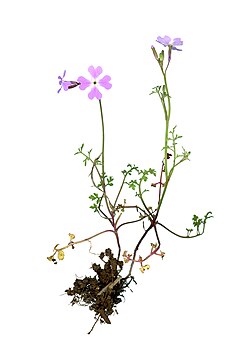
Key Facts
- Common Names: Mustards, crucifers, or the cabbage family.
- Diversity: Contains over 350 accepted genera and more than 4,300 accepted species.
- Floral Structure: Characterized by four free sepals and four free alternating petals.
- Chemical Defense: Use a system of glucosinolates and myrosinase enzymes to deter herbivores.
- Distribution: Found globally, except in Antarctica and specific tropical regions.
- Taxonomy: Divided into two subfamilies: Brassicoideae and Aethionemoideae.
Botanical Description
Species within the Brassicaceae family are primarily annual, biennial, or perennial. While most are terrestrial, a few species, such as the water awlwort, are adapted to live submerged in fresh water. Their root systems vary, ranging from taproots and woody caudices (thickened stem bases) to tuberous rhizomes or runners.
The leaves are typically simple and lack stipules (small appendages at the leaf base), appearing either alternately on the stems or in basal rosettes. Stems can be upright, reclining, or entirely absent in some species. A notable feature of their anatomy is the presence of single-celled hairs that can take various shapes, including star-, tree-, or T-shaped, though they are never topped by a gland.
Genetics and Chromosomes
The genome size of Brassicaceae is generally small compared to other angiosperms, typically less than 3.425 million base pairs per cell. For example, Arabidopsis thaliana has a genome of 150 Mbp, while Bunias orientalis reaches 2375 Mbp. Chromosome sets vary widely, with many species possessing eight sets (n=8), though polyploidy (the possession of multiple sets of chromosomes) can lead to counts as high as 256 in some North American Cardamine species.
Inflorescence and Fruit
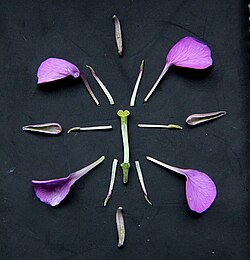
The flowers of the mustard family are terminal and lack bracts. They follow a specific pattern: four free sepals, four free alternating petals, two shorter free stamens, and four longer free stamens. This structure is a hallmark of the family's morphology.
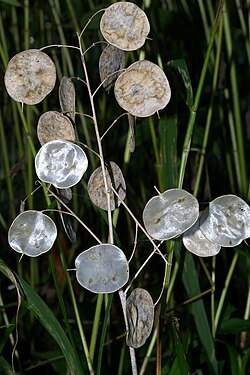
The fruit typically contains seeds arranged in rows, separated by a thin wall known as a septum.
Phytochemistry and Carbon Fixation
Almost all members of the Brassicaceae utilize C3 carbon fixation. A few Moricandia species are exceptions, employing a hybrid C3-C4 system that allows them to be more efficient in environments with high temperatures, drought, and low nitrate availability.
The family is chemically distinguished by its production of glucosinolates. When plant tissues are damaged, enzymes called myrosinases convert these glucosinolates into isothiocyanates, thiocyanates, and nitriles. These compounds are toxic to many organisms, serving as a potent defense mechanism against herbivory.
Taxonomy and Distribution
The classification of Brassicaceae has evolved from early morphological studies to modern DNA analysis. Currently, the family is placed in the order Brassicales. As of 2023, it is divided into two subfamilies: Aethionemoideae (containing only the genus Aethionema) and Brassicoideae, the latter of which is further split into five supertribes: Arabodae, Brassicodae, Camelinodae, Heliophilodae, and Hesperodae.
Geographically, the family is nearly cosmopolitan. The Irano-Turanian Region is believed to be the center of origin, hosting approximately 900 species. Other significant populations are found in the Mediterranean, North America, and South America.
Global Species Distribution Summary
| Region | Approx. Genera | Approx. Species | Endemic Species |
|---|---|---|---|
| Irano-Turanian | 150 | 900 | 530 |
| Mediterranean | 113 | 630 | 290 |
| North America | 99 | 780 | 600 |
| South America | 40 | 340 | - |
| Saharo-Arabian | 65 | 180 | 62 |
| Australia & NZ | 19 | 114 | - |
Ecological Impact: The Case of Garlic Mustard
While many mustards are beneficial, Alliaria petiolata (garlic mustard) has become a highly successful invasive species in temperate North America. It employs allelopathy—the secretion of chemicals that inhibit the growth of competing plants and kill beneficial soil fungi necessary for tree seedling maturity.
This invasive plant creates monocultures that reduce biodiversity, making forests wetter and increasing the prevalence of vines like poison ivy. Control is difficult because the plant is unpalatable to herbivores and possesses high seed production. Furthermore, it poses a threat to native Pieris butterflies, which lay eggs on the plant despite it being toxic to their larvae.
Frequently Asked Questions
What is the difference between Brassicaceae and Cruciferae?
There is no scientific difference in terms of the plants included; Brassicaceae is the modern name, while Cruciferae is the older but still valid name for the same family.
How do mustard plants protect themselves from being eaten?
They use a chemical defense system where myrosinase enzymes convert glucosinolates into toxic compounds like isothiocyanates when the plant is attacked.
Which genera are the largest in the Brassicaceae family?
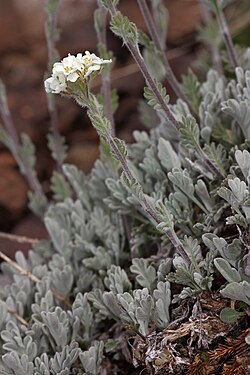
The largest genera include Draba (430 species), Erysimum (270 species), Lepidium (264 species), Cardamine (264 species), and Alyssum (112 species).
Why is garlic mustard so difficult to remove from forests?
Garlic mustard is difficult to control due to its allelopathic chemicals, high seed production, self-fertility, and the fact that it grows in early spring before most native plants.
What is the typical flower structure of a crucifer?
A typical flower has four free sepals, four free alternating petals, and six stamens (two short and four long).