Border Towns and Twin Cities: A Global Overview of Transborder Urbanism
Across the globe, geography often creates unique urban phenomena where cities grow so close to one another that they function as a single economic or social unit, despite being separated by a political boundary. These are known as border towns or twin cities—urban areas located on opposite sides of a national or regional border that share a symbiotic relationship.
From the sprawling metropolitan hubs of North America to the tightly knit cross-border villages of Europe, these settlements demonstrate how human interaction and commerce often transcend official lines on a map. Whether they are separated by a river, a bridge, or a simple street, these cities provide fascinating insights into international cooperation and regional development.

Key Facts
- International Twin Cities: Urban pairs separated by national borders, such as Copenhagen (Denmark) and Malmö (Sweden).
- Internal Twin Cities: Cities within the same country that have grown together, such as Dallas and Fort Worth in the United States.
- Tri-Cities and Quad Cities: Clusters of three or four cities that form a shared metropolitan region, such as the Dammam metropolitan area in Saudi Arabia.
- Amalgamation: The process where separate twin cities merge into a single administrative entity, such as the formation of modern Berlin.
- Transborder Agglomeration: The scientific term for the concentration of population and economic activity across a political border.
International Border Towns
International border towns are defined by their position on the frontier between two sovereign states. These cities often serve as primary gateways for trade, migration, and diplomacy.
Africa and Asia
In Africa, prominent examples include Kinshasa (DRC) and Brazzaville (Republic of the Congo), which sit across the Congo River. In Asia, the region sees high-density pairings such as Hong Kong and Shenzhen, and Johor Bahru (Malaysia) and Singapore, where economic integration is exceptionally high.
Europe
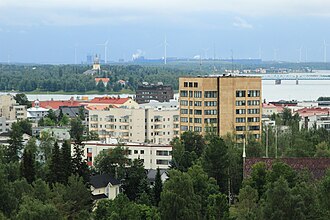
Europe features a dense network of cross-border towns due to the proximity of many small nations. Notable pairs include Vienna (Austria) and Bratislava (Slovakia), as well as the unique tri-border area of Basel (Switzerland), Weil am Rhein, and Saint Louis (France/Germany).
The Americas
North America is characterized by massive cross-border hubs, most notably the San Diego (USA) and Tijuana (Mexico) corridor and the Detroit (USA) and Windsor (Canada) pairing. In South America, the triple-border area of Puerto Iguazú (Argentina), Foz do Iguaçu (Brazil), and Ciudad del Este (Paraguay) represents a significant commercial nexus.

Internal and Regional Twin Cities
Not all twin cities are separated by national borders. Many are internal twin cities, separated by state, provincial, or municipal lines. These often evolve into a single metropolitan area over time.
North American Regional Pairs
The United States has numerous internal pairings, such as Minneapolis and Saint Paul in Minnesota, and the industrial hubs of Dallas and Fort Worth in Texas. These cities often maintain separate identities while sharing infrastructure and labor markets.
Asian and European Internal Hubs
In India, the pairing of Mumbai and Navi Mumbai illustrates rapid urban expansion. Similarly, in Europe, cities like Frankfurt and Offenbach in Germany function as closely linked urban partners.
Complex Urban Clusters: Tri-Cities and Beyond
When more than two cities merge into a functional unit, they are referred to as Tri-cities or Quad cities. These clusters create massive economic zones that can dominate an entire region.
- Tri-Cities: Examples include the Sydney Basin (Sydney, Wollongong, and Newcastle) in Australia and the Capital District (Albany, Troy, and Schenectady) in New York.
- Quad Cities: These are found in regions such as the United States, Finland, Thailand, and the United Kingdom.
- Large Agglomerations: In countries like India, Malaysia, and Poland, clusters of more than four cities often form integrated urban networks.
Urban Amalgamation
Over time, many twin cities undergo amalgamation, where they legally merge into one city. This is often done to streamline governance and infrastructure. A historic example is Berlin, which formed from the merger of Berlin and Cölln. In the United States, New York City represents a massive amalgamation, most notably the historic merger between Manhattan and Brooklyn.
| Type | Definition | Example |
|---|---|---|
| International Twin Cities | Cities separated by a national border | Tornio (Finland) & Haparanda (Sweden) |
| Internal Twin Cities | Cities separated by regional/state borders | Minneapolis & Saint Paul (USA) |
| Tri-Cities | Three cities forming one metropolitan area | Dubai, Sharjah, & Ajman (UAE) |
| Amalgamated Cities | Formerly separate cities now one entity | Berlin (Germany) |
Frequently Asked Questions
What is the difference between a twin city and a sister city?
A twin city is a geographical phenomenon where two cities are physically adjacent and share a border. A sister city is a legal and social agreement between two cities, often far apart, to promote cultural and commercial ties.
What is a transborder agglomeration?
A transborder agglomeration occurs when the urban growth of two or more cities on opposite sides of a political border merges, creating a single continuous built-up area.
Can internal twin cities merge?
Yes, this process is called amalgamation. When two cities merge their administrations and boundaries into one, they cease to be twin cities and become a single municipality.
Where are the most common tri-city areas found?
Tri-city areas are found globally, with significant examples in the United States (e.g., the Golden Triangle in Texas), India (e.g., Chandigarh, Mohali, and Panchkula), and Japan (e.g., Kyoto, Osaka, and Kobe).