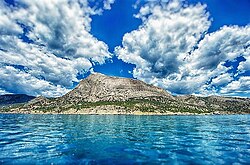
Black SeaEuxine SeaBlack Sea basin countriesBlack Sea geographyBlack Sea history

Black Sea Geography, History, and Ecology: A Comprehensive Overview

Black Sea Geography, History, and Ecology The Black Sea is a vital maritime region situated between Eastern Europe and West Asia. Known historically by the Greeks as the Euxine Sea (meani...

Black Sea Geography, History, and Ecology

The Black Sea is a vital maritime region situated between Eastern Europe and West Asia. Known historically by the Greeks as the Euxine Sea (meaning "hospitable" sea), this large body of water serves as a critical connection between the Mediterranean world and the vast river systems of the Eurasian continent. Spanning a maximum length of 1,175 km (730 mi), it is a complex ecosystem defined by its unique hydrology, diverse coastline, and deep historical significance.
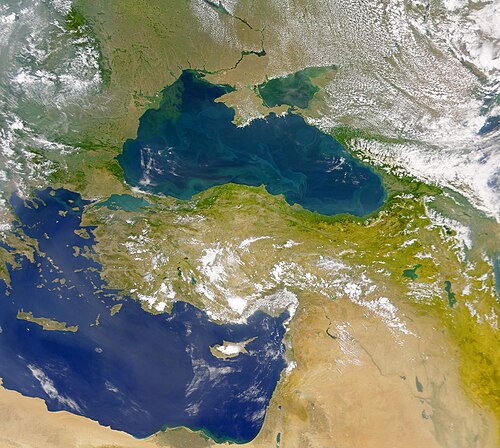
This SeaWiFS view reveals the currents on the sea's surface.
: This SeaWiFS view reveals the currents on the sea's surface.

Key Facts

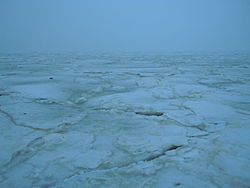
Ice on the Gulf of Odesa
  • Surface Area: 436,400 km² (168,500 sq mi)
  • Maximum Depth: 2,212 m (7,257 ft)
  • Primary Inflows: Bosporus and Kerch Strait
  • Basin Countries: Bulgaria, Georgia, Romania, Russia, Turkey, and Ukraine
  • Historical Name: Euxine Sea

Geographic Profile and Basin Countries
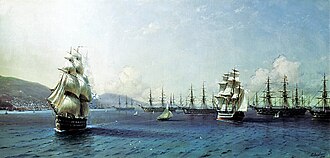
Ivan Aivazovsky. Black Sea Fleet in the Bay of Theodosia, just before the Crimean War

The Black Sea is bordered by several nations, each contributing to its extensive coastline and economic activity. The basin is shared by Bulgaria, Georgia, Romania, Russia, Turkey, and Ukraine, along with the partially recognized state of Abkhazia. The coastline is highly varied, ranging from the rugged shores of the Caucasus to the sandy beaches of the Romanian and Bulgarian coasts.
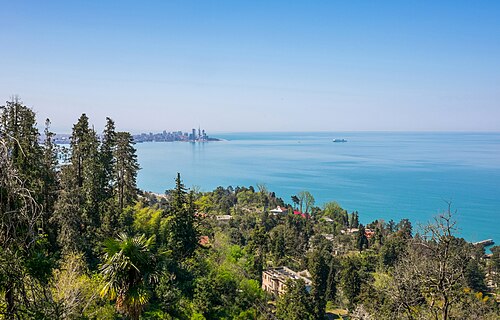
Black Sea coast of western Georgia, with the skyline of Batumi on the horizon
: Black Sea coast of western Georgia, with the skyline of Batumi on the horizon

The sea's connectivity is maintained through key maritime passages. The Bosporus serves as a primary connection to the Mediterranean, while the Kerch Strait provides access to the Sea of Azov. These straits are essential for international navigation and trade.
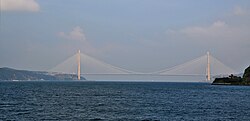
The Yavuz Sultan Selim Bridge in Istanbul, Turkey, crosses the Bosporus strait near its entrance to the Black Sea. Connecting Europe and Asia, it is one of the tallest suspension bridges in the world.
: The Yavuz Sultan Selim Bridge in Istanbul, Turkey, crosses the Bosporus strait near its entrance to the Black Sea. Connecting Europe and Asia, it is one of the tallest suspension bridges in the world.
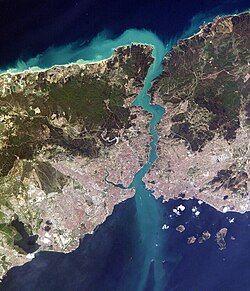
The Bosporus, taken from the International Space Station
: The Bosporus, taken from the International Space Station
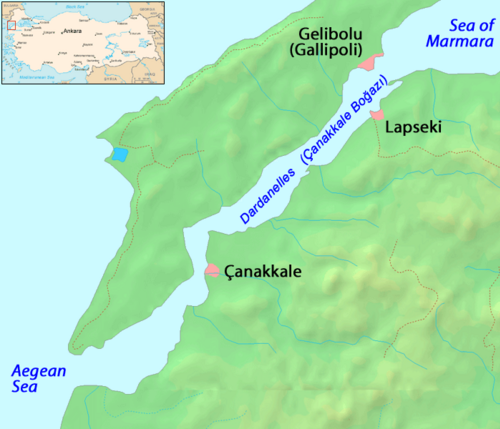
Map of the Dardanelles
: Map of the Dardanelles

Coastline and Economic Zones

The distribution of coastline and Exclusive Economic Zones (EEZs)—maritime areas where a state has special rights regarding the exploration and use of marine resources—varies significantly among the basin countries. Ukraine maintains the longest coastline at 2,782 km, followed by Turkey at 1,329 km.

Black Sea Coastline and Exclusive Economic Zone Data
Country Coastline Length (km) EEZ Area (km²)
Ukraine 2,782 132,414
Turkey 1,329 172,484
Russia 800 67,351
Bulgaria 354 35,132
Georgia 310 22,947
Romania 225 29,756
Abkhazia 210
Total 5,800 460,084

Hydrology and Drainage

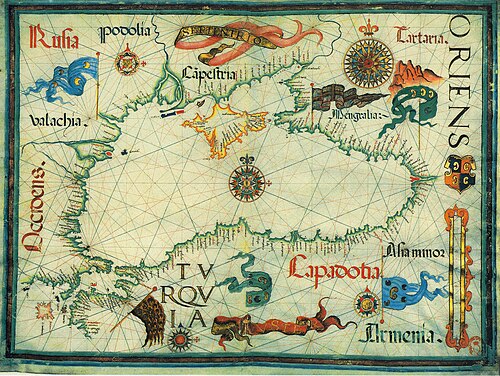
A 16th-century map of the Black Sea by Diogo Homem

The Black Sea receives massive amounts of freshwater from numerous major rivers. The Danube, Dnieper, Don, and Dniester are among the largest contributors to the sea's water budget. This constant influx of river water, combined with precipitation, is balanced by evaporation and outflow through the Bosporus.
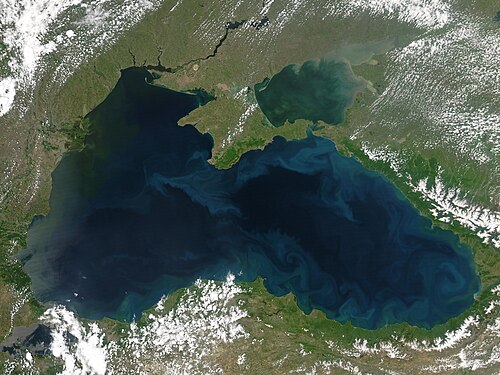
Phytoplankton blooms and plumes of sediment form the bright blue swirls that ring the Black Sea in this 2004 image.
: Phytoplankton blooms and plumes of sediment form the bright blue swirls that ring the Black Sea in this 2004 image.

The water budget is a delicate balance. While total river discharge and precipitation add significant volume, evaporation plays a major role in regulating the sea's levels. Interestingly, evaporation rates have seen a notable reduction since the 1970s.
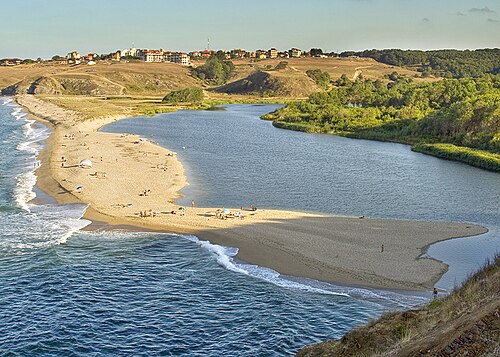
The estuary of the Veleka in the Black Sea. Longshore drift has deposited sediment along the shoreline which has led to the formation of a spit (Sinemorets, Bulgaria).
: The estuary of the Veleka in the Black Sea. Longshore drift has deposited sediment along the shoreline which has led to the formation of a spit (Sinemorets, Bulgaria).

Islands and Coastal Features

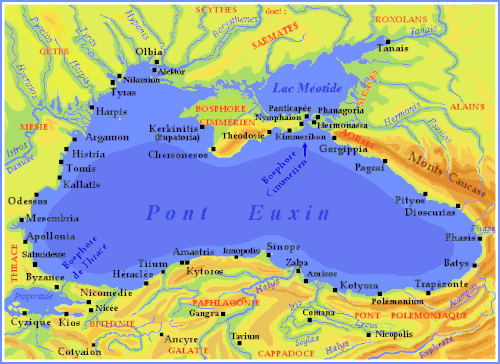
Greek colonies (8th–3rd century BC) of the Black Sea (Euxine, or "hospitable" sea)

The Black Sea features several notable islands belonging to various basin nations. These include Zmiinyi (Snake) Island in Ukraine, Giresun Island in Turkey, and several islands belonging to Bulgaria, such as St. Anastasia Island and St. Peter Island. Romania also hosts islands like Sacalinu Mare.
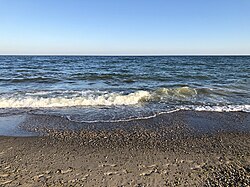
Black Sea beach in Zatoka, Ukraine
: Black Sea beach in Zatoka, Ukraine
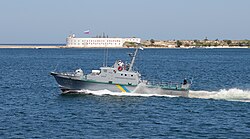
Ukrainian Navy artillery boat U170 in the Bay of Sevastopol
: Ukrainian Navy artillery boat U170 in the Bay of Sevastopol
The bay of Sudak, Crimea
: The bay of Sudak, Crimea
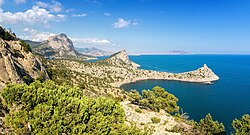
Kapchik Cape in Crimea
: Kapchik Cape in Crimea
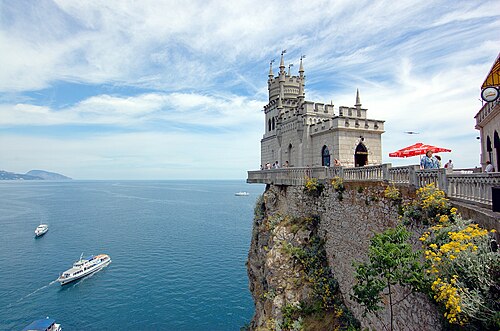
Swallow's Nest in Crimea
: Swallow's Nest in Crimea
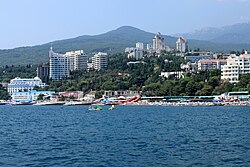
Yalta, Crimea
Yalta, Crimea
: Yalta, Crimea

Ecology and Marine Life

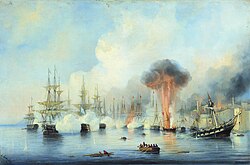
The destruction of the Ottoman fleet in Battle of Sinop

The ecology of the Black Sea is driven by various forms of phytoplankton—microscopic marine algae that form the base of the food web. Common types include dinoflagellates, diatoms, coccolithophores, and cyanobacteria. These organisms are responsible for the visible blooms that can change the sea's appearance.
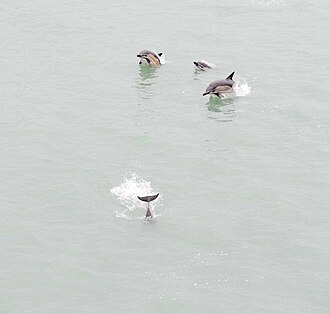
Common dolphins porpoising with a ferry at Batumi port
: Common dolphins porpoising with a ferry at Batumi port

Marine fauna includes various species such as the zebra mussel, common carp, and round goby. The sea also supports marine mammals, which are vital components of the local ecosystem.

Urban Centers and Tourism
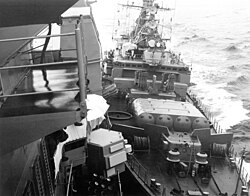
Soviet frigate Bezzavetny (right) bumping the USS Yorktown during the 1988 Black Sea bumping incident

The Black Sea coastline is home to several major urban centers and popular resort towns. Istanbul, Turkey, is the largest city in the region, while Odesa, Ukraine, and Varna, Bulgaria, serve as significant cultural and economic hubs. Many towns along the coast, such as Batumi in Georgia, Sochi in Russia, and Constanța in Romania, are renowned for tourism.
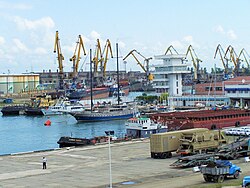
The port of Poti, Georgia
: The port of Poti, Georgia
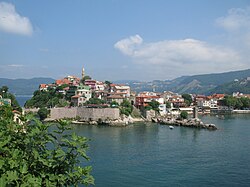
Amasra, Turkey, is located on a small island in the Black Sea.
: Amasra, Turkey, is located on a small island in the Black Sea.
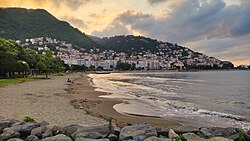
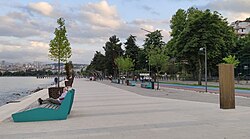
Coastline of Samsun in Turkey
: Coastline of Samsun in Turkey
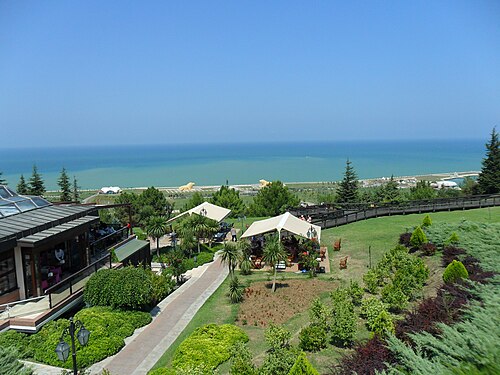
Coast of the Black Sea at Ordu
: Coast of the Black Sea at Ordu
Black Sea coast in Ordu, Turkey
: Black Sea coast in Ordu, Turkey
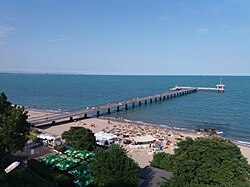
Coast of the Black Sea at Olimp
: Coast of the Black Sea at Olimp
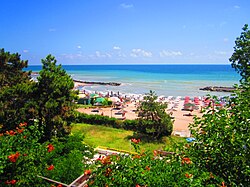
Coast of the Black Sea at Burgas
: Coast of the Black Sea at Burgas
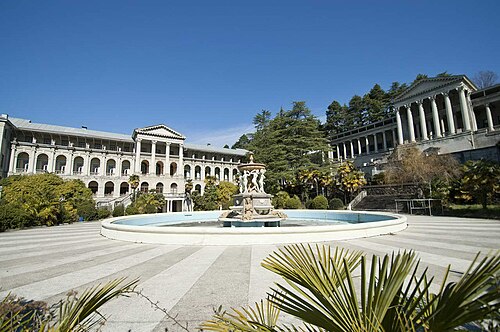
A sanatorium in Sochi, Russia
: A sanatorium in Sochi, Russia

Frequently Asked Questions

What is the historical name of the Black Sea?

The historical Greek name for the Black Sea is the Euxine Sea, which translates to "hospitable" sea.

Which rivers flow into the Black Sea?

Major rivers flowing into the Black Sea include the Danube, Dnieper, Don, Dniester, Kızılırmak, Kuban, Sakarya, and several others.

How deep is the Black Sea?

The Black Sea has an average depth of 1,253 meters (4,111 ft) and reaches a maximum depth of 2,212 meters (7,257 ft).

What are the main connections to other seas?

The Black Sea is connected to the Mediterranean Sea via the Bosporus strait and to the Sea of Azov through the Kerch Strait.

Are there islands in the Black Sea?

Yes, there are more than 10 islands, including Zmiinyi Island (Ukraine), Giresun Island (Turkey), and several islands belonging to Bulgaria and Romania.