Bird Feeding: History, Best Practices, and Ecological Impacts
Bird feeding is the practice of providing food to wild birds, typically through the use of specialized feeders. This activity has evolved from a niche spiritual practice into a massive global hobby, particularly in the United Kingdom and the United States. In the U.S., it ranks as the second most popular hobby, trailing only gardening, and is celebrated annually during National Bird-Feeding Month every February.
While many enthusiasts find joy in attracting colorful avian visitors to their gardens, the practice involves a complex balance of nutritional science and ecological consideration. From selecting the right seeds to understanding the environmental risks, bird feeding is more than just a leisure activity; it is an interaction with local wildlife that can have significant biological consequences.
Key Facts
- Economic Scale: American adults spend approximately US$3.8 billion annually on bird food, feeders, and accessories.
- Historical Roots: The practice dates back to the 6th century with Saint Serf of Fife.
- Popularity: Over 55 million Americans over the age of 16 participate in feeding wild birds.
- Legal Recognition: The U.S. Congress decreed February as National Bird-Feeding Month in 1994.
- Dietary Variety: Different species require specific foods, ranging from nectar for hummingbirds to raw beef for Australian kookaburras.
The History of Bird Feeding
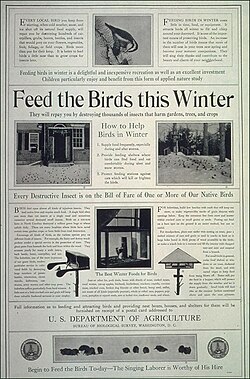
The recorded history of feeding wild birds begins in the 6th century with Saint Serf of Fife, a monk who famously tamed a robin by providing it with food. For centuries, the practice remained relatively quiet until the late 19th century in the United Kingdom. During the severe winter of 1890–1891, national newspapers urged the public to put out food to help birds survive the cold.
By 1910, Punch magazine had declared bird feeding a national pastime in the UK. Today, this tradition continues year-round, with enough supplementary food provided to meet the caloric needs of the ten most common garden bird species. In the United States, the hobby has grown so significantly that it is now a major cultural and economic activity.
Types of Bird Food and Feeding Methods
Attracting specific birds requires providing the food they are biologically adapted to eat. Different species have distinct preferences based on their dietary needs and beak shapes.
Seed and Nut Preferences
Many seed-eating birds prefer black-oil sunflower seeds and mixed seeds because of their thin casings and high fat content. Finches and siskins are specifically attracted to niger (also known as nyjer), while jays tend to prefer maize. Peanuts and coconut (though never desiccated coconut) are also common staples for various garden birds.
Specialized Diets
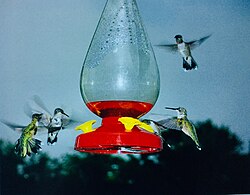
- Nectivorous Birds: Hummingbirds and sunbirds seek nectar.
- Carnivorous Birds: In Australia, raw beef mince is commonly fed to kookaburras and Australian magpies.
- Frugivores: White-eyes, barbets, and certain thrushes consume fresh or cut fruit.
- Opportunists: In some UK urban areas, red kites are known to visit gardens for chicken and table scraps.
Feeding Tools and Maintenance
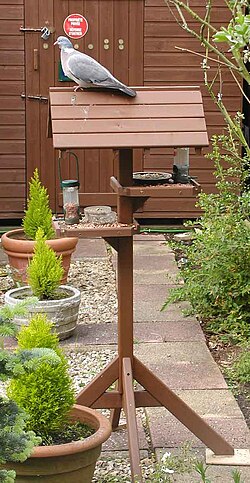
Various feeders are designed for specific species. In North America, suet (hardened animal fat) is often used to attract birds that do not typically visit seed feeders. To successfully establish a feeding station, patience is required; it can take several weeks for birds to discover a new site, especially in spring when natural food is abundant.
Maintenance is critical for bird health. Unshelled foods, such as suet and thistle seed, can spoil if left too long. Additionally, providing a birdbath is highly recommended, as birds require a reliable source of drinking water.
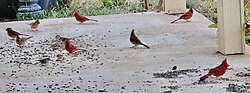
Ecological and Environmental Impact
The impact of supplementary feeding is a subject of scientific debate, with evidence suggesting both positive and negative outcomes.
Positive Effects on Abundance
A study in Sheffield, England, indicated that bird feeding increases the abundance of garden birds, specifically those species that regularly accept supplementary food. However, the study noted that the density of feeding stations did not increase species richness (the variety of different species in an area).
Potential Risks and Negative Impacts
Ornithologists, including Jason Rogers, have highlighted several risks associated with bird feeders:
- Health and Nutrition: Over-reliance on feeders can lead to malnutrition and the spread of diseases.
- Behavioral Changes: Feeding can foster dependency, alter natural migration patterns, and change the natural distribution of species.
- Predation: Feeders can attract predators. In the UK, eastern gray squirrels often consume bird food, and studies show that nests located near filled feeders face higher predation from squirrels and corvids.
- Evolutionary Shifts: Research on blackcaps migrating from Germany to Great Britain found that some birds adapted their bills to eat human-supplied food, while those migrating to Spain maintained bills adapted for fruit like olives.
Furthermore, supplementary feeding can disrupt local insect populations. Birds near feeders are more likely to prey upon carabid beetles and aphids.
The Economics of Bird Feeding
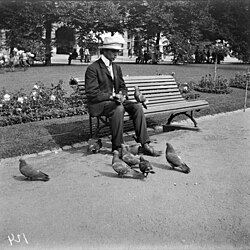
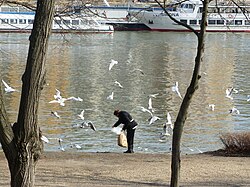
The hobby has created a robust industry. In the United States, over 55 million people participate, spending more than $3 billion on food and $800 million on accessories like birdhouses and baths. However, not all bird feeding is encouraged. In cities like London (specifically Trafalgar Square), feeding pigeons is discouraged by the government to prevent noise, pollution, and competition with vulnerable native species.
| Food Type | Target Bird Species | Key Characteristic |
|---|---|---|
| Niger (Nyjer) | Finches, Siskins | Small, oil-rich seed |
| Black-oil Sunflower | Various seed-eaters | High fat, thin shell |
| Nectar | Hummingbirds, Sunbirds | Sugar-rich liquid |
| Suet | Various North American birds | High-energy fat |
| Raw Beef Mince | Kookaburras, Magpies | Protein for carnivores |
| Maize | Jays | Large grain |
Frequently Asked Questions
How long does it take for birds to find a new feeder?
It can take several weeks for birds to discover a new feeding station. This delay is more common if the station is the only one in the area or if it is established during the spring when natural food sources are plentiful.
Is it safe to feed any kind of coconut to birds?
While coconut can be fed to birds, you should never provide desiccated coconut.
Can bird feeders harm the birds?
Yes, potential risks include malnutrition, the spread of disease, and an increased risk of predation from cats or other animals. Some studies also suggest that long-term feeding of certain foods, like peanut cake, can reduce brood sizes in blue tits and great tits.
Why is pigeon feeding banned in some city centers?
Governments may discourage feeding pigeons in urban areas because they can cause noise and pollution, or because they compete with more vulnerable native bird species for resources.
What is the best way to attract a wide variety of birds?
Providing a variety of food types (such as seeds, suet, and fruit) and ensuring there is a clean source of drinking water via a birdbath is the most effective way to attract different species.