Biological Dispersal: Mechanisms, Types, and Ecosystem Impacts
In the natural world, movement is more than just a change in location; it is a fundamental driver of survival and evolution. Biological dispersal is the movement of individuals—including animals, plants, fungi, and bacteria—from one location to another. This process is technically defined as any movement that has the potential to lead to gene flow, the transfer of genetic material between populations.
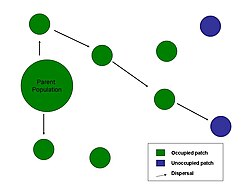
Dispersal occurs in three distinct phases: departure, transfer, and settlement. Each stage carries its own set of fitness costs and benefits. Whether it is a seed drifting on the wind or a juvenile animal seeking a new territory, dispersal influences population dynamics, species distribution, and the overall stability of an ecosystem.
Key Facts
- Two Primary Types: Dispersal is categorized as either active (density-dependent) or passive (density-independent).
- Life Stage Distinctions: Natal dispersal occurs from birth site to breeding site, while breeding dispersal occurs between different breeding sites.
- Ecosystem Role: The ability of species to move between habitat patches is critical for maintaining ecosystem stability.
- Human Influence: Human activities can either restrict dispersal through urban development or expand it via vectors like shipping ballast water.
- Genetic Benefit: Dispersal helps avoid inbreeding depression by preventing breeding between closely related individuals.
Types of Biological Dispersal
Dispersal strategies vary widely across the tree of life, generally falling into two categories based on the energy and intent behind the movement.
Active vs. Passive Dispersal
- Active Dispersal: Also known as density-dependent dispersal, this involves organisms capable of locomotion that move independently to find new environments.
- Passive Dispersal: Known as density-independent dispersal, this relies on external forces—such as wind, water, or other animals—to transport the organism or its propagules (seeds and spores).
Natal and Breeding Dispersal
Biologists also distinguish dispersal based on the life stage of the organism. Natal dispersal is the movement of a juvenile away from its place of birth. In contrast, breeding dispersal occurs when an adult moves from one breeding location to another.
The Costs and Benefits of Movement
Organisms typically disperse when the potential fitness benefits outweigh the risks. While moving to a new area can be dangerous, the rewards are often essential for long-term survival.
Primary Benefits
- Resource Acquisition: Locating new food sources or nesting sites.
- Environmental Escape: Leaving unfavorable or deteriorating conditions.
- Competition Reduction: Avoiding competition with siblings or parents.
- Genetic Diversity: Avoiding inbreeding depression by mating with unrelated individuals.
Dispersal Range and Environmental Constraints
The dispersal range is the maximum distance a species can move from its parent organism or existing population. This range determines how quickly a species can expand its territory.
Natural and Human-Made Barriers
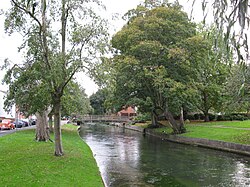
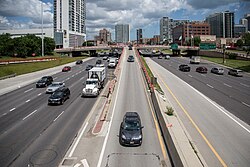
Environmental conditions can either facilitate or hinder movement. While rivers can act as dispersal vectors for certain species, urban development often creates barriers that limit the movement of wildlife, restricting gene flow between fragmented populations.
Human-Mediated Dispersal
Human activity significantly alters natural ranges. This occurs through two main forms: Human-Vectored Dispersal (HVD) and Human-Altered Dispersal (HAD). For example, ships transporting ballast water can introduce species to new continents, often leading to the establishment of invasive species like rats or stinkbugs. Conversely, some human-aided dispersals, such as those of honeybees and earthworms, can have positive effects.
Dispersal Mechanisms
Different organisms have evolved specialized mechanisms to ensure their offspring or individuals reach new habitats.
Plant and Non-Motile Mechanisms
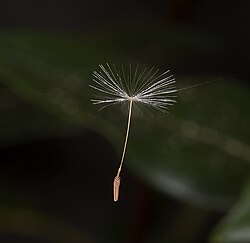
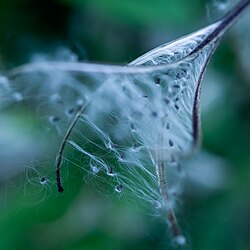
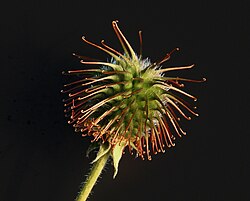
Since plants cannot walk, they rely on propagules. Wind is a common vector for seeds, as seen in dandelions, while others use biotic vectors (living organisms). For instance, burs attach to animal fur to be carried to new locations.
Animal Mechanisms
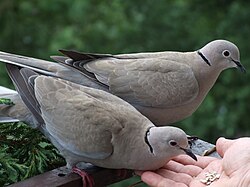
Motile animals use locomotion to test new environments, guided by inherited behaviors. Some species exhibit remarkable expansion; the Eurasian collared dove (Streptopelia decaocto), originally from Central and South Asia, has successfully colonized much of Eurasia through dispersal.
Quantifying and Observing Dispersal
Scientists measure dispersal using two primary metrics: rate and distance. The dispersal rate (or migration rate) describes the probability that an individual will leave a specific area.
Research has shown that human vectors can vastly increase these distances. A study on Brassica species in England found that seeds attached to shoes traveled much further than those dispersed by wind alone, with some seeds remaining viable on footwear for up to eight hours of walking.
| Concept | Description | Example/Vector |
|---|---|---|
| Natal Dispersal | Movement from birth site to breeding site | Juvenile animals |
| Breeding Dispersal | Movement between breeding sites | Adult animals |
| Passive Dispersal | Movement via external forces | Wind, Water, Animals |
| Active Dispersal | Self-propelled movement | Locomotion (Walking, Flying) |
| HVD | Human-Vectored Dispersal | Ballast water, Shoes |
Frequently Asked Questions
What is the difference between biological dispersal and migration?
While often used interchangeably in population genetics, migration typically refers to round-trip seasonal movements, whereas dispersal refers to a more permanent movement from one site to another that can lead to gene flow.
How does dispersal differ from geodispersal?
Biological dispersal is the movement of individuals or propagules. Geodispersal refers to the mixing of previously isolated populations after geographic barriers (like mountains or oceans) erode over time.
Why is dispersal important for genetic health?
Dispersal allows individuals to find mates outside their immediate family group, which helps avoid inbreeding depression and increases the genetic diversity of the population.
Can human activity help species disperse?
Yes. Humans can expand a species' range through vectors like shipping or travel. While this can lead to invasive species, it can also spread beneficial organisms like earthworms.
What are the three phases of the dispersal process?
The act of dispersal consists of departure from the original site, transfer through the environment, and settlement in a new habitat.