Bicycle Evolution: From 19th Century Invention to Global Transport
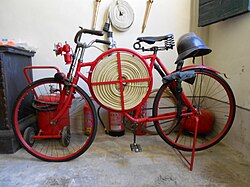
The bicycle is more than just a tool for recreation; it is the most popular vehicle of any kind in the world. From its humble beginnings as a wooden curiosity to the high-tech carbon fiber machines of today, the bicycle has revolutionized personal mobility, female emancipation, and global logistics. Perhaps the most striking example of its reach is the Chinese Flying Pigeon, the most popular bicycle model ever produced, with approximately 500 million units manufactured.
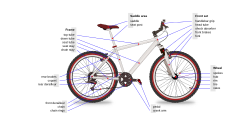
At its core, a bicycle is a human- or motor-powered vehicle consisting of a frame, wheels, tires, saddle, handlebar, pedals, and a drivetrain. While modern versions are complex, the fundamental goal remains the same: efficient, sustainable transportation.
Key Facts
- Most Popular Model: The Chinese Flying Pigeon (500 million produced).
- Inventors: Karl von Drais and Kirkpatrick MacMillan in the 19th century.
- Global Market: Estimated at $116 billion in 2025.
- Production Volume: Over 100 million bicycles are manufactured annually.
- Top Manufacturers: China, India, and Taiwan.
- Environmental Impact: Production emissions range from 70 kg to 250 kg CO₂eq depending on the region and bike type.
The History of Cycling

The journey of the bicycle began in the 19th century with the draisine, a wooden two-wheeler created by Baron Karl von Drais. This archetype paved the way for various iterations, including the velocipede and the iconic penny-farthing.
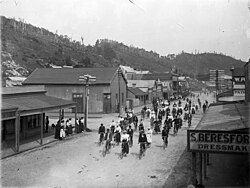
By the 1870s, cycling clubs began to flourish, providing a primary mode of transport before the advent of the automobile. The Bicycle Touring Club, established in 1878, was among the earliest. By 1888, the Raleigh Bicycle Company was founded in Nottingham, England, eventually becoming the world's largest manufacturer, producing over two million bikes per year.
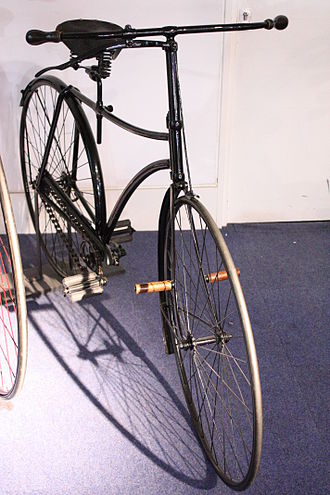
Beyond transportation, the bicycle played a pivotal role in social change. It became a symbol of female emancipation, offering women unprecedented mobility and independence during the late 19th century.
!["Let go – but stand by"; Frances Willard learning to ride a bicycle[125]](/images/de/bb/debbd48af96f5fe654e315e90ef19d2fe1c0f15542d31980be77cca96de5f952.jpg)
Technical Components and Design

Modern bicycles are engineered for specific purposes, utilizing materials like steel, aluminium, and carbon fiber. The choice of material affects weight, durability, and cost.
Frame and Seating
The frame serves as the skeleton of the bike. While traditional steel is common, high-performance bikes often use carbon fiber for its strength-to-weight ratio. Seating is equally specialized; for example, saddles are often designed specifically for different anatomical needs to ensure comfort during long rides.

Drivetrain and Steering
The drivetrain converts human energy into motion via pedals, chains, and sprockets (also known as a cassette). Some bikes use a derailleur to shift gears, while others utilize hub gears for internal shifting. Steering is managed through the handlebars, which may feature anatomic grips to prevent cyclist's palsy (ulnar syndrome) by distributing weight across the palm.
![Bicycle grips made of leather. Anatomic shape distributes weight over palm area to prevent cyclist's palsy (ulnar syndrome).[70]](/images/09/6a/096a06daa3ff95066b9b9c0f63754cb52298c9ba2f8b7ff6b1fbf7fdf817ced0.jpg)
Braking and Wheels
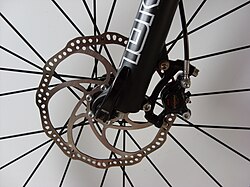
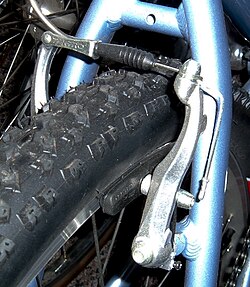
Braking systems vary by bike type. Linear-pull brakes (V-Brakes) are common on mountain bikes, while disc brakes, mounted to the fork and hub, provide superior stopping power in various conditions. Tires are rated for specific pressures, typically between 100 and 1,400 kPa (15 to 200 psi).
Maintenance and Longevity
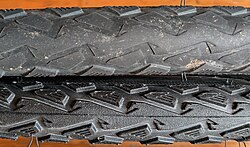
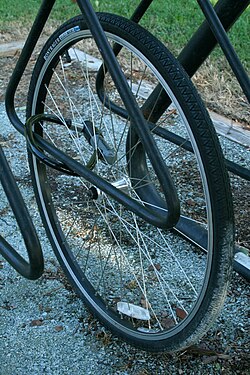
Regular maintenance is essential for safety and performance. The most critical aspect is maintaining correct tire inflation, as this significantly alters the ride feel. Tires generally wear out after 1,500 to 5,000 kilometers (900 to 3,000 miles), with punctures being the most common sign of wear.
Basic repairs often require a puncture repair kit, which typically includes tire levers, sandpaper, vulcanizing fluid (rubber solution), and patches. For more extensive needs, specialized shops provide a range of components from inner tubes to lighting systems.

Global Impact and Sustainability
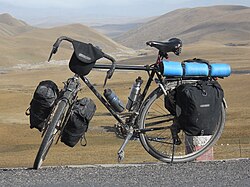
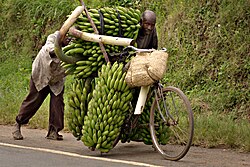
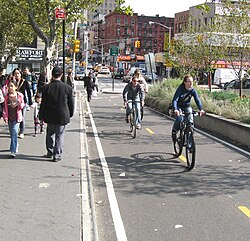
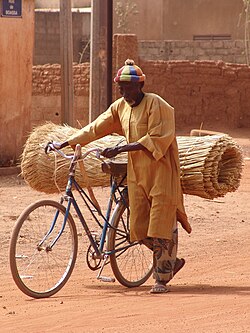
Bicycles serve diverse roles globally. In urban centers like Copenhagen or New York City, they are primary commuting tools. In regions like Uganda, Tanzania, and Burkina Faso, they are vital for poverty alleviation, used to transport goods such as bananas and fodder.
From an environmental perspective, bicycles are highly sustainable. The metals used are well-recyclable. Life-cycle assessments show that producing a standard bicycle in Europe generates approximately 70 kg CO₂eq, while an e-bike produces about 130 kg CO₂eq.

| Metric | Value / Detail |
|---|---|
| Annual Global Production | Over 100 Million units |
| Estimated Market Size (2025) | $116 Billion |
| Primary Materials | Steel, Aluminium, Carbon Fiber |
| European Production Impact (Standard) | 70 kg CO₂eq |
| Chinese Production Impact (Standard) | 150 kg CO₂eq |
Frequently Asked Questions




Who invented the bicycle?
The bicycle was developed in the 19th century, with Baron Karl von Drais and Kirkpatrick MacMillan credited as key inventors.
What is the most produced bicycle in history?
The Chinese Flying Pigeon is the most popular model, with approximately 500 million units produced.
How often should bicycle tires be replaced?
Tires typically wear out after 1,500 to 5,000 kilometers (900 to 3,000 miles), though punctures may necessitate earlier replacement.
What are the environmental benefits of bicycles?
Bicycles have a low climate impact compared to motorized vehicles, use recyclable metals, and have relatively low production emissions (ranging from 70 to 250 kg CO₂eq depending on the type and location of manufacture).
What is cyclist's palsy?
Also known as ulnar syndrome, it is a condition caused by pressure on the ulnar nerve; it can be mitigated by using anatomic handlebar grips that distribute weight across the palm.