Beveled Glass: Craftsmanship, Techniques, and Visual Effects
Beveled glass is a sophisticated architectural element created by cutting an angled surface, known as a bevel, around the periphery of thick glass. This process transforms a standard pane into a functional prism. When sunlight passes through these angled edges, it creates a color refraction that introduces a spectrum of colors typically absent in clear float glass, highlighting the artistry of the glass work.
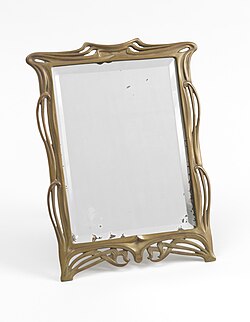
These glass pieces are often arranged in clusters to form specific designs. Simple three or four-piece configurations are frequently used in transoms (top lights of windows and conservatories), while more complex combinations are utilized for larger panels, such as doors and sidelites (the narrow windows flanking a door).
Key Facts
- Optical Effect: Bevels act as prisms, refracting sunlight into a spectrum of colors.
- Standard Thickness: Typically made from 1/4 inch (6 mm) float plate glass, though sizes up to 1/2 inch (10 mm) are used for larger windows.
- Material Pairing: Often juxtaposed with textured glass, which is typically 1/8 inch (3 mm) thick.
- Traditional Tooling: Historically relied on Newcastle sandstone wheels for smoothing.
- Modern Production: Now largely machine-made using plastic-based metal deburring wheels.
Materials and Design Applications
The visual impact of beveled glass is often enhanced by pairing it with clear or colored textured glass. The contrast between the smooth, angled edges of the 1/4 inch (6 mm) float plate glass and the distinct surface of the 1/8 inch (3 mm) textured glass creates a dramatic aesthetic. Depending on the desired visual effect, the width of the bevel can be adjusted.
| Feature | Standard Specification | Common Application |
|---|---|---|
| Float Plate Thickness | 1/4 inch (6 mm) to 1/2 inch (10 mm) | Main panels, large windows |
| Textured Glass Thickness | 1/8 inch (3 mm) | Decorative accents |
| Simple Clusters | 3 to 4 pieces | Transoms and conservatories |
| Complex Clusters | Multiple pieces | Doors and sidelites |
The Evolution of Beveling Techniques
Traditional Manual Craftsmanship
Historically, beveling was a labor-intensive manual process involving grinding and polishing. The process began by holding the glass against a horizontal roughing wheel using sand and water. To refine the surface, an emory wheel removed the sand, followed by a horizontal grindstone and a polishing wheel treated with pumice stone. Finally, a buffing wheel with rouge was used to brighten the glass.
For smoothing, craftsmen used large natural sandstone wheels, the finest of which were sourced from a quarry in Newcastle, England. These wheels, often several feet in diameter and 8 inches (200 mm) thick, required extreme consistency to avoid scratching the glass. The equipment varied by the shape of the cut: straight lines and outside curves were ground on a flat rotating platter with a silicon carbide and water slurry, while inside curves required a silicon carbide grinding wheel.
Modern Automated Production
Today, most beveled glass is machine-made. This transition was made possible by plastic-based metal deburring wheels, which smooth the ground glass face more efficiently than traditional aluminum oxide or sandstone. While automation increases speed, traditional stone-smoothed pieces are often distinguished by a superior crispness of the bevel edge.
Regardless of the method, the final step remains the same: polishing the beveled face using a felt-covered wheel and a slurry of water and optical polishing powder. The goal is to achieve an even bevel width and edge thickness with a crisp edge and no facets on the face.
Historical Scale and Complexity
The scale of this craft was particularly evident in the early 1900s in the USA. It was common to find oval door glass measuring 5 feet (1.5 m) in length. These pieces featured 2-inch (50 mm) wide bevels on 3/8-inch (10 mm) thick plate glass, a task so demanding it required two craftsmen working as a team.
Frequently Asked Questions
What is beveled glass?
Beveled glass is thick glass that has been cut at an angle around its edges, creating a beveled periphery that refracts light like a prism.
How does beveled glass differ from float glass?
While float glass is flat and clear, beveled glass features angled edges that create a spectrum of colors when exposed to sunlight, which is not possible with standard float glass.
What are transoms and sidelites?
Transoms are the windows located above a door or another window (top lights), and sidelites are the narrow vertical windows located on the sides of a door.
Why is traditional beveled glass sometimes preferred over machine-made?
Traditional beveled glass, smoothed with natural stones, often possesses a crisper bevel edge compared to the results produced by modern plastic smoothing wheels.
What materials were used to polish glass traditionally?
Traditional polishing involved a sequence of emory wheels, pumice stone, rouge for brightening, and finally, a felt wheel with optical polishing powder.