Beryl: The Versatile Mineral Behind Emeralds and Aquamarines
Beryl is a remarkable mineral composed of beryllium aluminium silicate, represented by the chemical formula Be₃Al₂(SiO₃)₆. While pure beryl is colorless, it is most famous for the stunning array of colors it displays when trace impurities enter its crystal structure. From the deep greens of emeralds to the tranquil blues of aquamarine, this mineral serves as both a vital ore source for beryllium and a cornerstone of the gemstone industry.
Historically, beryl played a practical role in human history. In 13th-century Italy, when glass technology could not yet produce perfectly clear lenses, artisans used beryl or rock crystal to construct the first eyeglasses. This connection even influenced language; the German word for glasses, Brille, is derived from the mineral's name.
Key Facts
- Chemical Formula: Be₃Al₂(SiO₃)₆
- Crystal System: Hexagonal
- Mohs Hardness: 7.5–8.0
- Common Varieties: Emerald, Aquamarine, Morganite, Goshenite, Heliodor, and Red Beryl
- Primary Use: Gemstones and an ore source of beryllium
Crystal Structure and Formation
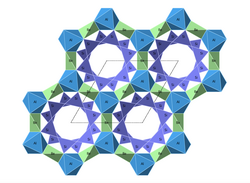
Beryl is classified as a cyclosilicate, meaning its structure contains rings of silicate tetrahedra (SiO₃). These rings are arranged in columns along the C axis, creating internal channels. These channels are scientifically significant because they allow various ions, neutral atoms, and molecules to be incorporated into the crystal. These "impurities" disrupt the overall charge and are responsible for the diverse colors we see in different beryl varieties.
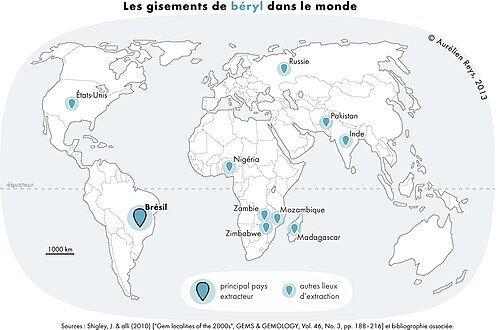
In terms of physical habit, beryl typically forms hexagonal columns, though it can also appear in prismatic, tabular, or massive forms. While naturally occurring crystals can reach massive proportions—including a record-breaking 380,000 kg specimen from Madagascar—terminated, gem-quality crystals are highly prized.
Famous Beryl Varieties
Emerald: The Green Gem
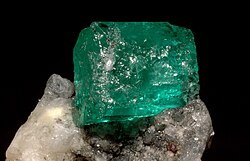
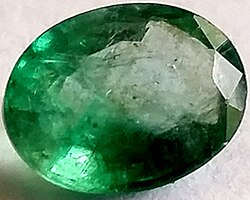
Emerald is the most famous green variety of beryl, colored by approximately 2% chromium and sometimes vanadium. Emeralds are often highly included, which can make them somewhat brittle. Some of the most sought-after emeralds come from the Colombian Andes, specifically the Muzo and Chivor regions. A rare phenomenon known as the trapiche emerald features a unique six-pointed radial pattern caused by dark carbon impurities.
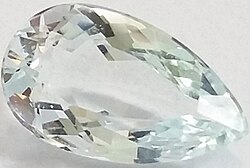
Aquamarine: The Color of the Sea
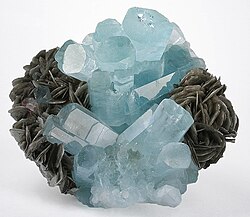
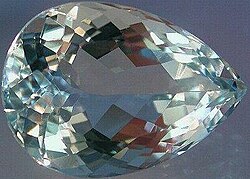
Derived from the Latin aqua marina (sea water), aquamarine is the blue or cyan variety of beryl. It is found in many beryl-producing localities, including the gem-gravel deposits of Sri Lanka. A specific deep blue version, known as maxixe, owes its color to radiation-induced color centers.
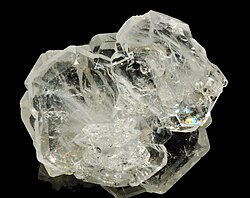
Morganite and Goshenite
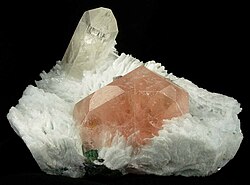
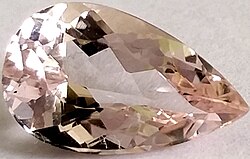
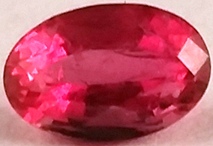
Morganite is a rare, light pink to rose-colored variety caused by manganese (Mn) ions. It is sometimes referred to as pink beryl. In contrast, goshenite is the completely colorless variety of beryl. While once used for eyeglass lenses, goshenite is now primarily used for gemstone purposes.
Golden Beryl and Red Beryl
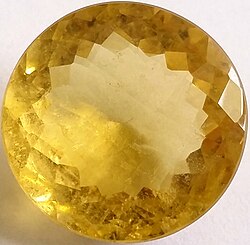
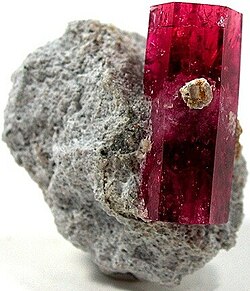
Golden beryl ranges from pale yellow to brilliant gold, colored by iron (Fe) ions. When the color is greenish-yellow, it is specifically called heliodor. On the other end of the spectrum is the incredibly rare red beryl (historically called bixbite), found primarily in Utah, USA, and occasionally New Mexico. Its deep red color is also attributed to manganese ions.
Technical Specifications Summary
| Property | Value/Description |
|---|---|
| IMA Symbol | Brl |
| Crystal Class | Dihexagonal dipyramidal (6/mmm) |
| Luster | Vitreous to resinous |
| Specific Gravity | 2.63–2.92 |
| Refractive Index | n ω = 1.564–1.595, n ε = 1.568–1.602 |
| Streak | White |
Frequently Asked Questions
Why are emeralds often included or "flawed"?
Most emeralds are highly included due to the geological conditions in which they form. These inclusions can affect the stone's durability, making emeralds generally more brittle than other beryl varieties.
What is the difference between golden beryl and heliodor?
While the terms are often used synonymously, "golden beryl" typically refers to pure yellow or golden shades, whereas "heliodor" refers specifically to greenish-yellow shades.
Is red beryl the same as bixbite?
The term "bixbite" was an old synonym for red beryl, but it is now deprecated by organizations like CIBJO to avoid confusion with the mineral bixbyite.
How does beryl get its different colors?
The color is determined by trace elements or radiation that enter the crystal structure through channels in the hexagonal lattice. For example, chromium creates green emeralds, while manganese creates pink morganite and red beryl.
Where is the largest beryl crystal found?
The world's largest known naturally occurring beryl crystal was found in Malakialina, Madagascar. It measures 18 meters long and weighs approximately 380,000 kg.