Berlin Attack Responses: Political Reactions and Community Solidarity
Following a violent attack on a peacefully celebrating crowd in Berlin, the city has become a focal point for intense political debate and profound community mourning. The event has sparked a wide range of reactions, from high-level government condemnations to grassroots movements seeking to bridge the gap between the queer community and Muslim organizations.
Key Facts
- Government Condemnation: Mayor Kai Wegner and Chancellor Friedrich Merz denounced the attack as a strike against Berlin's open society and an "abhorrent act."
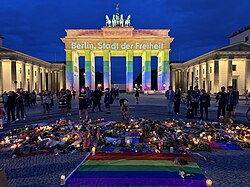
- Public Mourning: A remembrance rally at Pariser Platz saw attendance estimates ranging from 5,000 (police) to 10,000 (organizers).
- Interfaith Solidarity: Forum Islam Berlin and the Khadija Mosque expressed strong solidarity with victims and established contact with Berlin Pride organizers.
- Political Divide: Proposals range from tightening laws against extremists to implementing educational measures against queerphobia.
- Anti-Hate Protests: Thousands marched through the Mitte borough on August 2, 2026, to protest both anti-queer hatred and Islamophobia.
Political Reactions and Legislative Debates
The attack triggered immediate responses from Germany's top leadership. Governing Mayor Kai Wegner described the event as a target against the city's freedom, while Chancellor Friedrich Merz, in coordination with Federal Interior Minister Alexander Dobrindt, pledged a thorough investigation to ensure the perpetrators are punished. Iris Spranger, Berlin's state interior senator, and Alfonso Pantisano, the Senate's queer-affairs commissioner, emphasized the shock and mourning felt by the queer community.
In the aftermath, the political landscape split over the appropriate legislative response. On July 26, some officials called for stricter laws against known extremists. The Alternative for Germany party criticized Chancellor Merz for failing to address Islamic radicalism. Conversely, the party Die Linke proposed a comprehensive protection plan for queer life in Berlin, which includes:
- Preventive measures against queerphobia (prejudice or hatred toward LGBT+ people).
- LGBT+ rights education in schools.
- Reversing budget cuts for queer-focused projects.
- Adding sexual identity protections to the Basic Law (Germany's constitution).
Adding to the complexity, House of Representatives deputy Elif Eralp warned against the "instrumentalization" of the attack to fuel anti-Muslim racism or to justify the immediate tightening of security laws.
Community Remembrance and Solidarity
The city's grief manifested in large-scale public gatherings. On July 26, a remembrance rally took place at Pariser Platz, followed by a silent memorial march from St. Mary's Church to the Brandenburg Gate.
The tragedy also fostered unexpected alliances. Forum Islam Berlin, representing various Muslim religious communities, expressed solidarity with the victims. Imam Scharjil Khalid initiated direct contact with Berliner CSD e.V., the association responsible for organizing Berlin Pride. Similarly, the Ahmadiyya-run Khadija Mosque launched the "Muslim for Peace — Together Against Extremism" campaign, though its imam noted a concerning climate of generalized suspicion toward Muslims following the event.
Advocacy and the Fight Against Hate
Advocacy groups have used the moment to call for systemic change. Julia Miosga of Berliner CSD e.V. argued that while religious or right-wing ideologies seek to oppress queer people, the attack should not be used to incite hatred against Muslims. This sentiment was echoed by the Berlin-Brandenburg regional association of LSVD+, which called for enhanced legal protections for LGBT+ individuals.
Doreen Hoffmann of CSD Deutschland criticized politicians who expressed concern only after the attack while previously challenging queer rights. LSVD+ further accused right-wing populist parties and media outlets of hypocrisy and racism. These tensions culminated on August 2, 2026, when thousands marched through Berlin's Mitte borough to protest the rise of both Islamophobic rhetoric and anti-queer hatred.
| Entity | Primary Action/Position | Key Objective |
|---|---|---|
| Federal Government | Condemnation and investigation | Punishment of responsible parties |
| Die Linke | Proposed protection plan | Education and constitutional protections |
| Forum Islam Berlin | Outreach to Berliner CSD e.V. | Inter-community solidarity |
| LSVD+ / CSD Deutschland | Public advocacy and protests | Legal protections and anti-discrimination |
| Khadija Mosque | "Muslim for Peace" campaign | Combating extremism and suspicion |
Frequently Asked Questions
How did the German government respond to the attack?
Governing Mayor Kai Wegner and Chancellor Friedrich Merz condemned the attack as a strike against an open society and an abhorrent act, pledging a thorough investigation and the punishment of those responsible.
What were the different political proposals following the event?
Proposals varied from calls for tighter laws against extremists (supported by some officials and the AfD) to Die Linke's plan for education, budget restoration for queer projects, and constitutional protections for sexual identity.
How did Muslim organizations in Berlin react?
Forum Islam Berlin and the Khadija Mosque strongly condemned the attack, expressed solidarity with victims, and established direct contacts with Berlin Pride organizers to foster peace and oppose extremism.
What was the purpose of the march on August 2, 2026?
Thousands of people marched through the Mitte borough to protest against both anti-queer hatred and the increase in Islamophobic rhetoric that followed the attack.
Who are the main advocacy groups involved in the aftermath?
Key groups include Berliner CSD e.V., CSD Deutschland, and the Berlin-Brandenburg regional association of LSVD+, all of whom have called for better legal protections and an end to the exploitation of the attack to incite hatred.