Exploring the Kingdom of Belgium: A Comprehensive Guide
Located at the heart of Western Europe, the Kingdom of Belgium is a nation defined by its complex history, diverse linguistic landscape, and significant role in international politics. From its ancient roots to its modern status as a federal constitutional monarchy, Belgium offers a unique blend of cultural richness and economic strength.
Whether you are interested in its intricate political structure, its vibrant cities like Brussels, or its deep historical heritage, this guide provides an essential overview of everything that makes Belgium a vital part of the European continent.

Key Facts

- Capital: Brussels
- Official Languages: Dutch, French, and German
- Government Type: Federal constitutional monarchy
- Population: Approximately 11,867,634 (2026 census estimate)
- Currency: Euro (€)
- National Motto: "Unity makes strength" (Eendracht maakt macht / L'union fait la force / Einigkeit macht stark)
Historical Evolution

The history of the territory that is now Belgium spans millennia, beginning with the ancient tribes of Gallia Belgica during the era of Julius Caesar.
: Gallia Belgica at the time of Julius Caesar's conquest of Gaul in 54 BCEThrough the Middle Ages, the region was shaped by various powerful entities, including the Burgundian State in the 15th century and later the Habsburg Netherlands.

Following periods of Spanish and Austrian rule, and the subsequent French Revolution, the region was part of the United Kingdom of the Netherlands. The modern nation of Belgium was born from the Belgian Revolution of 1830, eventually gaining full international recognition in 1839.


In more recent history, Belgium played a central role during the World Wars, including the liberation of its cities by Allied forces in 1944.

Geography and Regions

Belgium is a compact but densely populated country, covering a total area of 30,689 km². Its landscape is varied, ranging from coastal areas to more inland terrains.

The country is organized into three distinct regions: the Flemish Region, the Walloon Region, and the Brussels-Capital Region. These regions are further subdivided into provinces, which serve as the primary administrative units.

The climate and environmental conditions of the country are subject to ongoing study, particularly regarding temperature trends and land use.

Administrative Provinces
The provinces are split between the Flemish and Walloon regions, with the Brussels-Capital Region acting as a unique, highly dense metropolitan hub.
| Region | Province | Capital | Population (Jan 2024) |
|---|---|---|---|
| Flemish | Antwerp | Antwerp | 1,926,522 |
| Flemish | East Flanders | Ghent | 1,572,002 |
| Flemish | Flemish Brabant | Leuven | 1,196,773 |
| Flemish | Limburg | Hasselt | 900,098 |
| Flemish | West Flanders | Bruges | 1,226,375 |
| Walloon | Hainaut | Mons | 1,360,074 |
| Walloon | Liège | Liège | 1,119,038 |
| Walloon | Luxembourg | Arlon | 295,146 |
| Walloon | Namur | Namur | 503,895 |
| Walloon | Walloon Brabant | Wavre | 414,130 |
| Brussels | Brussels-Capital | Brussels | 1,249,597 |
Politics and Governance

Belgium operates as a federal constitutional monarchy. This means that while there is a monarch (currently King Philippe) who serves as the head of state, the actual governing power is distributed through a complex federal system.

The legislative branch is known as the Federal Parliament, which consists of two houses: the Senate (the upper house) and the Chamber of Representatives (the lower house).


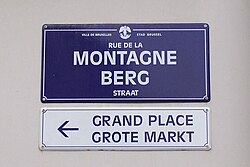
Because of its linguistic diversity, the government is also structured around three language communities: the Flemish Community (Dutch-speaking), the French Community (French-speaking), and the German-speaking Community.

Economy and Infrastructure
Belgium possesses a highly developed economy with a significant GDP. It is a major player in international trade, supported by robust infrastructure, including significant ports and industrial sectors.

The nation's economic strength is reflected in its per capita income and its high Human Development Index (HDI). Key industries include steelmaking, which has a long history along the Meuse river, and various high-tech sectors.

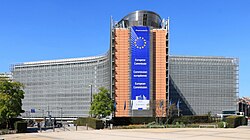
Furthermore, Brussels serves as a global political hub, hosting the seat of the European Commission, one of the most important institutions of the European Union.
Culture, Society, and Science

The Belgian identity is a tapestry of different influences. This is visible in its religious diversity, its world-renowned cuisine, and its celebrated artists and athletes.
Religion and Demographics
As of 2023, the religious landscape shows that a majority of the population identifies as having no religion (59%), while 34% identify as Christian (with Catholicism being the largest group at 31%). Islam represents 6% of the population.


Arts and Education
Belgium has a rich tradition in the fine arts, exemplified by masterpieces like the Ghent Altarpiece. The country also boasts prestigious educational institutions, such as the KU Leuven and the University of Antwerp.


Cuisine and Lifestyle
Belgian culture is often celebrated through its unique traditions, such as the Gilles of Binche, and its iconic culinary offerings, most notably moules-frites (mussels and fries).


In the realm of sports and literature, Belgium has produced global icons, from legendary cyclists like Eddy Merckx to renowned writers like Georges Simenon and performers like Jacques Brel.



Frequently Asked Questions
What are the official languages of Belgium?
Belgium has three official languages: Dutch, French, and German.
What is the capital of Belgium?
The capital of Belgium is the City of Brussels, which also serves as the largest metropolitan area in the country.
How is Belgium's government structured?
Belgium is a federal constitutional monarchy. It features a monarch as head of state and a federal parliament consisting of a Senate and a Chamber of Representatives.
What is the main currency used in Belgium?
Belgium uses the Euro (€).
What are the main regions in Belgium?
Belgium is divided into three main regions: the Flemish Region, the Walloon Region, and the Brussels-Capital Region.