Belgian Government in Exile: Maintaining Sovereignty in London
During the turmoil of World War II, the Belgian government faced the existential challenge of maintaining national legitimacy while their homeland was under occupation. Establishing a government in exile in London, Belgian leaders sought to fulfill the functions of a national administration while representing Belgian interests to the Allied powers. As Paul-Henri Spaak noted, this body represented all that remained of a "legal and free Belgium" entitled to speak for the nation.
To maintain international standing, the government maintained strong diplomatic ties. The British diplomatic mission, led by Ambassador Lancelot Oliphant, was attached to the exile government. In March 1941, the United States appointed Anthony Biddle Jr. as Ambassador to the governments in exile of Belgium, the Netherlands, Poland, and Norway. Although the Soviet Union initially broke diplomatic relations in May 1941 due to the Nazi-Soviet Pact, it re-established its legation and eventually upgraded it to an Embassy by 1943.
Key Facts
- Diplomatic Hub: London served as the seat of the Belgian government in exile, maintaining relations with the UK, US, and later the USSR.
- Refugee Support: Over 15,000 Belgian civilians sought refuge in the UK, supported by the Central Service of Refugees.
- Military Effort: The Free Belgian forces included the 1st Fusilier Battalion and specialized units in the RAF and Royal Navy.
- Global Influence: Belgium was a signatory to the Atlantic Charter (1941) and the Declaration by United Nations (1942).
- Economic Legacy: The government helped establish the IMF and the Benelux Customs Union.
Supporting Belgian Refugees in the United Kingdom
One of the most immediate challenges for the government in exile was the welfare of Belgian civilians. By 1940, at least 15,000 refugees had arrived in the UK, many having fled with nothing. While the British government initially managed these arrivals, the Belgian government established the Central Service of Refugees in September 1940 to provide employment and material aid.
The transition was not without friction. Many in the British public felt hostility toward Belgian refugees, fueled by the belief that Belgium had betrayed the Allies following King Leopold III's decision to surrender in May 1940.
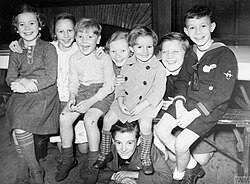
Despite these tensions, the government focused on the social and cultural wellbeing of its citizens. In 1942, they sponsored the Belgian Institute in London. By 1943, the government had established four Belgian schools in Penrith, Braemar, Kingston upon Thames, and Buxton, educating a total of 330 pupils.
The Rise of the Free Belgian Forces
Shortly after the surrender, Prime Minister Hubert Pierlot called for the creation of an army-in-exile via French Radio, emphasizing the need for solidarity with the Allies. This effort began with troops rescued from Dunkirk during Operation Dynamo (the evacuation of Allied soldiers from France) and Belgian émigrés already in England.
The government approved the creation of the Camp Militaire Belge de Regroupement (CMBR) in Tenby, Wales. The camp grew from 462 members in July 1940 to nearly 700 by August. These soldiers formed the 1st Fusilier Battalion, commanded by Lieutenant-General Raoul Daufresne de la Chevalerie and inspected by Lieutenant-General Victor van Strydonck de Burkel.
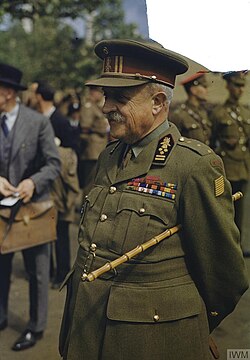
Belgium's contribution extended beyond the infantry. Twenty-eight Belgian airmen fought in the Battle of Britain, and the government successfully lobbied for two all-Belgian squadrons within the Royal Air Force (RAF) and a dedicated Belgian section within the Royal Navy.
However, internal strife persisted. For several years, the army was divided in its allegiance between the government and the King. Frustrated by a lack of combat opportunities, 12 soldiers mutinied in November 1942. By 1943, royalist sentiments moderated, and the military returned to the government's support.
International Treaties and Post-War Planning
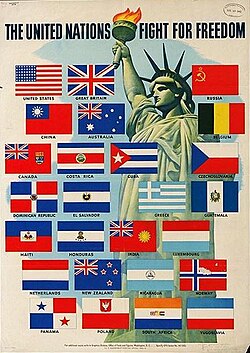
The government in exile played a pivotal role in shaping the post-war international order. In September 1941, Belgium signed the Atlantic Charter, and in January 1942, it joined 26 other nations in signing the Declaration by United Nations, a precursor to the United Nations Organisation.
As the war progressed, the focus shifted toward economic stability. In July 1944, Camille Gutt represented Belgium at the Bretton Woods Conference in the United States. Gutt acted as a key intermediary between major Allied powers, helping establish the Bretton Woods System of currency controls and the International Monetary Fund (IMF), where he served as the first director. These agreements ensured the Belgian Franc would be tied to the American Dollar post-war.
Finally, in September 1944, Belgium collaborated with the Netherlands and Luxembourg to form the Benelux Customs Union. Signed during the London Customs Convention on September 5, 1944, this agreement expanded a pre-war union between Belgium and Luxembourg and laid the groundwork for the 1958 Benelux Economic Union.
| Category | Key Initiative/Event | Outcome/Impact |
|---|---|---|
| Diplomacy | Atlantic Charter & UN Declaration | Established post-war global cooperation goals. |
| Military | CMBR & RAF Squadrons | Continued Belgian combat presence in WWII. |
| Refugees | Central Service of Refugees | Material aid and education for 15,000+ civilians. |
| Economics | Bretton Woods Conference | Creation of the IMF; stabilized the Belgian Franc. |
| Regional | London Customs Convention | Formation of the Benelux Customs Union. |
Frequently Asked Questions
Where was the Belgian government in exile located?
The Belgian government in exile was based in London, United Kingdom, where it functioned as the legal representative of the Belgian state during the Nazi occupation.
How did the British public view Belgian refugees in 1940?
Many in the British public were hostile toward Belgian refugees, largely due to the perception that Belgium had betrayed the Allies when King Leopold III decided to surrender.
What military units were formed by the Free Belgian forces?
The forces included the 1st Fusilier Battalion (formed at the CMBR camp in Wales), two all-Belgian squadrons in the Royal Air Force, and a Belgian section within the Royal Navy.
What was Camille Gutt's role in post-war planning?
Camille Gutt represented Belgium at the Bretton Woods Conference, served as an intermediary between Allied powers, and became the first director of the International Monetary Fund (IMF).
What was the Benelux Customs Union?
Signed in September 1944, it was an agreement between Belgium, the Netherlands, and Luxembourg to create a customs union, which later evolved into the Benelux Economic Union in 1958.