Beka Records: A Legacy of Early 20th Century German Recording
In the early days of the recording industry, a few pioneering labels shaped how the world experienced music. Among these was Beka Records, a German-based label that operated during the formative years of the gramophone. From its inception in the early 1900s through the mid-1920s, Beka played a significant role in capturing the sounds of the era, spanning various genres and international markets.
Founded around 1903 in Germany, Beka Records established itself as a key player in the European music scene. Its reach extended beyond German borders; prior to the outbreak of World War I, the company expanded its influence into the United Kingdom by producing records under the Beka-Grand Records label.
Corporate Evolution and Acquisition
The trajectory of Beka Records was closely tied to the larger corporate movements of the early audio industry. The label eventually became a subsidiary of the Carl Lindström Company, a major force in the distribution and manufacture of recording equipment and discs.
The era of Beka as an independent entity came to an end in 1925. Following this, the Carl Lindström Company was sold to the Columbia Graphophone Company in 1926. Through this transition, the remnants of the organization were reincorporated under the Gramophone Company, marking the end of Beka's distinct operational history.
The Artists of Beka
Beka Records boasted a diverse roster of talent, ranging from solo vocalists to full ensembles. The label captured a wide array of musical styles, from classical and operatic performances to popular dance music of the 1920s.
Notable artists and groups associated with the label included:
- Vocalists: Bert Alvey, Jessie Broughton, Albertina Cassani, Lucia Cavalli, and Miss Riboet.
- Ensembles: Cook & Carpenter, Gerhard Ebeler, Kappelle Willy Krug, and Kapelle Merton.
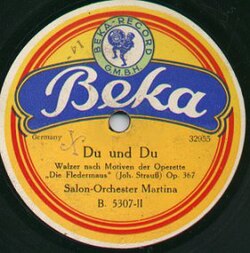
- Orchestras: The Beka London Orchestra, the Martina Salon Orchestra, the Meister Orchestra, and the Royal Cowes Minstrels.
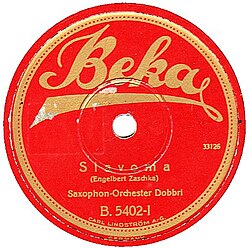
- Specialized Groups: The Dobbri Saxophone Orchestra, known for their contributions to the era's dance music.
An example of the label's output includes the 1925 recording of "Slawoma - Der neueste Tanz" (Slavoma) performed by Engelbert Zaschka and the Saxophon-Orchester Dobbri of Berlin.
Key Facts
- Founded: Approximately 1903 in Germany.
- Operational Period: 1903 to 1925.
- UK Market: Operated as Beka-Grand Records before World War I.
- Parent Company: Carl Lindström Company.
- Final Acquisition: Sold to Columbia Graphophone Company in 1926.
- Documentation: History and discography are maintained by the City of London Phonograph and Gramophone Society (CLPGS).
Summary of Beka Records
| Attribute | Details |
|---|---|
| Industry | Record Label |
| Origin | Germany |
| Active Years | 1903–1925 |
| UK Brand | Beka-Grand Records |
| Final Parent | Columbia Graphophone Company |
Frequently Asked Questions
When was Beka Records founded and when did it cease operations?
Beka Records was founded in Germany around 1903 and remained active until 1925.
Did Beka Records operate outside of Germany?
Yes, before World War I, the company produced gramophone records specifically for the United Kingdom market under the label Beka-Grand Records.
Who eventually acquired Beka Records?
Beka was a subsidiary of the Carl Lindström Company, which was subsequently sold to the Columbia Graphophone Company in 1926.
Where can I find a complete list of Beka Records releases?
A detailed history and a listing of known records issued by the label are published by the City of London Phonograph and Gramophone Society (CLPGS) as part of their Reference Series of books.
Which orchestras were associated with the label?
The label featured several ensembles, including the Beka London Orchestra, the Dobbri Saxophone Orchestra, the Martina Salon Orchestra, and the Meister Orchestra.