Beirut Hippodromes: From Roman Antiquity to Modern Racing
Beirut, the vibrant capital of Lebanon, possesses a unique sporting legacy that spans millennia. The city is home to two distinct hippodromes—ancient arenas designed for chariot racing and a modern facility dedicated to equestrian sports. Together, these sites offer a glimpse into the architectural evolution and cultural history of the region.
The Roman Hippodrome of Beirut
Discovered in 1988, the Roman Hippodrome is a significant archaeological site located in the Beirut Central District. Spanning 3,500 square meters, it represents one of the most impressive examples of Roman engineering in the Levant (the eastern Mediterranean region). It was the second such site discovered in Lebanon, following the Tyre Hippodrome.
Of the five known Roman hippodromes in the Levant—which also include sites in Caesarea (Israel), Jerash (Jordan), and Bosra (Syria)—the Beirut site is considered the grandest. Its scale is evidenced by amphitheaters several meters high and a race track exceeding 90 meters in length.
Preservation and Legal Battles
The survival of the Roman Hippodrome has been the subject of intense political and legal conflict. In 2009, Culture Minister Tamam Salam officially listed the site in the general inventory of historic buildings, decreeing that it be preserved in situ (in its original place) as a tourist landmark.
However, in March 2012, then-Culture Minister Gaby Layoun approved plans to construct a luxury residential complex over the ruins. This decision was met with fierce opposition from three former Culture Ministers—Tarek Mitri, Salim Wardé, and Tammam Salam—who argued for the site's protection. The Association for the Protection of the Lebanese Heritage (APLH) organized a protest march on March 24, 2012, to reverse the decision.
The legal struggle culminated on May 31, 2012, when a court suspended the Ministry's decision (N˚ 849) to dismantle the hippodrome. As a result of this litigation, the site remains protected.
Hippodrome du parc de Beyrouth
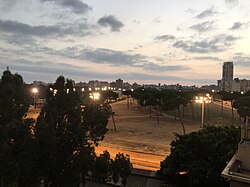
While the Roman ruins speak to the ancient past, the Hippodrome du parc de Beyrouth represents the city's modern era. Located in the Horsh district adjacent to Badaro, this horse-racing facility evolved from the "al-Marmah" hippodrome founded in 1893 in the town of Bir Hassan.
The vision for a Western-style hippodrome and casino complex was championed by wealthy Beirutis and supported by the wali (governor) of Beirut, Azmi Bey. In 1916, Alfred Sursock financed the project, agreeing to redevelop 600,000 square meters of the Beirut pine forest. This expansive project included a cinema, a public causeway, and a casino—the latter of which eventually served as the seat for the French mandate authorities in Lebanon.
Completed in 1921 by Amine and Bahjat Abdelnour, the facility reached a peak of global popularity in the 1960s. During this era, it was one of the busiest race tracks in the world, hosting races twice a week, 52 weeks a year.
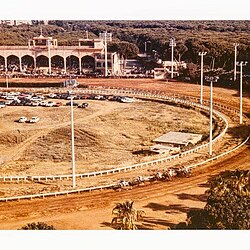
The site's history is also marked by conflict; on August 4, 1982, the Israeli army occupied the hippodrome during the Invasion of Lebanon.
Today, the facility is more than just a race track. It hosts the annual Garden Show & Spring Festival, an event attracting over 24,000 international visitors and 160 exhibitors. A notable highlight occurred at the 2012 festival when Meilland International, a French rose producer, introduced the "Beirut Rose," a variety cultivated specifically in tribute to the capital.
Key Facts
- Roman Site Scale: The Roman Hippodrome covers 3,500 m² with a track over 90 meters long.
- Regional Significance: Beirut hosts one of only five Roman hippodromes in the Levant.
- Modern Origins: The current hippodrome's precursor, al-Marmah, was founded in 1893.
- Peak Era: In the 1960s, the modern hippodrome held races 104 times per year.
- Legal Status: The Roman ruins were saved from residential development by a court suspension in May 2012.
| Feature | Roman Hippodrome | Hippodrome du parc de Beyrouth |
|---|---|---|
| Era | Roman Empire | Late 19th Century / Early 20th Century |
| Primary Use | Ancient Chariot Racing | Modern Horse Racing & Events |
| Key Date | Discovered 1988 | Completed 1921 |
| Current Status | Protected Archaeological Site | Active Racing and Event Facility |
Frequently Asked Questions
How many Roman hippodromes are there in the Levant?
There are five known Roman hippodromes in the Levant: one each in Beirut (Lebanon), Tyre (Lebanon), Caesarea (Israel), Jerash (Jordan), and Bosra (Syria).
Why was the Roman Hippodrome of Beirut almost destroyed?
In 2012, the Culture Ministry approved plans to build a luxury residential complex over the ruins, leading to protests and legal action by the Association for the Protection of the Lebanese Heritage (APLH).
Who financed the construction of the modern Beirut Hippodrome?
The project was financed by Alfred Sursock, who signed an agreement with the municipality of Beirut to redevelop 600,000 square meters of pine forest.
What is the Beirut Rose?
The Beirut Rose is a variety of rose created by the French producer Meilland International and presented at the 2012 Garden Show & Spring Festival as a tribute to the city.
What happened to the casino planned for the modern hippodrome site?
The structure intended for the casino eventually became the headquarters for the French mandate authorities in Lebanon.