Becker Friedman Institute: Advancing Economic Research at the University of Chicago
The Becker Friedman Institute (BFI) for Research in Economics serves as a premier collaborative hub for cross-disciplinary economic study. Established in June 2011 at the University of Chicago, the institute was formed by merging two previously independent research centers: the Milton Friedman Institute for Research in Economics and the Becker Center on Chicago Price Theory.
By integrating these resources, the BFI creates a centralized environment where scholars can apply rigorous economic frameworks to a vast array of societal challenges, ensuring that the University of Chicago remains at the forefront of global economic thought.
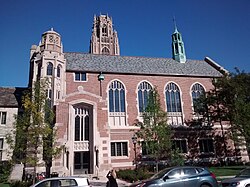
The Legacy of Becker and Friedman
The institute is named in honor of two Nobel Memorial Prize in Economic Sciences laureates: Milton Friedman (1912–2006) and his mentee, Gary S. Becker (1930–2014). Although their specific areas of focus differed, both men were united by the conviction that economics, when grounded in empirical research—the process of verifying theories through observed data—is an essential tool for understanding human behavior.
Milton Friedman is widely celebrated for his transformative contributions to macroeconomics (the study of economy-wide phenomena) and monetary economics. In contrast, Gary Becker is renowned for expanding microeconomic analysis (the study of individual and business decision-making) into unconventional territories, including the economics of marriage, family dynamics, criminal behavior, and racial discrimination.
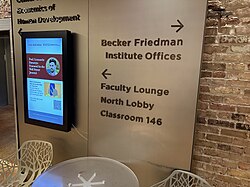
A Cross-Disciplinary Collaborative Model
The BFI operates as a bridge between several of the University of Chicago's most prestigious academic units. This collaboration includes the Booth School of Business, the Law School, the Department of Economics, and the Harris School of Public Policy.
To foster innovation, the institute organizes various academic activities, including:
- Research Conferences and Workshops: Events that bring together economists and scholars from related fields to refine ideas and share diverse perspectives.
- Visiting Scholars Program: An active initiative that invites external experts to collaborate with university faculty.
- Student Support: Dedicated programs designed to mentor and support students and promising young researchers.
Research Focus and Specializations
The institute maintains a diverse research portfolio, balancing traditional strengths with contemporary policy inquiries. Its work spans several critical domains:
Traditional Chicago Strengths
- Price Theory: The study of how prices are determined and how they allocate resources in an economy.
- Law and Economics: The application of economic theory to explain the effects of legal rules.
- Human Capital: The study of the economic value of a worker's experience and skills.
Contemporary Policy and New Methodologies
Beyond traditional theory, the BFI investigates urgent modern issues such as systemic risk (the risk of collapse of an entire financial system), fiscal imbalance, and policy uncertainty. The institute also explores the economics of the family and utilizes field experiments—conducting economic tests in real-world environments rather than controlled labs.
| Category | Details |
|---|---|
| Established | June 2011 |
| Location | University of Chicago |
| Leadership | Director: John A. List; Deputy Director: Chad Syverson |
| Collaborating Units | Booth School of Business, Law School, Dept. of Economics, Harris School of Public Policy |
| Core Focus Areas | Price Theory, Human Capital, Law and Economics, Field Experiments |
Key Facts
- The BFI was created by merging the Milton Friedman Institute and the Becker Center on Chicago Price Theory.
- It is named after Nobel laureates Milton Friedman and Gary Becker.
- The institute is directed by John A. List, with Chad Syverson as deputy director.
- Research is guided by an Institute Research Council consisting of distinguished faculty.
- The BFI integrates four major University of Chicago academic divisions.
Frequently Asked Questions
When was the Becker Friedman Institute established?
The institute was established in June 2011 at the University of Chicago.
Who are the namesakes of the institute?
The institute is named after Gary S. Becker and Milton Friedman, both of whom won the Nobel Memorial Prize in Economic Sciences.
What are the primary research areas of the BFI?
The BFI focuses on traditional strengths like price theory, human capital, and law and economics, as well as modern issues like systemic risk, fiscal imbalance, and field experiments.
Which university departments collaborate with the BFI?
The institute is a collaboration between the University of Chicago's Booth School of Business, Law School, Department of Economics, and the Harris School of Public Policy.
Who currently leads the institute?
The institute is directed by John A. List, supported by deputy director Chad Syverson.