Beagle 3: The Proposed Successor to the Beagle 2 Mars Mission
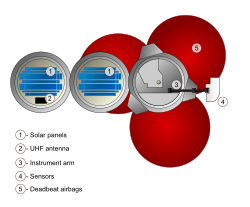
The quest to find evidence of life on the Red Planet has inspired numerous ambitious projects. Among these was Beagle 3 (also known as Beagle 2: Evolution), a proposed Mars lander mission designed to search for signs of life, whether past or present. Conceived as a follow-up to the British Beagle 2 mission—which unfortunately lost communication upon arrival—Beagle 3 aimed to refine the search for biological markers on the Martian surface.
The Vision Behind Beagle 3
The project was championed by Professor Colin Pillinger, the lead scientist of the original Beagle 2 mission. Pillinger envisioned a sophisticated operation where up to two landing craft would be deployed from an orbiter. This mission was intended to launch in 2009 as part of the European Space Agency's (ESA) Aurora Programme, a long-term strategic framework for the exploration of the solar system.
Following the tradition of its predecessor, the lander was named after the HMS Beagle, the historic ship that carried Charles Darwin during his influential voyage around the world.
Development and Partnerships
The development of Beagle 3 was not a solitary effort. EADS Astrium, a major aerospace company, contributed to the early development and provided funding to help bring Pillinger's vision to fruition. The primary objective of the mission was to provide critical support to the goals of the ESA Aurora programme, focusing on the scientific analysis of the Martian environment.
Challenges and Rejections
Despite the scientific ambition and early backing, Beagle 3 faced significant hurdles in securing a launch. In 2004, the European Space Agency rejected the project, ending its prospects within the Aurora Programme. Undeterred, Professor Pillinger attempted to find an alternative route to Mars by proposing that the lander hitch a ride on NASA's Mars Science Laboratory (MSL) mission. However, this proposal was also declined, ultimately preventing the mission from moving forward.
Key Facts
- Primary Goal: To search for past or present life on Mars.
- Lead Scientist: Professor Colin Pillinger.
- Proposed Launch Date: 2009.
- Funding/Development Partner: EADS Astrium.
- Proposed Frameworks: ESA Aurora Programme and NASA Mars Science Laboratory.
- Naming Origin: Named after the HMS Beagle, Charles Darwin's ship.
| Feature | Details |
|---|---|
| Alternative Name | Beagle 2: Evolution |
| Mission Type | Mars Lander |
| Proposed Deployment | Up to two landing craft from an orbiter |
| Status | Proposed (Not launched) |
Frequently Asked Questions
What was the main purpose of Beagle 3?
The primary objective of Beagle 3 was to search for evidence of life on Mars, looking for both current biological activity and signs of ancient life.
Who was the lead scientist for the project?
Professor Colin Pillinger, who also led the original Beagle 2 mission, was the driving force and lead scientist behind Beagle 3.
Why was the mission called Beagle 3?
The mission was named after the HMS Beagle, the ship used by Charles Darwin during his world voyage, continuing the naming convention of the Beagle 2 lander.
Did Beagle 3 ever launch?
No, Beagle 3 never launched. It was rejected by the ESA in 2004, and a subsequent proposal to join a NASA mission was also unsuccessful.
Which organizations were involved in the proposal?
The project involved Professor Colin Pillinger, EADS Astrium (funding and development), and proposals were submitted to the European Space Agency (ESA) and NASA.