BBC Radio Wiltshire: A History of Local Broadcasting
The evolution of local radio in Wiltshire reflects the changing demographics and administrative shifts of the region. From its inception as a community-focused information hub to its current role within the BBC local radio network, the station has navigated trademark disputes, organizational splits, and branding transformations to serve the people of Swindon and the wider county.
BBC Wiltshire Sound (1989–2002)
Launched on 4 April 1989, the station originally debuted as BBC Wiltshire Sound. Headquartered in Prospect Place, Swindon, the station avoided the name "BBC Radio Wiltshire" at launch because a competitor, GWR, held the trademarks for the words "Wiltshire" and "Radio" in various combinations.
The station's first voice on air was Paul Chantler, and its early visual identity featured the Westbury White Horse. During these formative years, the station established a reputation for reliable local programming, prioritizing news and essential information for the community.
Between 1991 and 1994, Programme Editor Mike Gray introduced several innovations. He provided a platform for 17-year-old Swindon student Mark Franklin, whose work eventually led to a role on Top of the Pops. The station also featured specialist music content, including contributions from jazz singer Rosemary Squires.
One of the most distinctive elements of this era was Acrebury, a long-running soap opera. In a remarkable feat of performance, presenter and actor Gerry Hughes voiced every single character in the show, earning him a Guinness World Record. To accommodate the geographical distance from Swindon, the city of Salisbury was also provided with its own dedicated breakfast show.
However, a virtual relaunch in 2000 brought significant changes. Both Acrebury and the Salisbury breakfast show were discontinued, and several presenters departed. These shifts sparked listener protests at the headquarters and negative coverage in local newspapers. This relaunch also introduced separate programming for Swindon to reflect the town's rapid growth and its new status as a unitary authority, bringing in new presenters such as Dan Chisholm and Peter Heaton-Jones.
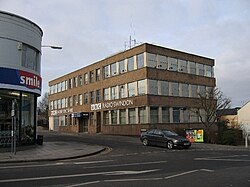
BBC Radio Wiltshire and BBC Radio Swindon (2002–2008)
The distinction between the town and the county was formalized on 11 November 2002, when the service split into two distinct entities: BBC Radio Swindon, serving the town and its immediate surroundings, and BBC Radio Wiltshire, covering the rest of the county.
While the two stations initially maintained separate schedules for most of the day, this autonomy gradually diminished. By 2007, following various schedule adjustments and staff departures, only the breakfast shows remained unique to each station, with all other content being simulcast across both frequencies.
BBC Wiltshire (2008–2020)
On 21 April 2008, the two services merged back into a single entity branded as BBC Wiltshire. This change aligned the station with the broader BBC local radio network policy of using a single umbrella name for both radio and online services.
Initially, Swindon maintained a separate breakfast show under the branding "Swindon's BBC Wiltshire." Over time, however, all separate opt-outs were removed, and all programs became synchronized across all BBC Wiltshire frequencies.
BBC Radio Wiltshire (2020–Present)
On 9 March 2020, the station reverted to the name BBC Radio Wiltshire to better accommodate a new jingle package. In recent years, the station has seen further changes to its output; as of the autumn of 2023, local programming was reduced to eight hours a day on weekdays and a four-hour sports program on Saturday afternoons.

Key Facts
- Launch Date: 4 April 1989.
- Original Name: BBC Wiltshire Sound (due to GWR trademark restrictions).
- World Record: Gerry Hughes held a Guinness World Record for voicing all characters in the soap opera Acrebury.
- Major Split: Divided into BBC Radio Swindon and BBC Radio Wiltshire in November 2002.
- Current Status: Local programming is limited to 8 hours on weekdays and 4 hours on Saturdays (as of late 2023).
Station Evolution Summary
| Period | Station Name(s) | Key Structural Feature |
|---|---|---|
| 1989–2002 | BBC Wiltshire Sound | Single station; featured Acrebury soap opera. |
| 2002–2008 | BBC Radio Swindon / BBC Radio Wiltshire | Split into two services for town and county. |
| 2008–2020 | BBC Wiltshire | Merged umbrella brand for radio and online. |
| 2020–Present | BBC Radio Wiltshire | Reverted name for branding; reduced local hours. |
Frequently Asked Questions
Why was the station not called BBC Radio Wiltshire when it launched?
The station was named BBC Wiltshire Sound because the competitor GWR owned the trademarks for the words "Wiltshire" and "Radio" in any combination at that time.
What was Acrebury?
Acrebury was a long-running soap opera broadcast on the station, notable for the fact that every character was voiced by a single person, Gerry Hughes.
When did the station split into two separate services?
The split occurred on 11 November 2002, creating BBC Radio Swindon for the town and BBC Radio Wiltshire for the rest of the county.
Who was the first presenter heard on the station?
The first presenter to go on air when the station launched in 1989 was Paul Chantler.
How much local programming is currently broadcast?
Following changes in autumn 2023, the station broadcasts eight hours of local programming on weekdays and a four-hour sports show on Saturdays.