Bauxite: The Primary Source of Global Aluminium Production
Bauxite is a sedimentary rock characterized by a high aluminium content, serving as the world's primary source for both aluminium and the rare metal gallium. Named after the village of Les Baux in Provence, France, where it was discovered by geologist Pierre Berthier in 1821, this ore is essential to modern industrial manufacturing.
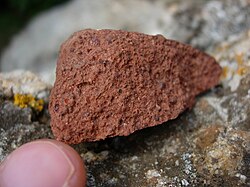
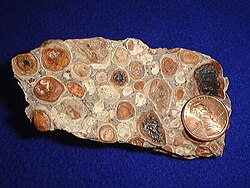
Visually, bauxite appears dull in luster and typically presents in shades of reddish-brown, white, or tan. Its composition is a complex mixture of aluminium minerals—specifically gibbsite (Al(OH)3), boehmite (γ-AlO(OH)), and diaspore (α-AlO(OH))—combined with iron oxides like goethite and hematite, the clay mineral kaolinite, and trace amounts of anatase and ilmenite.
Key Facts
- Primary Use: The main global source of aluminium and gallium.
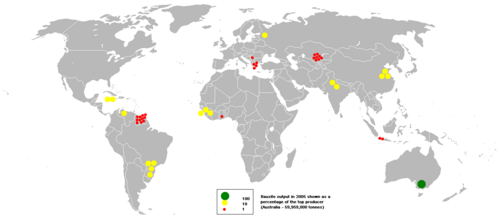
- Top Producers: Guinea is the leading producer, followed by Australia and China.
- Mining Method: Primarily extracted via strip mining due to its proximity to the surface.
- Processing: Converted to alumina via the Bayer process and then to aluminium via the Hall-Héroult process.
- Environmental Risk: Produces "red mud," a highly alkaline byproduct that can contaminate ecosystems.
Formation and Classification
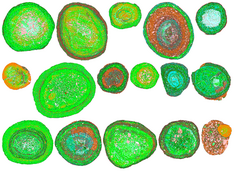
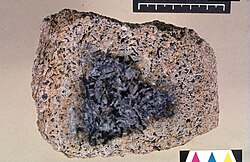
While various classification schemes exist, a prominent distinction made by Vadász in 1951 separates bauxite into two main types: lateritic bauxites (silicate bauxites) and karst bauxite ores (carbonate bauxites). The specific origin of these deposits can vary by region; for example, analysis of Jamaican soils suggests that some bauxite originated from Miocene volcanic ash deposits resulting from volcanic activity in Central America.
Production and Global Reserves
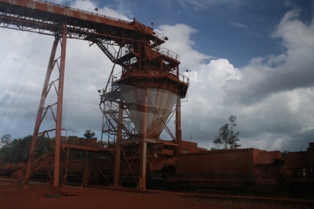
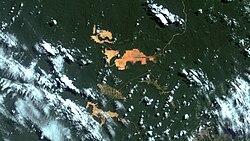
Bauxite is almost always found near the surface with minimal overburden (the rock and soil overlying the mineral deposit), making strip mining the most efficient extraction method. Because of this shallow depth, the process involves removing vegetation and topsoil to expose the ore.
While reserves are vast, the industry is increasingly looking toward aluminium recycling. Recycling requires significantly less electric power than primary production from ore, which may help extend the lifespan of the world's remaining bauxite reserves.
The Process of Aluminium Production
As of 2010, roughly 70% to 80% of dry bauxite is processed into aluminium through a two-stage industrial sequence. Bauxite is categorized by its end-use as metallurgical, abrasive, cement, chemical, or refractory.
The Bayer Process
The first stage is the Bayer process, where bauxite is heated in a pressure vessel with a sodium hydroxide solution at temperatures between 150 and 200°C (300 to 390°F). This dissolves the aluminium as sodium aluminate. The remaining undissolved waste, known as bauxite tailings, contains silica, titania, calcia, and iron oxides. Once filtered, pure gibbsite is precipitated and then heated in rotary kilns or fluid flash calciners to over 1,000°C (1,830°F) to create aluminium oxide (Al2O3), or alumina.
The Hall-Héroult Process
The second stage is the Hall-Héroult process. The aluminium oxide is dissolved in molten cryolite at approximately 960°C (1,760°F). An electric current is then passed through the molten substance via electrolysis to yield pure metallic aluminium.
Gallium and Other Minerals
Beyond aluminium, bauxite is the primary source of gallium. During the Bayer process, gallium accumulates in the sodium hydroxide liquor and can be extracted using methods such as ion-exchange resin. However, efficiency is low; at a typical feed concentration of 50 ppm, only about 15% of the gallium is extractable, with the rest remaining in the red mud or aluminium hydroxide streams. Bauxite is also considered a potential source for vanadium.
Environmental and Social Impacts
The extraction and processing of bauxite carry significant ecological and social costs. Strip mining leads to the complete loss of local biodiversity, habitat destruction, and permanent alterations to soil and hydrological characteristics.
The Danger of Red Mud
A critical byproduct of the Bayer process is red mud, a highly alkaline sludge with a pH of around 13. This substance contains compounds like sodium aluminosilicate and calcium titanate that do not break down naturally. If leaked, red mud can cause total extinction of life in local waterways, as seen in the 2010 Marcal River spill in Hungary. In dry form, it becomes a dust that is linked to cancer, birth defects, and lung disease.
Social Conflict and Indigenous Rights
Mining often occurs on traditional indigenous lands, leading to disputes over land expropriation, food contamination, and water access. Notable conflicts have occurred in:
- Guinea: Significant unrest in the Boké Region, resulting in road blockades and loss of life.
- Ghana: Controversy over mining in the Atewa range, an ecologically vital evergreen forest reserve.
- Vietnam: Nationwide debate and government repression following proposals to mine the central highlands.
- India: Violent clashes between police and Indigenous peoples in the Rayagada district of Odisha over tribal land rights.
Maritime Safety and Liquefaction
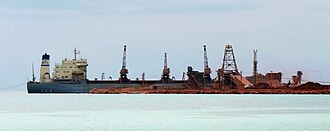
When transported as bulk cargo, bauxite is classified as a Group A cargo. If the ore is excessively moist, it can undergo liquefaction, where the solid cargo behaves like a liquid. This creates a "free surface effect," causing the cargo to shift rapidly and potentially capsize the vessel, as suspected in the 2015 sinking of the MS Bulk Jupiter. To mitigate this, the "can test" is used: a sample is struck against a surface; if a moist slurry forms, the cargo is likely to liquefy.
| Category | Details |
|---|---|
| Primary Minerals | Gibbsite, Boehmite, Diaspore |
| Impurity Minerals | Goethite, Hematite, Kaolinite, Anatase, Ilmenite |
| Key Processing Steps | Bayer Process → Hall-Héroult Process |
| Major Byproducts | Red Mud (Alkaline sludge), Gallium |
| Top Producing Nations | Guinea, Australia, China |
Frequently Asked Questions
What is the difference between bauxite and aluminium?
Bauxite is the raw sedimentary ore (the rock) extracted from the earth, while aluminium is the pure metallic element extracted from that ore through chemical and electrical processing.
How is bauxite mined?
Because bauxite deposits are typically found very close to the earth's surface, they are extracted using strip mining, which involves removing the overlying soil and vegetation.
What is red mud and why is it dangerous?
Red mud is a highly alkaline byproduct of the Bayer process. With a pH of around 13, it can contaminate water and soil, killing local wildlife, and can cause serious health issues like lung disease when inhaled as dust.
Why is bauxite considered a risk for shipping?
Bauxite is a Group A cargo that can liquefy if it contains too much moisture. This shift in state can cause the cargo to move suddenly, destabilizing the ship and potentially leading to it sinking.
Can gallium be recovered from bauxite?
Yes, gallium accumulates in the sodium hydroxide liquor during the Bayer process and can be extracted using methods such as ion-exchange resin, though extraction efficiency is typically low.