Exploring Baubau: The Cultural and Economic Heart of Buton Island
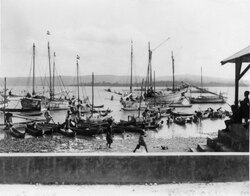
Located on the southwest coast of Buton Island in Southeast Sulawesi, Indonesia, Baubau is a city steeped in history and strategic importance. Once the capital of the Sultanate of Buton and a colonial administrative seat, it has evolved into a vital economic hub for the region. Today, Baubau serves as the second-largest city in Southeast Sulawesi, blending its rich maritime heritage with a growing modern economy.
Key Facts
- Location: Southwest coast of Buton Island, Southeast Sulawesi, Indonesia.
- City Status: Achieved on 21 June 2001.
- Population: Estimated at 165,145 (mid-2025).
- Economic Role: The primary economic center of the Buton Island region.
- Major Languages: Indonesian (national) and Wolio (regional).
- Topography: Characterized by mountains, hills, and a long coastline.
Geography and Climate
Baubau occupies a diverse landscape consisting primarily of mountains and hills that rise above a long coastline. The terrain features land slopes of up to 40%, with altitudes ranging from sea level to 100 meters. The soil types found in the area include cambisol, podzol, and latosol; however, these soils are relatively infertile, making the region less suitable for large-scale farming.
The city experiences a tropical climate. During the day, temperatures typically range between 29°C and 33°C, while nighttime temperatures generally stay between 20°C and 29°C.
History and Governance
The history of Baubau is deeply intertwined with the Sultanate of Buton. It previously served as the capital of the entire Southeast Sulawesi regency until 1955, when the administrative center moved to the neighboring city of Kendari. Following Indonesian independence, the political landscape shifted from the sultanate to local political figures, leading to the formation of a local parliament.
Administratively, the city is divided into eight districts (kecamatan). These districts vary significantly in size and population density. For example, Batupoaro is the most densely populated district, while Sorawolio is the largest by land area.
Administrative Districts of Baubau
| District Name | Area (km²) | Estimated Population | Admin Centre |
|---|---|---|---|
| Betoambari | 31.60 | 23,132 | Katobengke |
| Murhum | 5.98 | 21,282 | Lamangga |
| Batupoaro | 1.88 | 27,154 | Wameo |
| Wolio | 24.38 | 45,000 | Wangkanapi |
| Kokalukuna | 17.51 | 21,153 | Waruruma |
| Sorawolio | 103.76 | 9,164 | Kaisabu Baru |
| Bungi | 75.79 | 8,875 | Liabuku |
| Lea-Lea | 32.97 | 9,385 | Kantalai |
Economy and Industry
Baubau is a significant economic driver for the province. In 2023, the city's Gross Regional Domestic Product (GRDP) was valued at 7.449 trillion rupiah. The economy is fueled by several key sectors:
- Trade and Retail: The largest contributor at 21.44%.
- Construction: Contributing 21.01%.
- Agriculture: Accounting for 15.60%.
- Services: The fastest-growing sector, seeing an 11.05% increase between 2022 and 2023.
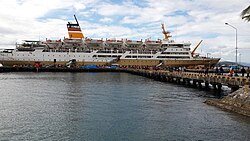
The Murhum Port plays a crucial role in local commerce, supporting both the fisheries industry and the asphalt industries from the nearby Buton Regency. Additionally, the city hosts numerous small and micro-industries, which provided employment for over 8,000 people in 2020.
Culture and Demographics
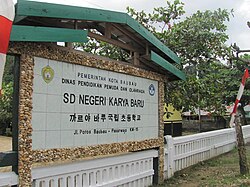
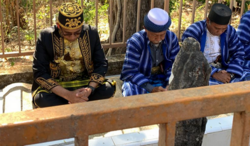
The cultural identity of Baubau is centered on the Butonese people. While Indonesian is the national language, Wolio remains a vital regional language and is taught in local schools. Interestingly, the city is also home to the Cia-Cia language, which gained international recognition for its attempt to use the Korean Hangul script as a writing system.
Demographically, the city is predominantly Muslim (96.65%), with smaller Hindu, Protestant, Catholic, and Buddhist communities. The population is diverse, including migrants from the Buginese, Moluccan, Javanese, and Sundanese ethnic groups.
Historical and Religious Sites
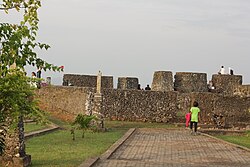
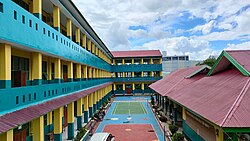
Baubau is home to numerous historical landmarks, including the Wolio Fortress and various monuments dating back to the early independence era. Religious life is also prominent, with the Islamic Center of Baubau serving as a major landmark.
Frequently Asked Questions
What is the main language spoken in Baubau?
The national language is Indonesian, but the major regional language is Wolio, which was the official language of the former Sultanate of Buton.
Is Baubau a good place for large-scale farming?
No, the soil types in Baubau (cambisol, podzol, and latosol) are generally not fertile and are considered relatively unsuitable for large-scale agricultural operations.
What are the primary drivers of Baubau's economy?
The economy is primarily driven by trade, retail, construction, and the service sector, supported by maritime activities through Murhum Port.
How diverse is the population of Baubau?
While most inhabitants are Butonese, the city is home to various migrant groups, including Buginese, Moluccans, Javanese, and Sundanese people.
What is the climate like in Baubau?
Baubau has a tropical climate with warm temperatures throughout the year, typically ranging from 20°C at night to 33°C during the day.