Bathing History and Evolution: From Ancient Rituals to Modern Hygiene
Bathing is the act of immersing the body, either partially or wholly, typically in water, though other mediums like hot air are also used. While most commonly associated with personal cleansing and hygiene, bathing serves a diverse array of purposes, ranging from spiritual religious rituals and leisure to medical treatments such as hydrotherapy, ice baths, and mud baths.
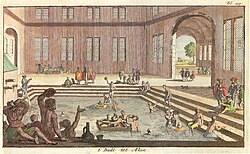
The experience of bathing varies wildly based on custom and availability. In modern settings with indoor plumbing, daily private showers or baths are the norm. However, communal bathing traditions—such as the hammams of the Middle East, saunas, banyas, and Japanese sentō—continue to provide both hygienic and vital social functions.
Key Facts
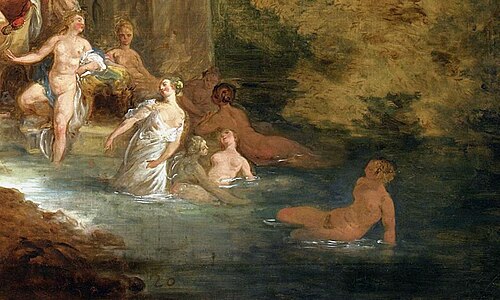
- Ancient Origins: Bathing in China dates back 3,000 years to the Shang dynasty.
- Social Evolution: Early Japanese public baths were often mixed-gender until the 1870s.
- Medical Shift: The 18th century saw a rise in therapeutic bathing, promoting cold water for health.
- Victorian Innovation: The "Improved" Turkish bath introduced dry hot-air bathing to Britain in 1856.
- Public Health: The 19th century marked the rise of municipal wash-houses to improve working-class health.
Bathing in the Ancient World

Evidence of sophisticated bathing practices appears early in human history. In ancient China, during the Shang dynasty (1600–1046 BCE), archaeological finds at the Yinxu ruins reveal the use of cauldrons for boiling water and skin scrapers for removing dead skin. By the Han dynasty (202 BC – AD 220), bathing had become so integrated into society that officials were granted a day's leave every five days for home bathing, marking the first instance of a bank holiday for hygiene.
Further evidence of luxury in ancient China includes 2,000-year-old baths in Xi'an, featuring intricate tiles and advanced sewage systems.
The Evolution of Japanese Bathing Culture
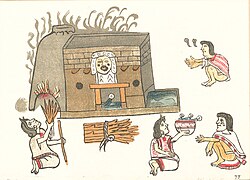
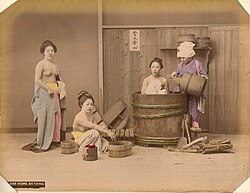
Japan has a rich history of communal bathing. The first public bathhouse was recorded in 1266, and the first sentō (public bath) was established in Edo (modern Tokyo) in 1591. Early steam baths, known as iwaburo (rock pools) or kamaburo (furnace baths), were often built into stone vaults or natural caves.
In these early iwaburo, seawater was poured over wood-heated rocks to create steam. These facilities were dark and lacked gender segregation, which eventually led to their abolition in 1870 on moral and hygienic grounds. During the Edo period (1603–1868), hot-water baths (yuya) were popular in Edo, while steam baths (mushiburo) prevailed in Osaka. Professional "bathing girls" (yuna) were once employed to scrub guests' backs, though this practice and mixed bathing were generally prohibited by 1841.
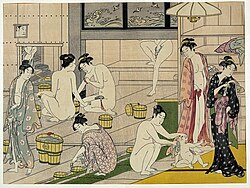
![Sento bathing scene. Japanese woman bathing in a wooden tub (woodcut by Torii Kiyomitsu, late 18th century)[76]](/images/f4/09/f40951ad160d14436d7547d25813f95e3804e6c2c7ab527f1032a3cdef03ffce.jpg)
Therapeutic Bathing and the Modern Era
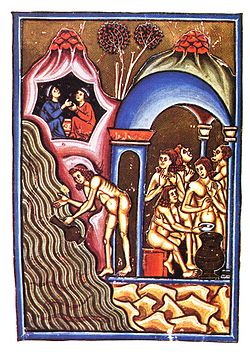
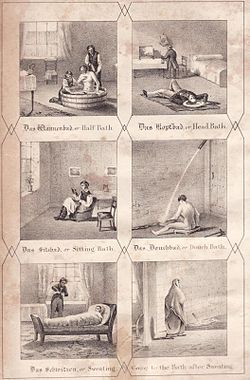
Public perception of bathing shifted in the 18th century as the medical community began advocating for its health benefits. Sir John Floyer, a physician from Lichfield, published a seminal work on cold bathing in 1702, which influenced later practitioners like Dr. J. S. Hahn, who wrote about the healing virtues of cold water in 1738.
The Rise of Public Wash-houses
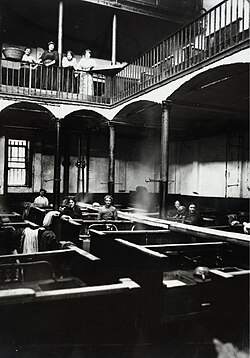
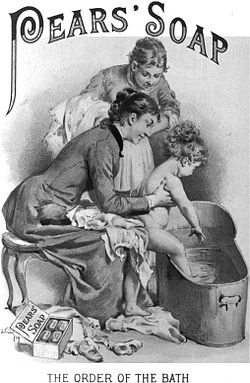
The 19th century saw a revival of large-scale public bathing. The first modern public baths opened in Liverpool in 1829, followed by the first warm fresh-water public wash-house in 1842. In cities like Birmingham, private baths were marketed as cures for ailments such as gout and diabetes. By 1845, there was a concerted effort to provide the working class with access to baths to combat widespread public health issues.
Victorian Turkish Baths
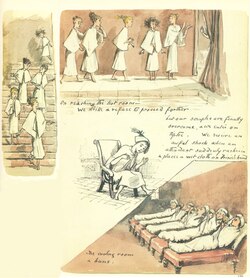
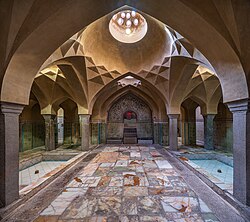
Inspired by the Islamic hammam, Victorian Turkish baths were popularized in Britain by David Urquhart. In 1856, Dr. Richard Barter developed the "Improved" Turkish or Irish bath, realizing that the body could tolerate higher temperatures in dry hot air than in steam. This innovation led to the opening of over 700 such baths across the British Isles and eventually spread to Australia, Canada, New Zealand, and the United States.
Bathing as an Artistic Motif
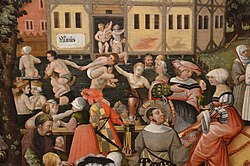
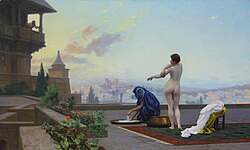
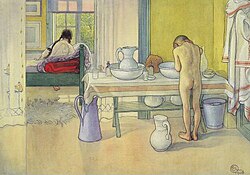
The act of bathing has long fascinated artists, serving as a subject for exploring the human form, intimacy, and nature. From the Renaissance works of Albrecht Dürer and Titian to the Impressionist scenes of Edgar Degas and Pierre-Auguste Renoir, bathing has been a recurring theme in global art.
Summary of Bathing Traditions
| Type | Primary Medium | Key Characteristic | Historical Context |
|---|---|---|---|
| Sentō | Hot Water | Communal, social function | Japan (Edo period to present) |
| Hammam | Steam/Water | Islamic adaptation of Roman baths | Ottoman Empire / Middle East |
| Victorian Turkish | Dry Hot Air | Therapeutic, high temperature | Britain (mid-19th century) |
| Hydrotherapy | Cold/Hot Water | Medical and remedial use | 18th Century Europe |
Frequently Asked Questions
What is the difference between a hammam and a Victorian Turkish bath?
A hammam is a traditional Islamic bathhouse using steam and water, whereas the Victorian Turkish bath was a 19th-century British adaptation that utilized dry hot air to achieve higher, more therapeutically effective temperatures.
When did public bathing become a matter of public health in England?
While private baths existed earlier, the mid-1840s marked a turning point in Birmingham and other cities where lectures and policies urged the provision of public baths specifically to address the health problems of the working class.
How did early Japanese steam baths operate?
Early iwaburo (rock pools) functioned by burning wood to heat rocks, then pouring seawater over them to create steam. These were often located in natural caves or stone vaults with small entrances to retain heat.
Who were the yuna in Japanese history?
Yuna were "bathing girls" employed in early Japanese bathhouses to assist guests by scrubbing their backs and washing their hair. Their employment was generally prohibited by 1841.
What was the significance of the Shang dynasty's bathing tools?
Archaeological finds from the Shang dynasty, such as cauldrons for boiling water and skin scrapers, prove that sophisticated personal cleansing practices existed in China as far back as 3,000 years ago.