Baseball Coaching Roles and Responsibilities
In professional baseball, the manager serves as the primary decision-maker, determining the starting lineup, batting order, and in-game substitutions. However, the manager does not work alone. A sophisticated network of coaches assists in the daily operations and strategic execution of the game. These roles are analogous to assistant coaches in other sports, providing specialized expertise to ensure the team functions smoothly.
Key Facts
- Uniform Tradition: Most coaches wear numbered uniforms, a practice stemming from the era of player-managers.
- Staff Limits: Major League Baseball (MLB) generally restricts uniformed staff to one manager and six coaches, with a seventh permitted as an assistant hitting coach since 2013.
- Hierarchy: The bench coach serves as the second-in-command and acting manager if the head manager is unavailable.
- Specialization: Modern coaching staffs include dedicated experts for pitching, hitting, and base running.
The Evolution of the Coaching Staff
Full-time professional coaching began in 1909 with the New York Giants. By the 1920s, teams typically employed two coaches stationed near first and third base. Following World War II, the staff expanded to include pitching and bullpen coaches as managers moved permanently into the dugout. The 1960s saw the rise of batting and bench coaches.
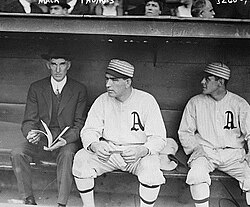
While uniforms are now standard, history has seen notable exceptions. Connie Mack of the Philadelphia Athletics famously wore a black suit for 50 years, and Burt Shotton of the Brooklyn Dodgers wore street clothes with a team jacket. Joe McCarthy of the Yankees and Red Sox wore a uniform but opted for no number on his back.
Core Coaching Positions
The Bench Coach
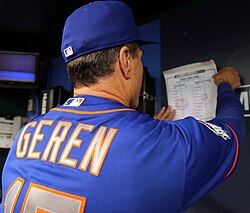
The bench coach is the manager's primary advisor and the team's second-in-command. They relay scouting information from the front office and provide situational strategy advice during the game. Beyond the dugout, they coordinate spring training and daily practice routines. If a manager is ejected or suspended, the bench coach assumes the role of acting manager.
Pitching and Bullpen Coaches
The pitching coach focuses on the development and performance of the starting and relief pitchers. They may adjust a pitcher's arm angle, rubber placement, or pitch selection. While the manager visits the mound for strategy or substitutions, the pitching coach typically visits to discuss mechanics. Historically, these coaches were often former catchers, though most are now former pitchers.
The bullpen coach works specifically with relief pitchers. Unlike the pitching coach, they remain in the bullpen for the duration of the game, preparing relievers to enter the match and offering technical advice.
The Hitting Coach
Hitting coaches focus on batting techniques and form. They monitor swings during games and oversee cage sessions and pregame practice. Modern hitting coaches utilize video analysis—the use of video technology to identify and correct swing flaws—to accelerate player improvement and scout opposing pitchers.
On-Field Base Coaches
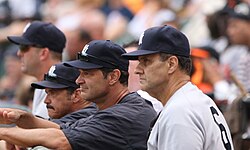
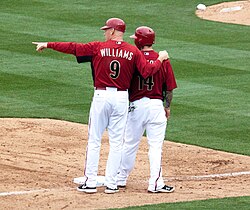
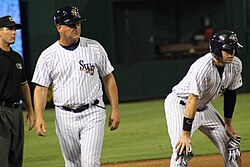
Two coaches are stationed in foul territory during offensive play: the first base coach and the third base coach.
- First Base Coach: Primarily manages the batter's transition to first base and assists runners already on first. Because their in-game duties are lighter, they often take on additional roles as infield, outfield, or catching instructors.
- Third Base Coach: Holds significant responsibility, making split-second decisions on whether to send a runner home based on the runner's speed, the fielder's arm strength, and the ball's position.
Additional Staff and Specialized Roles
Beyond the uniformed staff, teams employ various specialists who typically wear street clothes due to MLB roster restrictions. These include:
- Athletic Trainer: Essential for player health and injury recovery.
- Strength and Conditioning Coach: Focuses on physical fitness and performance.
- Bullpen Catcher and Batting Practice Pitcher: Provide necessary support during warm-ups and practice.
| Role | Primary Responsibility | Key Location | Uniformed? |
|---|---|---|---|
| Manager | Lineups, substitutions, and overall strategy | Dugout | Yes |
| Bench Coach | Manager's advisor and second-in-command | Dugout | Yes |
| Pitching Coach | Pitcher mechanics and pitch selection | Dugout/Mound | Yes |
| Bullpen Coach | Preparing relief pitchers | Bullpen | Yes |
| Hitting Coach | Batting technique and video analysis | Dugout/Cages | Yes |
| Base Coaches | Directing baserunners and relaying signals | First/Third Base | Yes |
Amateur and Youth Baseball
In minor league and amateur baseball, coaching staffs are smaller. A manager, pitching coach, and hitting coach often split the duties of base and bullpen coaches. In U.S. college baseball, the professional "manager" role is instead titled head coach.
Youth baseball coaching emphasizes safety and fundamentals. Responsibilities include inspecting equipment and fields, maintaining positive communication with umpires and administrators, and ensuring a fun, productive environment where all players—not just the stars—can learn the game.
Frequently Asked Questions
Who takes over if the manager is ejected from a game?
The bench coach assumes the role of acting manager for the remainder of the game.
What is the difference between a pitching coach and a bullpen coach?
The pitching coach manages overall development and makes mound visits, while the bullpen coach stays in the bullpen to prepare relief pitchers for entry into the game.
Why do baseball coaches wear uniforms?
This tradition began because managers were historically selected from the active player roster.
What is video analysis in hitting coaching?
It is the use of video technology to analyze a player's swing, allowing the coach to illustrate problem areas and make adjustments more quickly.
How many uniformed coaches are allowed in an MLB game?
MLB generally restricts the staff to one manager and six coaches, though a seventh (assistant hitting coach) has been permitted since 2013.