Baruch College: A History of Public Higher Education and Business Excellence
Baruch College stands today as a premier senior college within the City University of New York (CUNY) system, but its origins are deeply rooted in a pioneering vision for accessible education. The institution's lineage traces back to 1847 with the founding of the Free Academy, the first institution of free public higher education in the United States. Established via the New York State Literature Fund to support students who could not afford private colleges, the academy was brought to life by the Committee of the Board of Education of the City of New York, led by John L. Mason, J.S. Bosworth, and Townsend Harris.
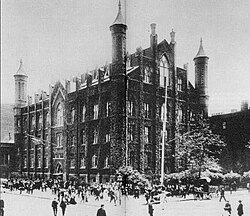
From the Free Academy to a Specialized Business School
The Free Academy eventually evolved into the College of the City of New York, known today as The City College of New York (CCNY). As the demand for professional training grew, the City College School of Business and Civic Administration was established in 1919. By December 15, 1928, the school laid the cornerstone for its own dedicated facility, which was regarded at the time as the largest institution for business education in the United States.
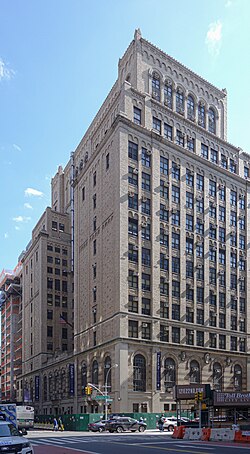
While the school initially did not admit women, this policy changed by the 1930s. The growth of the institution was rapid; by 1935, CCNY reached a peak enrollment of 40,000 students, with the School of Business alone hosting over 1,700 students in its day session.
The Evolution into Baruch College
In 1953, the institution was renamed the Baruch School of Business. This honor was bestowed in recognition of Bernard Baruch, a 1889 CCNY graduate who became a renowned financier and advisor to two U.S. presidents. Following the 1961 New York State Education Law that created the CUNY system, the school was officially spun off as Baruch College in 1968, becoming an independent senior college.
The Debate Over Location and Mission
The late 1960s brought a significant debate regarding the college's physical location. In 1967, Manhattan Borough President and civil rights activist Percy Sutton proposed moving the college to Harlem. Sutton argued that such a move would combat institutional segregation—the systemic separation of students based on race—and foster socialization between students of color and their white peers.
However, the Student Council and Chancellor Albert Bowker opposed the move. The Council argued that a relocation would inconvenience faculty and students, while Bowker maintained that the college's specialized business curriculum required it to remain within a business district in lower Manhattan.
Leadership and Modern Expansion
The college has been shaped by a series of influential presidents who expanded its academic rigor and physical footprint:
- Robert C. Weaver (1969–1970): The first president of the independent college and former Federal Secretary of Housing and Urban Development.
- Joel Edwin Segall (1977–1990): Established the college's permanent home on Lower Lexington Avenue and recruited high-profile faculty.
- Matthew Goldstein (1991–1998): Raised admissions standards and founded the School of Public Affairs in 1994.
- Edward Regan (2000–2004): Oversaw increases in student retention and test scores. During his tenure, the Vertical Campus opened and the college joined the Macaulay Honors College (formerly the CUNY Honors College).
- Kathleen Waldron (2004–2009): Led the "Baruch Means Business" $150 million capital campaign, resulting in the renaming of the Vertical Campus, the 23rd Street building, and the Performing Arts complex after major donors.
- Mitchel Wallerstein (2010–2020): Focused on global degree programs and social mobility, achieving the highest graduation rate in the CUNY system.
Currently, the college is led by President S. David Wu, who took office on July 1, 2020. The institution's prominence in the community was further recognized in October 2025, when the nearby 23rd Street subway station was renamed 23rd Street–Baruch College.
Key Facts
- Founded: Roots date back to the Free Academy (1847).
- System: Part of the City University of New York (CUNY).
- Naming: Named after Bernard Baruch, a financier and CCNY alumnus.
- Milestones: Established as an independent college in 1968.
- Infrastructure: Features the Vertical Campus and the 23rd Street building.
- Recognition: Ranked as a top college for social mobility under Mitchel Wallerstein.
| President | Tenure |
|---|---|
| Robert Weaver | 1968–1970 |
| Clyde Wingfield | 1971–1976 |
| Joel Segall | 1977–1990 |
| Matthew Goldstein | 1991–1998 |
| Edward Regan | 2000–2004 |
| Kathleen Waldron | 2004–2009 |
| Mitchel Wallerstein | 2010–2020 |
| S. David Wu | 2020–Present |
Frequently Asked Questions
What is the origin of Baruch College?
Baruch College traces its roots to the Free Academy, founded in 1847 as the first free public institution of higher education in the U.S., which later became The City College of New York (CCNY).
Who was Bernard Baruch?
Bernard Baruch was an 1889 graduate of CCNY who became a prominent financier and served as an adviser to two U.S. presidents; the college was named in his honor in 1953.
Why is Baruch College located in lower Manhattan?
Despite proposals to move to Harlem in the 1960s, the college remained in lower Manhattan because its specialized business curriculum required proximity to the city's business district.
What is the "Baruch Means Business" campaign?
It was a $150 million capital campaign led by President Kathleen Waldron that significantly increased alumni giving and funded the renaming of key campus facilities.
When did Baruch College become an independent institution?
The Baruch School of Business was spun off as Baruch College, an independent senior college within the CUNY system, in 1968.