Banjo Paterson: The Voice of the Australian Bush
Andrew Barton "Banjo" Paterson was more than just a writer; he was a cultural architect who helped define the spirit of colonial Australia. As a poet, journalist, and author, Paterson captured the rugged beauty and the resilient character of the Australian interior, transforming the "bush"—the remote rural wilderness—into a symbol of national identity.
Widely regarded as one of the greatest writers of Australia's colonial period, Paterson is best known for his evocative ballads that romanticized the life of stockmen and settlers. His work remains a cornerstone of Australian literature, blending folklore with a keen observation of the land.
Key Facts
- Full Name: Andrew Barton Paterson.
- Pseudonym: "The Banjo," named after his favorite horse.
- Most Famous Work: "Waltzing Matilda," often considered Australia's unofficial national anthem.
- Literary Movement: A leading figure of the Bulletin School of Australian literature.
- Professional Background: Trained as a solicitor before pursuing a full-time literary career.
- Major Themes: Rural life, colonial identity, and the allure of the Australian bush.
Early Life and Legal Career
Born in 1864 at "Narrambla" near Orange, New South Wales, Paterson grew up immersed in the rural landscapes that would later inspire his poetry. Before becoming a household name in literature, he pursued a career in law. He worked as a law clerk for a Sydney firm led by Herbert Salwey and was officially admitted as a solicitor in 1886.
Despite his legal training, Paterson's passion lay in writing. In 1885, he began submitting poetry to The Bulletin, a nationalist literary journal that served as the primary platform for writers seeking to establish a distinct Australian voice. His early contributions included a poem critical of the British war in the Sudan.
The Rise of "The Banjo"
Throughout the 1890s, Paterson became one of the most popular contributors to The Bulletin. Writing under the pseudonym "The Banjo," he developed a friendly but spirited rivalry with fellow poet Henry Lawson. While Lawson often focused on the hardships of rural life, Paterson highlighted its allure and adventure.
This period saw the creation of his most enduring masterpieces, including "Clancy of the Overflow" (1889) and "The Man from Snowy River" (1890). In 1895, he penned "Waltzing Matilda," a ballad that has since become the most recorded Australian song in history.
Journalism and Global Adventures
Paterson's curiosity extended beyond the Australian bush. He served as a war correspondent during the Boxer Rebellion from 1901 to 1902, documenting his experiences and meetings with figures such as George "Chinese" Morrison. In 1902, he traveled to the New Hebrides (now Vanuatu) to report on an agricultural settlement scheme at Annandale in Espiritu Santo, producing nine articles for the Herald.
His leadership skills led him to editorial roles, serving as the editor of Samuel Bennett's Evening News (1903–1908) and the Town and Country Journal (1907–1908).
Personal Life and Later Years
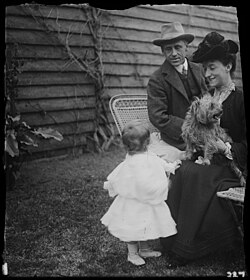
On April 8, 1903, Paterson married Alice Emily Walker at St Stephen's Presbyterian Church in Tenterfield, New South Wales. The couple settled in Woollahra, where they raised two children, Grace and Hugh.
In his later years, Paterson continued to write and compose. He expanded his repertoire beyond poetry to include novels, short stories, and children's literature. He was awarded the CBE (Commander of the Order of the British Empire) for his contributions to literature. He passed away on February 5, 1941, in Sydney at the age of 76.
Literary Works and Legacy
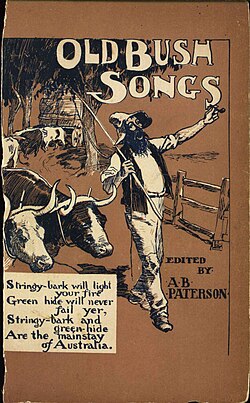
Paterson's bibliography is diverse, spanning several genres. In 1905, he released Old Bush Songs, a collection of ballads he had been assembling for a decade. His novels include In No Man's Land (later titled An Outback Marriage) and The Shearer's Colt.
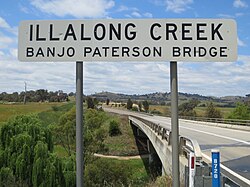
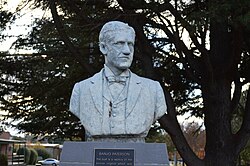
He also ventured into non-fiction with Happy Dispatches (1934), based on his time as a war reporter, and wrote for children in The Animals Noah Forgot (1933). His legacy is preserved today through monuments, such as the bridge named in his honor near Illalong and his portrait on the Australian ten-dollar note.
| Category | Notable Works | Year/Period |
|---|---|---|
| Famous Poems | "The Man from Snowy River", "Waltzing Matilda", "Clancy of the Overflow" | 1889–1895 |
| Novels | An Outback Marriage, The Shearer's Colt | 1900, 1936 |
| Collections | Old Bush Songs, The Man from Snowy River and Other Verses | 1895, 1905 |
| Non-Fiction | Happy Dispatches | 1934 |
Frequently Asked Questions
Why was he called "Banjo" Paterson?
He used "The Banjo" as a pseudonym for his poetry submissions to The Bulletin, naming himself after his favorite horse.
What is the significance of "Waltzing Matilda"?
Written in 1895, it is widely regarded as Australia's unofficial national anthem and is the most recorded song in the country's history.
What was the "Bulletin School" of literature?
It refers to a group of writers associated with The Bulletin journal who focused on nationalist themes and the unique identity of the Australian colonial experience.
Did Banjo Paterson do anything other than write poetry?
Yes, he was a qualified solicitor, a journalist, a war correspondent, and an editor for several publications, including the Evening News.
Who was Banjo Paterson's literary rival?
He had a friendly rivalry with the poet Henry Lawson, with the two often debating the true nature and allure of life in the Australian bush.