Bandra: The Evolution of Mumbai's Vibrant Coastal Suburb
Bandra, one of Mumbai's most iconic suburbs, is a place where colonial history meets modern commerce. From its humble beginnings as a quiet fishing village to its current status as a global business hub, Bandra's journey reflects the broader transformation of the city of Mumbai. The name itself is a subject of historical debate: some believe it derives from the Marathi word vandr (meaning monkeys), while others suggest it comes from the Persian word bandar, meaning a port or harbour.
Key Facts
- Origins: Originally a fishing village inhabited by Kolis and salt farmers.
- Colonial Shift: Ruled by the Portuguese from 1534 until the British took control via the Treaty of Surat (1775) and later the Treaty of Bassein (1802).
- Infrastructure: The first railway service arrived on April 12, 1867.
- Modern Economy: Home to the Bandra Kurla Complex (BKC), a premier business district hosting global firms like Google and Amazon.
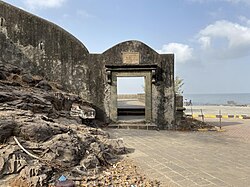
- Heritage: Features historic landmarks including the Bandra Fort and Mount Mary Church.
Early History and the Indo-Portuguese Era
In the 12th century, the region was under the rule of the Silhara dynasty. However, the landscape changed drastically in 1534 when Diego da Silveira, a Mediterranean pirate, entered the creek and burned the local fishing town, bringing the area under the rule of Portuguese Goa. This transition was formalized through the Treaty of Bassein (1534), signed aboard the brig Sao Mateus.
The Portuguese era was marked by significant Christianisation. Father Conceicao Rodrigues played a pivotal role, baptising thousands of local fishermen and establishing St. Andrew's Church. In 1548, the Portuguese granted Bandra and several other villages to António Pessoa as a reward for military service, though these lands eventually reverted to the Crown and were later acquired by the Jesuits in 1568.
While the Seven Islands of Bombay were ceded to England in 1661 as part of Catherine of Braganza's dowry, Salsette island—where Bandra is located—remained Portuguese. This period saw the construction of numerous chapels and churches, including the early St. Andrew's Church in 1575.
The British Era and Urban Expansion
Bandra's political status shifted several times during the late 18th century, moving from English to Maratha and finally back to British control following the Treaty of Bassein in 1802. It remained under British administration until India's independence on August 14, 1947.
The Railway Revolution
The arrival of the railway in 1867 transformed Bandra from a village into a suburb. The BB&CI (the precursor to Western Railway) inaugurated a service between Virar and Bombay, followed by the opening of a grand railway station in 1869. The station's architecture is notable for its iron pillars, which were constructed from bunched railway tracks.
As the population grew, particularly among the affluent Pathare Prabhu community who used bungalows in Khar as weekend retreats, the need for better access led to the opening of the Khar Road station on July 1, 1924. This development effectively established Khar as its own distinct suburb.
Municipal Growth
Bandra became a municipality in 1876 and was later merged into the Bombay Municipal Corporation in 1950. Over time, many original villages—such as Pali, Chuim, and Ranwar—were absorbed by urban sprawl.
Cultural and Educational Landmarks
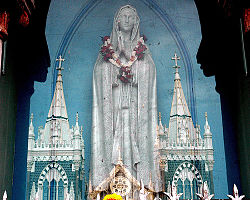
Bandra is renowned for its spiritual and academic institutions. The Mount Mary Church is a central landmark, particularly during the Bandra Fair held every September during the Octave of the Nativity of Our Lady.
Educationally, the area has a rich legacy. St. Andrew's Parish School (1780) and St. Stanislaus High School (1863) are among the oldest. Other notable institutions include St. Joseph's Convent High School (1865), R.D. National College (relocated from Hyderabad in 1949), and the comprehensive Rizvi Education Complex established in 1985.
Bandra Lake
Also known as Bandra Talao or Motha Reservoir, this lake was constructed by a wealthy Konkani Muslim from Navapada. Now officially named Swami Vivekanand Sarovar, it is recognized as a "Heritage II" structure, though its previous pisciculture (fish farming) and boating activities have ceased.
The Rise of the Bandra Kurla Complex (BKC)
To alleviate traffic congestion in South Mumbai, the city reclaimed land along the Mithi River to create the Bandra Kurla Complex (BKC). This strategic move attracted major global equity and technology firms, including Blackstone, Google, and Amazon, due to the availability of new development and lower land costs compared to the city center.
However, this commercial success has increased pressure on local infrastructure. Because BKC is situated between Bandra and Kurla stations, nearly 300,000 commuters arrive daily at Bandra Railway Station to take onward transport. This has made Bandra one of the busiest stations in India and the second-busiest on Maharashtra's Western Railway after Churchgate.
| Era/Period | Ruling Power/Influence | Key Development |
|---|---|---|
| 12th Century | Silhara Dynasty | Small fishing and salt farming village |
| 1534 - 1775 | Portuguese | Christianisation and construction of early churches |
| 1775 - 1947 | British (with Maratha intervals) | Introduction of railways (1867) and municipality status (1876) |
| Post-1947 | Indian Government | Integration into Greater Bombay and creation of BKC |
Frequently Asked Questions
What is the origin of the name Bandra?
There are two primary theories: one suggests it comes from the Marathi word for monkeys (vandr), and the other suggests it derives from the Persian word for port or harbour (bandar).
When did the railway arrive in Bandra?
The first railway service was inaugurated on April 12, 1867, operated by the BB&CI company.
What is the significance of the Bandra Kurla Complex (BKC)?
BKC is a major commercial hub created on reclaimed land to reduce congestion in South Mumbai, attracting global corporations like Amazon and Google.
Which historic churches are found in Bandra?
Bandra is home to several historic Catholic parishes, including St. Andrew's, Mount Carmel, St. Peter's, St. Theresa's, St. Anne's, and St. Francis d'Assisi.
What is the current status of Bandra Lake?
Now known as Swami Vivekanand Sarovar, the lake is designated as a "Heritage II" structure.