Discovering Bali: A Guide to the Island of the Gods
Known affectionately as Pulau Dewata (the Island of the Gods) and Pulau Seribu Pura (the Island of a Thousand Temples), Bali is one of the world's most iconic destinations. Located within the Lesser Sunda Islands of Indonesia, this province offers a unique blend of profound spiritual traditions, breathtaking natural landscapes, and a rapidly evolving modern economy.
Whether you are drawn to the mist-covered mountains, the intricate rituals of Balinese Hinduism, or the vibrant coastal life, Bali provides an experience unlike any other. This guide explores the essential facts, geography, and culture that make this island a global treasure.
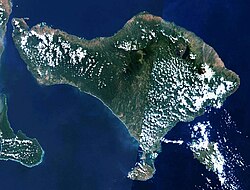
Key Facts
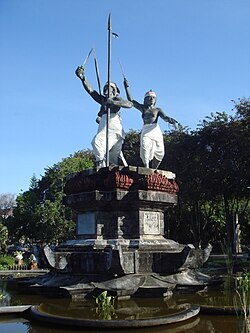
- Capital: Denpasar
- Official Language: Indonesian (with Balinese as the native tongue)
- Primary Religion: Hinduism (86.40%)
- Highest Point: Mount Agung (3,031 m)
- Total Area: 5,590.15 km²
- UNESCO World Heritage Site: The Subak System (Cultural Landscape of Bali Province)
Geography and Climate
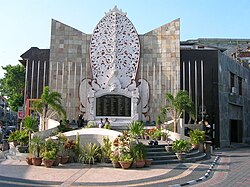
Bali is characterized by diverse terrain, ranging from volcanic peaks to dramatic coastal cliffs. The highest elevation on the island is Mount Agung, a significant landmark that dominates the skyline.
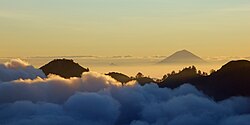
The island's climate is tropical, featuring distinct wet and dry seasons. The warmest months typically see daily maximum temperatures around 31°C (88°F), while the driest period occurs around August, when average precipitation drops significantly. This seasonal variation dictates much of the island's agricultural rhythm and tourism patterns.
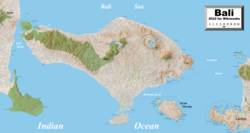
Natural Wonders and Biodiversity
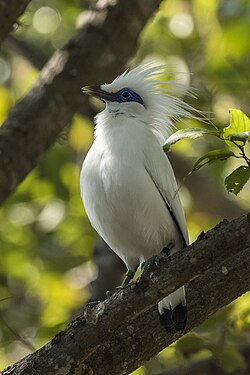
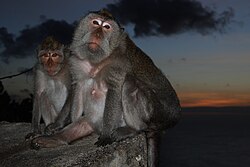
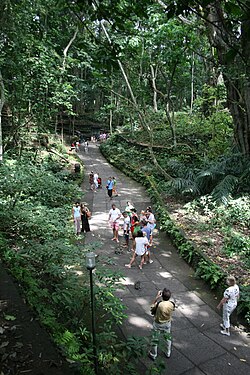
Bali's ecosystem is home to a variety of unique flora and fauna. From the protected Bali myna (Jalak Bali) found in West Bali National Park to the playful macaques in the forests of Uluwatu and Ubud, the island's wildlife is a major draw for nature enthusiasts.
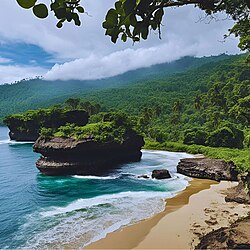
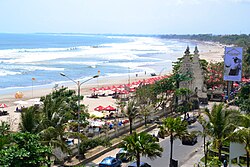
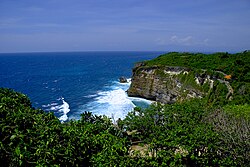
The coastline is equally diverse, featuring everything from the popular sands of Kuta Beach to the rugged, towering cliffs of Nusa Penida.
![The cliff of Nusa Penida with Kelingking Beach [id] in the foreground](/images/6e/f8/6ef8fbc1152a5bf44cd57e31c4eb44789edb690e11a486726338511302e0cc87.jpg)
Culture and Spirituality
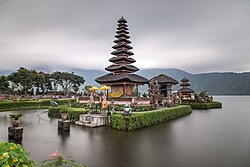
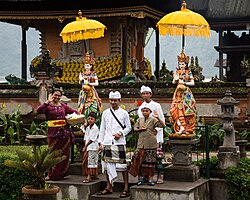
The heartbeat of Bali is its spiritual life. Hinduism is the predominant religion, shaping the architecture, daily customs, and social fabric of the island. This is most visible in the thousands of temples—or puras—scattered across the landscape.
![The Mother Temple of Besakih, one of Bali's most significant Hindu temples.[137]](/images/72/04/7204d1be51a9389cb1087cd14c670d2cb8a4edfe48d6843445e0fdef54a722bd.jpg)
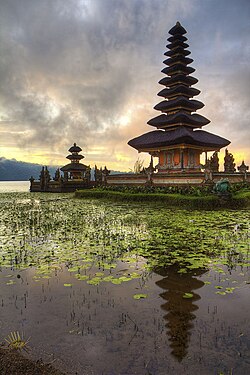
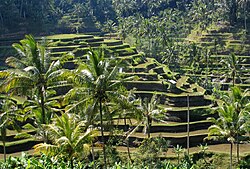
One of the most significant cultural achievements is the Subak system. This traditional irrigation method is more than just a way to water rice paddies; it is a manifestation of the Tri Hita Karana philosophy, which emphasizes harmony between humans, nature, and the divine. This system has been recognized as a UNESCO World Heritage Site.
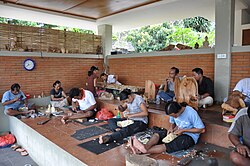
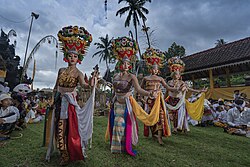
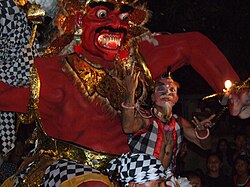
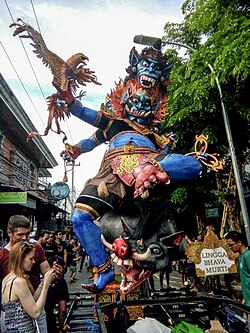
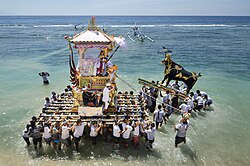
Traditional arts, including wood carving and sacred dances like the Rejang, continue to thrive, often performed during major religious ceremonies and festivals such as the Ogoh-ogoh procession.
Administrative and Economic Overview
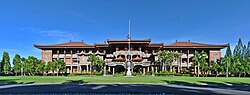
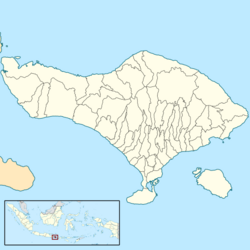
Bali is divided into several regencies and cities, including Badung, Gianyar, and Buleleng. The provincial government is centered in Denpasar, which serves as the capital and largest urban hub.

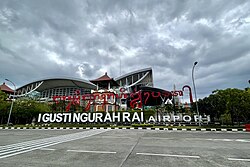
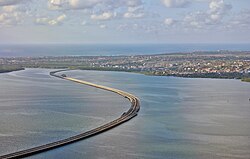
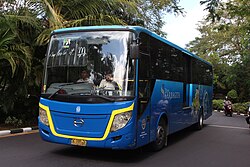
The economy is heavily driven by tourism, which saw significant growth in recent years. In 2025, the island welcomed nearly 7 million international tourists. Infrastructure, such as the I Gusti Ngurah Rai International Airport and the Bali Mandara Toll Road, supports this massive influx of visitors.
While tourism is a primary driver, the island also maintains a strong agricultural sector and a growing service economy.
Quick Reference: Bali Province Statistics
| Category | Details |
|---|---|
| Total Area | 5,590.15 km² |
| Population (2024 Est.) | 4,461,260 |
| Main Ethnic Group | Balinese (85.97%) |
| Primary Religion | Hinduism (86.40%) |
| HDI (2024) | 0.786 (High) |
Frequently Asked Questions
What is the Subak system?
The Subak system is a traditional Balinese irrigation network used for rice cultivation. It is deeply rooted in the Tri Hita Karana philosophy, which promotes harmony between the spiritual, human, and natural worlds. It is recognized by UNESCO as a World Heritage site.
What are the most popular tourist areas in Bali?
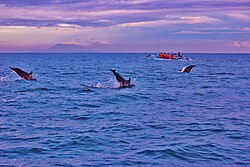
Popular destinations include the bustling beaches of Kuta, the cultural heart of Ubud, the scenic cliffs of Uluwatu, and the tranquil waters of Lovina.
What is the highest point in Bali?
The highest point in Bali is Mount Agung, which reaches an elevation of 3,031 meters (9,944 feet).
What language is spoken in Bali?
While Indonesian is the official language used for administration and education, Balinese is the native language spoken by the majority of the population.
When is the best time to visit Bali?
Bali experiences a tropical climate with a wet and dry season. Generally, the drier months offer more favorable weather for outdoor activities and exploring the island's many temples and beaches.