Baja: The Capital of Fisherman's Soup
Nestled on the left bank of the Danube in southern Hungary, Baja is a vibrant city with county rights located in Bács-Kiskun County. Known affectionately as "The Capital of Fisherman's Soup," it serves as a vital commercial and service hub for the Northern Bácska region. With a population of approximately 33,142 residents as of 2023, Baja blends a rich multicultural history with a strategic geographic position that bridges the Great Hungarian Plain and Transdanubia.
The city is more than just a regional center; it is a place where diverse ethnic influences—including Hungarian, German, Croat, and Serbian—have converged over centuries to create a unique cultural tapestry. From its role as a historic transportation hub to its modern status as a gateway to the Gemenc forest, Baja offers a compelling mix of nature, history, and gastronomy.
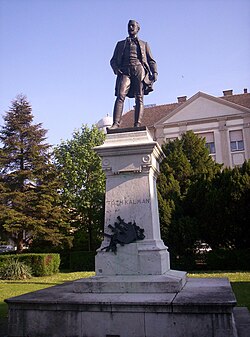
Key Facts
- Official Nickname: The Capital of Fisherman's Soup.
- Location: Bács-Kiskun County, Southern Great Plain region, Hungary.
- Population: 33,142 (as of January 1, 2023).
- Key Geography: Situated on the Danube river, adjacent to the Gemenc forest.
- Major Event: The annual Fisherman's Soup Boiling Festival.
- Economic Pillars: Water transport (second most important port in Hungary) and agricultural machinery (AXIÁL Co.).
History and Etymology
The origins of Baja's name are likely rooted in a Turkic language, though some suggest it may stem from the city's first owner, also named Baja. Historically, the town was known by the Latin name Francillo and the German name Frankenstadt.
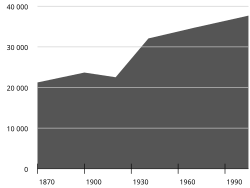
While the region has been inhabited since the end of the Iron Age, the settlement itself likely formed in the 14th century, with the first written mention appearing in 1308. During the Ottoman conquest in the 16th and 17th centuries, Baja grew in prominence as a fortified regional center, attracting Bunjevci and Serbian migrants. By 1696, it was granted town rights.
In the 18th century, under the Habsburg Empire, Baja evolved into a critical commercial hub. Its position on the Danube allowed for the efficient transport of grain and wine to Austria and Germany. Although its importance as a railway hub fluctuated in the 19th century, the city remained a cornerstone of regional services. Following the Treaty of Trianon in 1920, Baja was assigned to Hungary, eventually becoming known for its textile industry and its strategic bridge crossing the Danube.
Geography and Climate
Baja is located roughly 150 km south of Budapest. It sits at the intersection of the Great Hungarian Plain (Alföld) and Transdanubia (Dunántúl), separated by the Danube. The city's internal waterways are defined by the Sugovica, also known as the Kamarás-Duna.
To the west lies the Gemenc forest, part of the Danube-Drava National Park, which is accessible via a narrow-gauge railway. To the east, the landscape is dominated by arable farmland producing wheat, barley, and maize.
The climate is a transition zone between continental and Mediterranean influences. Summers are typically hot and stifling, with temperatures occasionally reaching 36–37°C and an increase in torrential rains. Winters are characterized by cold, snowy conditions.
Economy and Infrastructure
Baja is a powerhouse for water transport, boasting the second most important port in Hungary. The local economy is bolstered by major corporations such as AXIÁL Co., which distributes agricultural machinery across Eastern Europe, and the Gemenc Forest and Game Co. Ltd., which manages the nearby nature reserve.
The city provides essential public services, including healthcare and higher education, for the surrounding Bácska region. Modern retail is represented by a shopping center and TESCO supermarket, complementing the city's traditional commercial structures.
Culture, Education, and Religion
Baja's cultural life is centered around its museums and galleries. The István Türr Museum preserves local history, the István Nagy Gallery showcases regional art, and the Bunjevci House celebrates the traditions of the Bunjevci people. The city's most famous attraction is the Fisherman's Soup Boiling Festival, a European-renowned event featuring competitive soup boiling.
Education is supported by the Béla III High School and the Eötvös József College, alongside a local observatory and the General Culture Center of Germans Living in Hungary (MNÁMK).
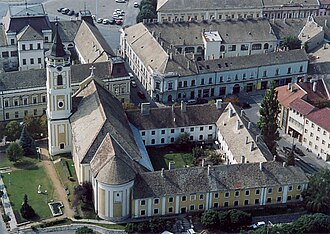
The Endre Ady Library
Named after the celebrated Hungarian poet Endre Ady, the city library is housed in the former synagogue, donated by the Jewish community. The library is a treasure trove for historians, containing a collection of 4,352 pre-18th-century volumes and three incunabula (books printed before 1501). A Holocaust memorial is located in the synagogue's garden.
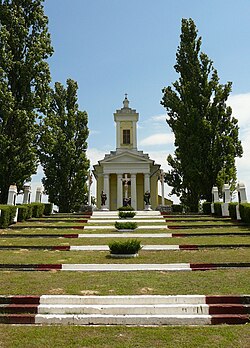
Religious Diversity
Reflecting its multicultural roots, Baja has 15 churches. The largest religious group is Roman Catholic, followed by smaller communities of Protestants, Evangelists, Orthodox Christians, Lutherans, and Jews.
Baja at a Glance
| Category | Details |
|---|---|
| Region | Southern Great Plain, Bács-Kiskun County |
| Population (2023) | 33,142 |
| Total Area | 177.61 km² |
| Primary River | Danube (and Sugovica) |
| Key Industry | Water transport, Agriculture, Textiles |
| Notable Landmark | Endre Ady Library (Former Synagogue) |
Frequently Asked Questions
Why is Baja called the Capital of Fisherman's Soup?
Baja is famous for its annual Fisherman's Soup Boiling Festival, a major cultural event in Europe that features a competitive soup-boiling contest and celebrates the city's culinary traditions.
What is the significance of the Endre Ady Library?
Beyond being named after a famous poet, the library is housed in the city's former synagogue and holds a massive collection of pre-18th-century books, including rare incunabula.
Which natural attractions are near Baja?
The city is located next to the Gemenc forest, which is part of the Danube-Drava National Park and can be visited via a narrow-gauge railway.
What is the ethnic composition of Baja?
The population is predominantly Hungarian (83.4%), with significant minorities including Germans (4.3%), Croats (2.1%), and Gypsies (1.2%), reflecting its history as a multicultural hub.
How does Baja contribute to Hungary's economy?
Baja operates the second most important port in Hungary for Danube water transport and is home to AXIÁL Co., a successful agricultural machinery exporter.