Understanding Bacillus subtilis: The Versatile Model Bacterium
In the vast world of microbiology, few organisms are as significant to scientific research and industrial application as Bacillus subtilis. Often referred to as a "model organism," this bacterium serves as a fundamental tool for understanding cellular development, genetics, and complex biological processes. From its origins in soil to its role in modern biotechnology, B. subtilis continues to be a cornerstone of biological study.
Originally named Vibrio subtilis by Christian Gottfried Ehrenberg, the bacterium was later renamed by Ferdinand Cohn in 1872. The species name "subtilis" is derived from Latin, meaning "fine, thin, or slender," a nod to its characteristic physical structure.
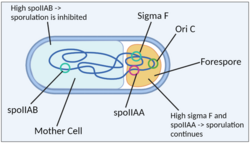
Key Facts
- Classification: A Gram-positive, rod-shaped bacterium belonging to the family Bacillaceae.
- Morphology: Typically measures 4–10 μm in length and 0.25–1.0 μm in diameter.
- Key Feature: Capable of forming highly resilient endospores to survive harsh conditions.
- Genetic Tool: Widely used in genetic studies due to its well-mapped genome and natural transformation abilities.
- Metabolism: Catalase-positive and capable of fermenting various sugars, including glucose and fructose.
Biological Characteristics and Morphology
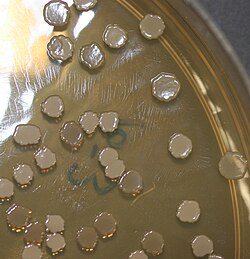
Bacillus subtilis is characterized by its distinct physical and biochemical traits. Under a microscope, it appears as a Gram-positive rod. In a laboratory setting, when grown on a culture dish, it typically forms medium-sized, round, convex colonies that appear whitish in color.
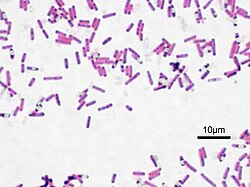
Biochemically, the organism is catalase-positive, meaning it produces the enzyme catalase to break down hydrogen peroxide. It is also motile and can grow in environments containing up to 6.5% NaCl (salt). Its metabolic versatility is evidenced by its ability to produce acid from a wide array of substrates, including glycerol, glucose, maltose, and various other sugars.
Summary of Microbiological Properties
| Test Category | Characteristic | Result |
|---|---|---|
| Morphology | Shape | Rod-shaped |
| Morphology | Gram Stain | Positive (+) |
| Physiology | Motility | Positive (+) |
| Biochemistry | Catalase | Positive (+) |
| Biochemistry | Oxidase | Negative (–) |
| Biochemistry | Indole | Negative (–) |
| Biochemistry | Urease | Negative (–) |
Genetics and Natural Transformation
The genome of B. subtilis is a primary reason for its status as a model organism. For instance, the sub-strain QB928 is frequently utilized in genetic research because it contains specific genetic markers. This strain possesses a complete genome sequence of 4,146,839 DNA base pairs and 4,292 genes.
One of the most fascinating aspects of this bacterium is its ability to undergo natural transformation. This is a process where a bacterium takes up foreign DNA from its surrounding environment. In B. subtilis, this transferred DNA is often double-stranded and can be quite large—sometimes exceeding 1,271 kb, which represents more than one-third of its total chromosome length. Remarkably, approximately 7–9% of recipient cells are capable of taking up an entire chromosome.
Survival Through Sporulation
When environmental conditions become unfavorable, B. subtilis employs a survival strategy known as sporulation. During this process, the bacterium produces an endospore—a highly resistant, dormant structure. These spores allow the organism to withstand extreme stress, including heat, radiation, and desiccation, ensuring the species can persist until conditions improve.
Frequently Asked Questions
What does it mean that B. subtilis is Gram-positive?
Being Gram-positive refers to a bacterium's reaction to a specific staining method. It indicates that the cell has a thick peptidoglycan layer in its cell wall, which retains the crystal violet dye used during the staining process.
How does B. subtilis survive extreme environments?
It survives through the formation of endospores. These are specialized, tough, dormant structures that protect the bacterium's genetic material from environmental stressors like extreme heat or lack of nutrients.
Why is B. subtilis used in scientific research?
It is used as a "model organism" because its genetics are well-understood, it is easy to grow in a lab, and it possesses unique biological processes—like natural transformation and sporulation—that help scientists study fundamental cellular functions.
Is B. subtilis capable of moving?
Yes, B. subtilis is characterized as being motile, meaning it has the biological capability to move through its environment.
What is natural transformation in this bacterium?
Natural transformation is a process where the bacterium absorbs DNA from its surrounding medium. This allows for the transfer of genetic material between bacteria, which can lead to genetic diversity.