Aztec Pantheon: Deities of Nature, War, and the Cosmos
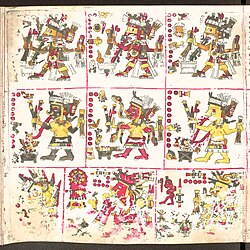
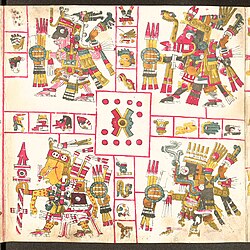
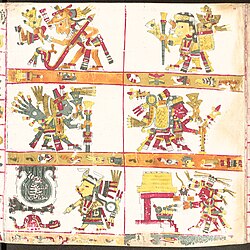
The Aztec pantheon is a complex assembly of divine beings, each governing specific aspects of the natural world, human existence, and the celestial spheres. For modern scholars, identifying these deities in art and codices is often challenging because Aztec gods do not possess a single, static appearance. Instead, their visual representation is based on a combination of icons—symbolic elements that represent the specific powers and responsibilities of the deity.
By analyzing these individual elements, researchers can decode the divine personalities. Each icon serves as a visual shorthand for the concept the deity oversees, ensuring that while a god might appear in various forms, their core meaning remains homogeneous.
Key Facts
- Iconography: Deities are identified by combinations of symbols rather than a fixed physical style.
- Dualities: Many gods share roles or exist as twins, such as Quetzalcoatl and Xolotl.
- Cosmic Order: The pantheon is organized into specific groups, including the Lords of the Night and Lords of the Day.
- Elemental Domains: Deities are categorized by their dominion over water, fire, sky, earth, and stars.
The Elemental Deities
Water and Fertility
Water was central to Aztec survival and spirituality. Tlaloc, the god of rain, lightning, and thunder, served as a primary fertility god. He was joined by Chalchiuhtlicue, who governed "horizontal waters" such as lakes, rivers, seas, and streams, as well as baptism and storms. Other specialized water deities included Huixtocihuatl (goddess of salt), Opochtli (god of fishing and birdcatchers), and Atlahua (a fisherman and archer god).
Fire and Transformation
Fire represented both time and destruction. Xiuhtecuhtli presided over fire and time, while Chantico governed the hearth and volcanoes. Xolotl, the twin of Quetzalcoatl, linked fire and lightning with death and the Evening Star (Venus).
Earth and Sustenance
The earth deities focused on agriculture and the physical landscape. Xipe-Totec, the ruler of the East, governed force, rebirth, and the seasons. Sustenance was overseen by Tonacatecuhtli and Tonacacihuatl. Agriculture was further supported by Chicomecoatl (the "seven-serpent" goddess), Centeotl (god of maize), and Xilonen (goddess of tender maize). Tlaltecuhtli served as the primordial god or goddess of the earth's landscape.
Celestial and Cosmic Rulers
The Sky and the Four Directions
The Aztec universe was anchored by four primary rulers of the cardinal directions:
- North: Tezcatlipoca, god of providence, darkness, and the invisible.
- East: Xipe-Totec, lord of the seasons and rebirth.
- West: Quetzalcoatl, god of life, light, wisdom, and the winds.
- South: Huitzilopochtli, god of war, sacrifice, the sun, and fire.
Celestial Bodies and Stars
The sky was populated by a vast array of deities. Tonatiuh and Nanahuatzin (who sacrificed himself to allow Tonatiuh to rise) governed the sun. The moon was associated with Meztli and Coyolxauhqui. The stars were managed by the Centzon-mimixcoa (400 northern stars) and Centzon-huitznahua (400 southern stars), along with Citlalicue and Citlalatonac. Mixcoatl, the god of the hunt, was identified with the Milky Way.
Death and the Underworld
The realm of the dead, known as Mictlan, was ruled by the couple Mictlantecuhtli and Mictecacihuatl. Xolotl also played a critical role here, acting as a guide and deity of deformity and death.
The Lords of Day and Night
The Aztecs organized their deities into temporal cycles. The Lords of the Night and Lords of the Day were groups of deities that governed specific time periods. Many deities, such as Xiuhtecuhtli, Tlaloc, and Tezcatlipoca, appeared in both lists, reflecting their multifaceted nature and pervasive influence over all time.
| Deity | Primary Domain | Key Attributes |
|---|---|---|
| Tlaloc | Water/Rain | Lightning, Thunder, Fertility |
| Quetzalcoatl | Sky/Wisdom | Life, Light, West Ruler |
| Tezcatlipoca | Night/Providence | Darkness, Invisible, North Ruler |
| Huitzilopochtli | War/Sun | Sacrifice, Fire, South Ruler |
| Mictlantecuhtli | Death | Ruler of Mictlan (Underworld) |
| Xiuhtecuhtli | Fire | Time, Hearth |
Frequently Asked Questions
How did the Aztecs identify their gods in art?
Because deities did not have one fixed style, they were identified through a combination of icons. Each icon symbolized a specific meaning or power, and the total combination of these elements revealed the deity's identity.
Who were the rulers of the four cardinal directions?
The North was ruled by Tezcatlipoca, the East by Xipe-Totec, the West by Quetzalcoatl, and the South by Huitzilopochtli.
What is Mictlan?
Mictlan is the Aztec Underworld, ruled by the god Mictlantecuhtli and the goddess Mictecacihuatl.
Which deity was associated with the morning star?
Tlahuizcalpantecuhtli was the god of the morning star (Venus), while Xolotl was associated with Venus as the Evening Star.
Who were the Centzon-mimixcoa and Centzon-huitznahua?
These were groups of 400 gods each, representing the stars of the northern and southern skies, respectively.