Azerbaijan: A Comprehensive Overview of the Land of Fire
Situated at the crossroads of Eastern Europe and Western Asia, Azerbaijan is a nation defined by its strategic location in the South Caucasus. Known for its rich energy reserves, diverse landscapes, and a complex history that bridges ancient civilizations and modern statehood, Azerbaijan serves as a vital link between the East and the West.
From the futuristic skyline of its capital, Baku, to the rugged peaks of the Caucasus Mountains, the country offers a unique blend of traditional Islamic heritage and contemporary urban development.

Key Facts
- Capital: Baku, the largest city and economic hub.
- Government: Unitary semi-presidential republic.
- Official Language: Azerbaijani.
- Currency: Manat (₼).
- Primary Religion: Islam (97.3%).
- Key Resource: Significant oil and natural gas reserves.
- Highest Point: Mount Bazarduzu.
History and Political Evolution
Ancient and Medieval Eras
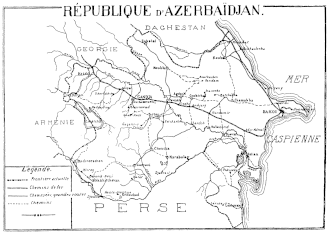
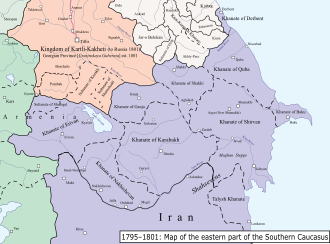
Azerbaijan's history stretches back to antiquity, with evidence of thriving early cultures seen in the petroglyphs of Gobustan. Over centuries, the region was influenced by various empires, including the Sasanids. By 1538, Tahmasp I ended the rule of the Shirvanshahs and established Shirvan as an administrative unit of Safavid Iran.
The Path to Independence
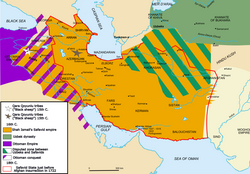
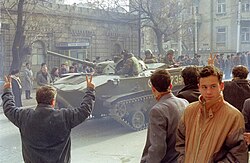
The modern political identity of Azerbaijan began with the formation of the People's Republic on May 28, 1918. This was followed by the establishment of the Soviet Socialist Republic on April 28, 1920. Azerbaijan eventually regained its independence from the Soviet Union, declared on October 18, 1991, and recognized on December 26, 1991. A new constitution was adopted on November 12, 1995.
Contemporary Governance
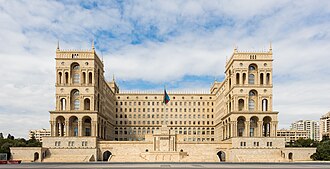
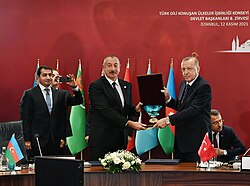
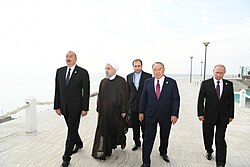
Since 1993, the country has been under the leadership of the Aliyev family. The current government is a unitary semi-presidential republic led by President Ilham Aliyev, Vice President Mehriban Aliyeva, and Prime Minister Ali Asadov.
Geography and Environment
Landscape and Climate
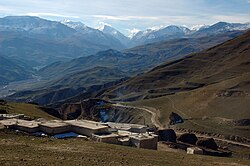
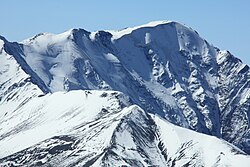
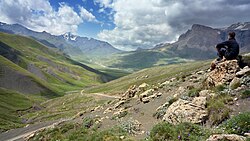
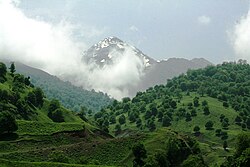
Azerbaijan's geography is highly varied, featuring the Great Caucasus Mountains in the north and the Lesser Caucasus in the west. The highest peak is Mount Bazarduzu, while the Murovdag range stands as the highest in the Lesser Caucasus. The climate is diverse, as categorized by the Köppen-Geiger system, ranging from semi-arid to temperate.
![Köppen-Geiger climate classification map for Azerbaijan[133]](/images/24/ca/24ca5eb8fbd0cfc654cabd8def61bbecb631e1c6364b377ca3946207f2e6bbd6.webp)
Biodiversity and Nature
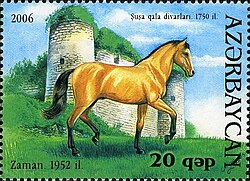
The nation is home to unique wildlife, most notably the Karabakh horse, which is recognized as the national animal of Azerbaijan.
Economy and Infrastructure
Energy and Natural Resources
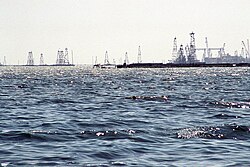
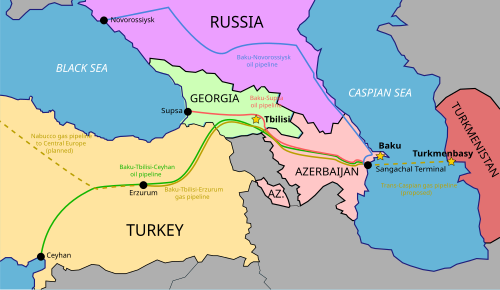
The economy is heavily driven by the energy sector. Azerbaijan is a major producer of oil and natural gas, utilizing infrastructure like the Oil Rocks (Neft Daşları) and the South Caucasus Pipeline to export energy to Europe via Turkey.
Economic Indicators
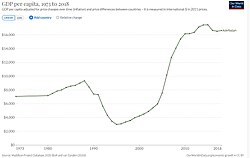
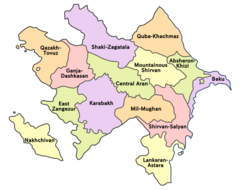
With a 2026 estimated nominal GDP of $78.372 billion and a PPP GDP of $281.296 billion, Azerbaijan has seen significant growth in per capita income since 1973. The country is divided into 14 economic regions to manage its development and resources.
Tourism and Science
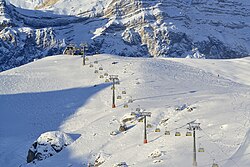
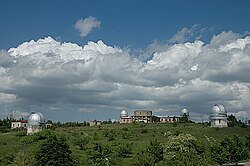
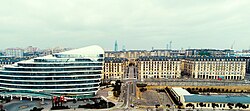
Tourism is growing through attractions like the Shahdag Mountain Resort and the Shamakhi Astrophysical Observatory. Urban renewal is evident in Baku's "White City," a project completed in 2022.
Society and Culture
Demographics and Religion
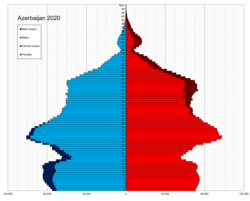
The population is predominantly Azerbaijani (94.8%), with minorities including Lezgins, Talysh, and Russians. While Islam is the primary religion, there are Christian communities and other small religious groups.
Arts and Heritage
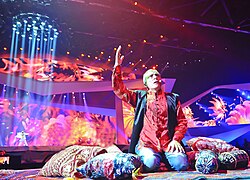
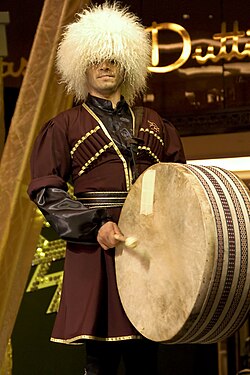
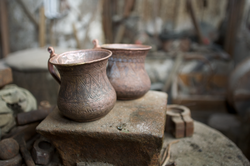
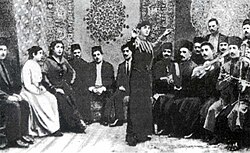
Azerbaijan possesses a rich cultural tapestry. Mugham, a traditional form of music, was inscribed as a UNESCO Masterpiece of Intangible Heritage of Humanity in 2008. The country is also known for its intricate carpet weaving, copper work in Lahij, and a cinematic history dating back to 1916.
Architecture and Sport
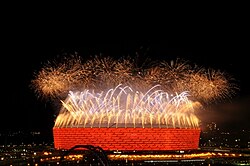
From the historic Bibi-Heybat Mosque to the modern Baku National Stadium, the architecture reflects a blend of faith and modernity. The nation has also become a hub for international sports, hosting the first European Games in 2015.
![The Bibi-Heybat Mosque in Baku. The mosque is built over the tomb of a descendant of Muhammad.[282]](/images/ca/d3/cad3de2968e65bedebf4e78a9f515986119ce3b78a26d76d3800e23493784290.jpg)
National Summary Table
| Category | Detail |
|---|---|
| Total Area | 86,600 km² |
| Estimated Population (2022) | 10,353,296 |
| GDP (Nominal 2026 Est.) | $78.372 Billion |
| Human Development Index (2023) | 0.789 (High) |
| Official Language | Azerbaijani |
| Main Economic Driver | Oil and Natural Gas |
Frequently Asked Questions
What is the official language of Azerbaijan?
The official language of the Republic of Azerbaijan is Azerbaijani.
Which city is the capital of Azerbaijan?
Baku is the capital and the largest city of the country.
What are the primary economic resources of Azerbaijan?
Azerbaijan's economy is primarily driven by its vast reserves of oil and natural gas.
What is Mugham?
Mugham is a traditional Azerbaijani form of music that was recognized by UNESCO as a Masterpiece of Intangible Heritage of Humanity in 2008.
Who is the current President of Azerbaijan?
The current President is Ilham Aliyev.