Axes: History, Mechanics, and Diverse Applications
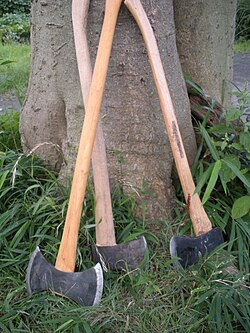
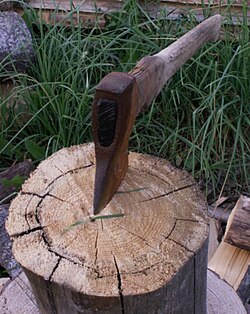
For thousands of years, the axe has served as one of humanity's most essential implements. From shaping raw timber and harvesting forests to serving as a formidable weapon of war, the axe is a versatile tool that has evolved alongside human technology. At its most basic, an axe consists of a sharpened blade, known as the bit, attached to a handle, referred to as a haft or helve.
The evolution of the axe mirrors the progression of human materials. Long before the invention of handles, stone-age hand axes were used as early as 1.5 million years BP. Eventually, humans developed hafted axes—those with handles—with evidence dating back at least 46,000 years from Northern Indigenous Australians. As metallurgy advanced, stone gave way to copper, bronze, iron, and finally steel.
Key Facts
- Simple Machine: An axe functions as a wedge (a dual inclined plane), concentrating pressure to split material.
- Leverage: The handle acts as a lever, increasing the force delivered to the cutting edge.
- Blade Angles: Cutting axes (for felling) have acute wedge angles, while splitting axes have more obtuse angles.
- Ancient Origins: Handle-less stone axes date back 1.5 million years; hafted versions appear around 46,000 years BP.
- Material Evolution: Progression from stone to copper, bronze, iron, and modern steel.
The Mechanics of the Axe
The axe is a classic example of a simple machine. By utilizing a wedge design, it reduces the effort required to chop wood by concentrating the force of the swing into a very small area at the blade's edge. Once the initial cut is made, the head moves behind the cut to force the wood apart.
Most axes are double bevelled, meaning they are symmetrical. However, specialized tools like broadaxes may feature a single bevel. Modern construction typically involves steel heads paired with wooden, plastic, or fibreglass handles.
Historical Evolution

The Stone Age and Neolithic Era
The earliest axes were knapped (chipped) from flint or other stones. By the late Pleistocene, ground-edge axes appeared in Australia (approximately 44,000 years ago) and later in Japan (around 38,000 BP). During the Mesolithic period (c. 6000 BC), hafting became more common, using birch-tar and rawhide lashings to secure the blade.
The distribution of these stone tools provides vital clues about prehistoric trade. Neolithic "axe factories" existed across Europe, including sites in England (tuff), Ireland (porcellanite), Poland (flint), Belgium (flint), France (pelite), and Italy (omphacite). Interestingly, stone axes remain in use today in parts of Papua, Indonesia.
The Metal Ages
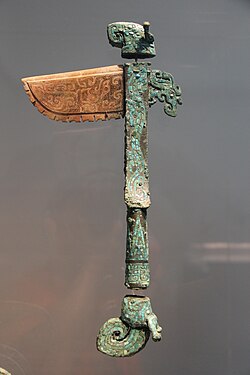
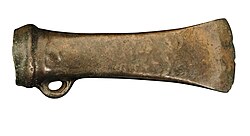
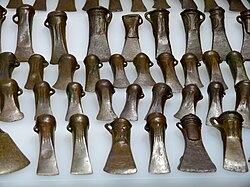
The transition to metal began in the late Neolithic and Chalcolithic periods with copper and arsenic-copper alloys. These early metal axes were flat and hafted similarly to stone tools. With the rise of bronze metallurgy, designs evolved from flat axes to flanged axes, palstaves, and eventually winged and socketed axes.
Symbolism, Ritual, and Folklore

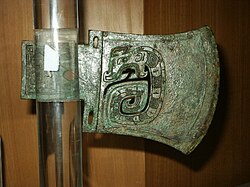
Beyond utility, axes have held deep religious and social significance. In Minoan Crete, the double axe, or labrys, was used by priestesses in ceremonies. In Yorùbá mythology, the double-headed axe (oshe) symbolizes Shango, the god of thunder and lightning, representing balanced justice.
Folklore often attributed supernatural powers to axes. Some cultures believed stone axes were thunderbolts and used them to protect buildings from lightning. In other traditions, burying an upright axe under a house sill was thought to ward off witches, while placing one under a bed was believed to ensure male offspring.
Types of Axes
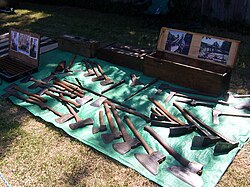
Woodworking and Shaping Tools
- Broadaxe: Used for hewing (squaring off round timbers) with a chisel-shaped bit.
- Adze: Features a blade perpendicular to the handle, used to rip level surfaces.
- Hatchet: A small, one-handed axe often featuring a hammer (poll) on the back.
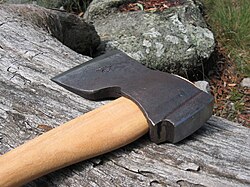
- Carpenter's Axe: A precision tool with a pronounced beard and finger notch for a "choked" grip.
- Mortising Axe: Used to remove wood between drilled holes to create mortises.
Axes as Weapons
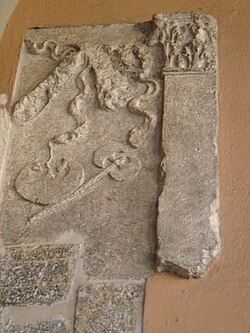
Because they are easy to manufacture and deliver high cleaving power, axes have been used in combat for millennia. Notable examples include the Battle axe, which concentrates weight in the head to defeat armor; the Dane axe, a long-handled Norse weapon; and the Tomahawk, used by Native Americans for both war and diplomacy.
Specialized Tools and Sport
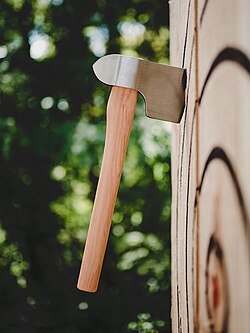
Modern applications include the Ice axe for climbing and the Pulaski, a firefighting tool combining an axe and a mattock blade. In the realm of sport, racing axes are used in competitive wood chopping, while throwing axes are used in target competitions.
| Category | Type | Primary Use | Key Feature |
|---|---|---|---|
| Woodworking | Broadaxe | Squaring timbers | Chisel-shaped blade |
| Woodworking | Adze | Leveling surfaces | Perpendicular blade |
| Combat | Battle Axe | Armor penetration | Concentrated head weight |
| Combat | Tomahawk | War/Diplomacy | Compact, versatile size |
| Utility | Pulaski | Firefighting/Digging | Combined axe and mattock |
| Sport | Racing Axe | Competitive chopping | Optimized for speed/power |
Frequently Asked Questions
What is the difference between a cutting axe and a splitting axe?
Cutting axes, used for felling and limbing, have a shallow (acute) wedge angle to bite deeper into the wood. Splitting axes have a deeper (more obtuse) angle to force the wood fibers apart more effectively.
What is a "haft"?
A haft is the handle of the axe to which the head (the blade) is attached.
How does an axe work as a simple machine?
An axe acts as a wedge, which is a type of dual inclined plane. It concentrates the force of the user's swing into a thin edge, while the handle provides leverage to increase the impact force.
What is a poll on an axe?
The poll, or butt, is the back side of the axe head opposite the blade. In many designs, such as hatchets or carpenter's axes, the poll is shaped to be used as a hammer.
Were axes used for anything other than cutting?
Yes, axes have been used as weapons of war, religious symbols (such as the Minoan labrys), stores of value in the Bronze Age, and as ceremonial tools for diplomacy.