Away Colours: The History and Rules of Team Sports Uniforms
In the world of competitive sports, visual clarity is essential. Whether it is a referee making a split-second call or a spectator following the action from the stands, distinguishing between two opposing teams is critical. This is where away colours—also known as road colours, away kits, or road uniforms—come into play.
At its core, an away kit is an alternative set of clothing worn by a team to prevent a "colour clash," which occurs when two teams wear similar or identical colours. While the visiting team typically bears the responsibility of changing, the rules governing these uniforms vary significantly across different sports and continents.

Key Facts
- Purpose: Away kits prevent confusion for officials, players, and spectators during games.
- Standard Practice: In most sports, the visiting (road) team is required to change their colours.
- North American Trends: Many US leagues historically avoided "colour vs. colour" matchups due to the limitations of early black-and-white television.
- Variety: Beyond home and away, many teams now produce third-choice kits or throwback uniforms for special occasions.
Uniform Traditions Across Major Sports
American Football (NFL and NCAA)
In gridiron football, road uniforms are almost universally white. However, some teams defy this convention for strategic or traditional reasons. For example, the Washington franchise frequently wore white at home during the Joe Gibbs era in the 1980s and 1990s. Similarly, the Los Angeles Rams have worn white at home as a tribute to the era when they played in Los Angeles during the 1960s.
Some teams associate specific colours with luck. The Dallas Cowboys' blue jerseys have been viewed as "jinxed" following losses in Super Bowl V and the 1968 divisional playoffs, leading to a preference for white at home.
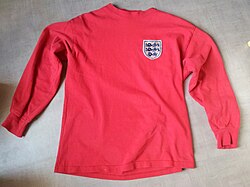
Association Football (Soccer)
In European football, the away kit is a staple of team identity. While usually reserved for clashes, some teams have found immense success in their alternative colours. Three teams have won the FIFA World Cup final while wearing away kits: Brazil (1958), England (1966), and Spain (2010).
Basketball (NBA and NCAA)
Until the 2017–18 season, NBA rules mandated that home teams wear light-coloured jerseys (usually white, though the Los Angeles Lakers famously wear yellow) and visiting teams wear darker colours. While these rules have evolved, the distinction between home and road colours remains a core part of the league's visual identity.
Ice Hockey (NHL)
The National Hockey League requires teams to have one white-based and one dark-based uniform. Historically, teams wore white at home, but this shifted in the 2003–04 season, with teams generally wearing dark colours at home and white on the road.

Other Global Sports
- Baseball: In Major League Baseball, visitors typically wear grey uniforms. Historically, some teams experimented with powder blue road uniforms from the 1970s to the early 1990s.
- Australian Rules Football: Teams use alternative colours to avoid clashes, such as Hawthorn and Essendon using different coloured shorts to distinguish themselves.
- Rugby Union: Away kits can sometimes cause diplomatic friction. England's use of an all-black kit at the 2011 World Cup was controversial because black is the primary home colour of New Zealand.




Comparison of Road Uniform Standards
| Sport | Typical Road Colour | Typical Home Colour | Notable Exception/Detail |
|---|---|---|---|
| NFL / NCAA Football | White | Team Colour | Some teams wear white at home for tradition/luck. |
| MLB Baseball | Grey | White | Powder blue was popular from 1970s–1990s. |
| NBA Basketball | Dark Colour | White/Light | Lakers traditionally wear yellow at home. |
| NHL Hockey | White | Dark Colour | Shifted to dark-at-home in 2003–04. |
| Association Football | Alternative Colour | Primary Colour | Third kits are often used for further clashes. |
Frequently Asked Questions
Why do visiting teams usually wear the away kit?
The primary reason is to prevent a colour clash. By having the visiting team change, the home team can maintain its primary identity and tradition in its own stadium, while ensuring officials and fans can easily tell the teams apart.
What is a "colour vs. colour" game?
A colour vs. colour game occurs when both teams wear their primary dark or coloured jerseys instead of one team wearing white. This was historically discouraged in North American sports to ensure better visibility on black-and-white televisions.
Can a home team ever wear their away colours?
Yes. In some leagues, home teams have the option to wear their away colours for specific games. If the home team chooses the away kit, the visiting team must wear the opposite (usually the home kit) to maintain contrast.
What are third-choice kits?
Third-choice kits are additional alternative uniforms produced by teams. These are used when both the home and away kits clash with the opponent's colours, or are sold as replica jerseys for fans.