Aviation History and the Evolution of Modern Air Transport
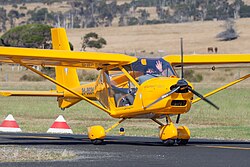
Aviation encompasses all activities related to mechanical flight and the vast aircraft industry. From the early days of buoyancy-based travel to the supersonic speeds of modern jets, the field includes a diverse array of vehicles: fixed-wing aircraft (traditional airplanes), rotary-wing types (helicopters), morphable wings, wing-less lifting bodies, and lighter-than-air craft such as hot air balloons and airships.
The journey of flight began in the 18th century, evolving from simple atmospheric displacement to the complex global network we see today. In 2024, the International Civil Aviation Organization (ICAO) reported that 9.5 billion passengers traveled worldwide, cementing aviation as a cornerstone of global mobility and commerce.
Key Facts
- First Untethered Flight: Achieved by the Montgolfier brothers on November 21, 1783, using a hot air balloon.
- First Controlled Powered Flight: Accomplished by the Wright brothers on December 17, 1903.
- Global Reach: As of 2018, approximately 11% of the world's population traveled by air.
- Environmental Impact: Aviation accounted for 2% of global CO2 emissions in 2023.
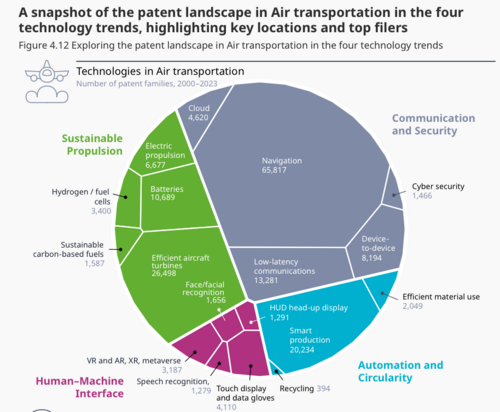
- Innovation Growth: Air transport patent families grew from under 1,100 in 2000 to over 12,800 in 2023.
The Dawn of Flight: Lighter-Than-Air
Before humans mastered the art of the wing, they utilized buoyancy. The modern era began with the Montgolfier brothers' hot air balloon in 1783. While groundbreaking, these balloons were limited by their inability to steer, moving only where the wind blew. This changed in 1784 when Jean-Pierre Blanchard flew the first steerable dirigible (a steerable balloon), later crossing the English Channel in 1785.
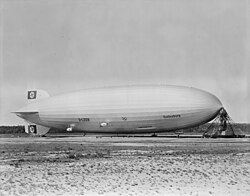
The pinnacle of this era was the Zeppelin. The Graf Zeppelin flew over one million miles, including a global circuit in 1929. However, the era of passenger airships effectively ended on May 6, 1937, with the Hindenburg disaster. A spark ignited leaking hydrogen gas, killing 36 people and ending the dominance of airships in favor of advancing airplane designs.
The Rise of Heavier-Than-Air Aircraft
The transition to powered, heavier-than-air flight was marked by several pioneers. Clément Ader's "Ader Éole" made an uncontrolled powered hop in 1890, and Otto Lilienthal advanced the field with controlled gliding in 1896. However, the definitive leap occurred on December 17, 1903, when the Wright brothers achieved the first successful powered, controlled, and sustained flight using their invention of three-axis control.
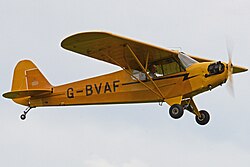
By World War I, aircraft became practical tools for reconnaissance and attack. The 1920s and 30s saw legendary feats, including Charles Lindbergh's solo transatlantic flight in 1927. The introduction of the Douglas DC-3 marked a turning point, as it became the first airliner to be profitable solely by carrying passengers.
The Jet Age and Beyond
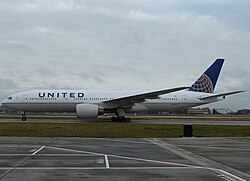
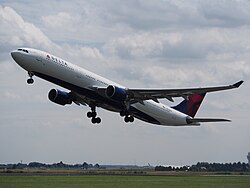
The development of the jet engine by Hans von Ohain in 1939 revolutionized the industry. Following World War II, civil aviation expanded rapidly. While the de Havilland Comet was an early pioneer, the Boeing 707 became the first widely used passenger jet due to its superior economy. Simultaneously, turboprop propulsion allowed smaller commuter planes to operate in diverse weather conditions.
Modern Aviation Operations
Today, the civil transport aircraft market is dominated by seven major manufacturers:
- Airbus (Europe)
- Boeing (United States)
- Antonov (Ukraine)
- Bombardier (Canada)
- Comac (China)
- Embraer (Brazil)
- United Aircraft Corporation (Russia), including subsidiaries like Sukhoi and Tupolev.
Military Aviation
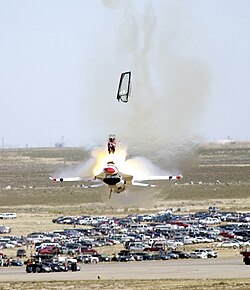
Military flight is categorized by specialized roles. Fighters like the F-22 and Eurofighter Typhoon prioritize speed and agility, while attack aircraft such as the A-10 and Su-25 focus on ground support. Transport aircraft like the C-17 Globemaster III handle logistics, and reconnaissance planes like the U-2 provide critical intelligence.
![The Lockheed SR-71 remains unsurpassed in many areas of performance.[38][which?]](/images/2d/63/2d637c360fa0b90774672a0b3a901fc80d41817a4afe72ab5c7740d4cb416faf.jpg)
Air Traffic Control (ATC)
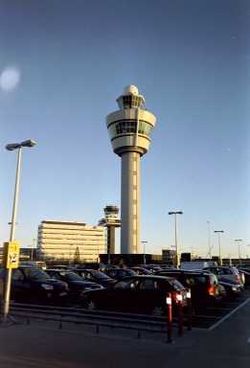
To ensure safety, ATC manages the skies through various layers of control. Airport control towers manage aircraft within a small radius (typically 10–15 km horizontally), while terminal controllers manage a wider area (50–80 km) around busy hubs.
Safety and Environmental Challenges
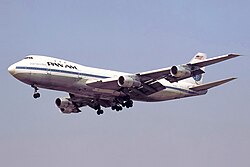
Aviation safety has evolved from the first fatal accident in 1908 to highly regulated systems. Despite this, the industry remembers tragedies like the 1977 Tenerife airport disaster, the deadliest accident in history, where two Boeing 747s collided.
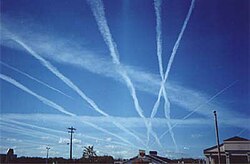
Environmental impact is now a primary concern. Aviation's CO2 emissions grew faster than road or rail between 2000 and 2019. To combat this, the International Air Transport Association (IATA) and ICAO are pushing for Sustainable Aviation Fuels (SAFs) and efficiency technologies, aiming to reduce emissions by up to 50% by 2050.
Innovation and Patents
The industry continues to innovate, as evidenced by a surge in patenting. While China, South Korea, and Japan show high volumes of patents, the United States, France, and Canada demonstrate a higher degree of specialization in specific air transportation technologies.
| Era | Key Technology | Notable Milestone |
|---|---|---|
| 18th Century | Hot Air Balloons | Montgolfier brothers' first untethered flight (1783) |
| Early 1900s | Fixed-Wing / Internal Combustion | Wright brothers' first controlled flight (1903) |
| 1930s-1950s | Jet Engines | First jet-powered flight (1939); Boeing 707 success |
| Modern Era | Sustainable Fuels / Digital ATC | Goal of 50% emission reduction by 2050 |
Frequently Asked Questions
Who achieved the first powered, controlled flight?
The Wright brothers achieved the first successful powered, controlled, and sustained airplane flight on December 17, 1903, utilizing three-axis control and a custom engine with a high power-to-weight ratio.
What caused the end of the passenger airship era?
The era largely ended after the Hindenburg disaster on May 6, 1937. Investigations suggested a spark ignited flammable hydrogen gas, and some findings indicated the airship's coating was highly flammable.
How does aviation impact the environment?
Aviation accounted for 2% of global CO2 emissions in 2023. The industry is currently working toward the use of sustainable aviation fuels (SAFs) and new efficiency technologies to mitigate this impact.
What are the different types of air traffic control?
There are several types, including airport control towers (managing aircraft within 10–15 km) and terminal controllers (managing a wider area of 50–80 km around busy airports).
Which countries are leading in aviation patents?
China, South Korea, and Japan have high patent volumes. However, the United States, France, and Canada show a higher level of specialization in air transportation technologies.