Avian Foraging: Strategies, Guilds, and Feeding Behaviors
Avian foraging encompasses the diverse processes and behaviors birds employ to locate and acquire food. Unlike many other animal groups, birds have evolved specialized body adaptations and behavioral patterns tailored to their specific environments. From the high-altitude forests to coastal shorelines, the way a bird finds its next meal is a complex interaction of sensory perception, physical movement, and energy management.
The foraging process typically follows a sequence: it begins with the search for food using sensory abilities, followed by locomotion to capture the prey, and concludes with the processing or handling of the food before it is ingested. This process can be a solitary effort or a social one, involving multiple birds of the same or different species.
The Energetics of Foraging
For every bird, foraging is a balancing act between energy expenditure and energy gain. Birds possess some of the highest metabolic rates among warm-blooded animals, meaning they must ensure a net positive energy gain to survive. This biological pressure has led to the concept of optimal foraging, where birds evolve to maximize the energy they receive while minimizing the time and effort spent searching, moving, and avoiding predators.
Key Facts
- Energy Balance: Birds must balance the energy spent on locomotion and predator avoidance against the calories gained from food.
- Social Advantages: Flocking can increase foraging efficiency through the "many-eyes" hypothesis, risk dilution, or the exchange of information about food locations.
- Visual Adaptation: Laterally-placed eyes allow many birds to scan for predators and search for food simultaneously.
- Guild Flexibility: A single bird species may belong to different foraging guilds depending on the season or its current habitat.
Foraging Strategies and Adaptations
To maximize efficiency, birds utilize various physiological and behavioral adaptations. Many species forage in flocks, which may provide protection via the selfish herd theory or risk dilution. Additionally, birds that use communal roosts often exchange vital information regarding the location and quality of food patches.
Dietary choices are rarely random; birds typically select food based on availability and the ratio of energy gained relative to the handling time—the time required to process and consume the item.
Understanding Foraging Guilds
In ecology, birds are often grouped into foraging guilds (or trophic guilds). These are assemblages of species that share similar foraging habitats, food types, and techniques. Because birds are adaptable, these classifications are not always fixed; for example, a bird's diet during the breeding season may differ significantly from its winter diet.
Ecologists use hierarchical criteria to describe these guilds, covering feeding style, prey type, substrate, habitat, and time of activity. For instance, the mountain chickadee is classified as a forest insect-gleaner. In more complex cases, such as the white-browed wagtail, a bird may be described as an aquatic-terrestrial-herbivore-insectivore-granivore.
Classification by Food and Prey Type
Birds are often categorized by what they eat:
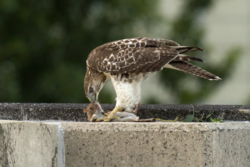
- Carnivore: Consumes animal tissue.
- Insectivore: Primarily eats insects.
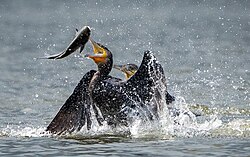
- Piscivore: Specializes in fish.
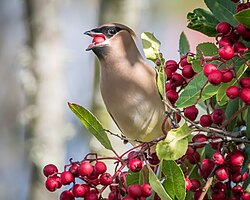
- Frugivore: Primarily consumes fruit.
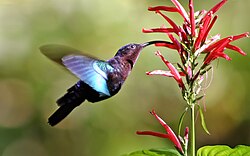
- Nectarivore: Feeds on nectar.
- Granivore: Consumes seeds or nuts.
- Sanguinivore: Feeds on blood (e.g., vampire ground finch).
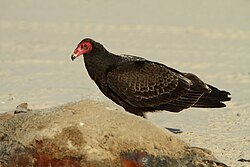
- Scavenger: Feeds on carrion.
- Omnivore: Eats a variety of plant and animal materials.
Classification by Habitat and Substrate
The environment where a bird searches for food also defines its guild:
- Aerial: Food is caught mid-air.
- Arboreal: Food is collected from trees or shrubs, including the upper or lower canopy.
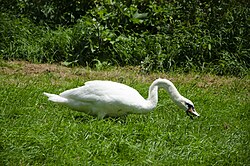
- Terrestrial: Foraging on the ground, including leaf litter or grass.
- Aquatic: Includes freshwater, saltwater, and coastal environments. This can be further divided into water surface, water bottom (via diving or dabbling), and mudflats.
- Pelagic: Foraging in the open ocean, far from the coast.
Classification by Foraging Technique
The physical method used to obtain food is a key identifier of avian behavior:
- Gleaning: Picking items from a surface.
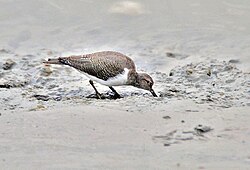
- Probing: Inserting the bill into substrates like sand or mud to detect prey.
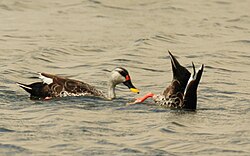
- Dabbling: Dipping the head or neck underwater.
- Plunging: Diving from the air into water with an open mouth.
- Hawking: Aerial pursuit of prey.
- Kleptoparasitism: Harassing other birds to steal their food.
- Tool Use: Using instruments to obtain food, seen in some corvids and woodpecker finches.
Summary of Avian Foraging Classifications
| Classification Basis | Examples of Categories | Key Characteristic |
|---|---|---|
| Prey Type | Piscivore, Insectivore, Nectarivore | What the bird eats |
| Habitat/Substrate | Pelagic, Arboreal, Aerial | Where the bird searches |
| Technique | Probing, Gleaning, Dabbling | How the bird captures food |
Frequently Asked Questions
What is optimal foraging in birds?
Optimal foraging is an evolutionary strategy where birds maximize their net energy intake per unit of time. Because birds have very high metabolic rates, they must balance the energy spent searching for and handling food against the energy gained from the food itself.
Can a bird belong to more than one foraging guild?
Yes. Many bird species are flexible and may change their foraging guild based on the season (breeding vs. wintering) or the specific habitat they are currently occupying.
What is the difference between dabbling and diving?
Dabbling involves an aquatic bird dipping only its head or neck underwater to find food, whereas diving involves the bird completely submerging its entire body to search for prey.
What is kleptoparasitism?
Kleptoparasitism, also known as piracy, is a foraging technique where one bird harasses another to force it to drop or disgorge its captured prey, which the pirate bird then consumes.
How do birds use tools for foraging?
Some highly intelligent birds, such as certain corvid species and woodpecker finches, use external objects (instruments) to help them extract food from hard-to-reach places.