Avadhana and the Literary Contributions of Ganesh
Avadhana is a sophisticated literary performance that blends poetic mastery with extreme mental discipline. In this art form, a performer known as an avadhani composes extempore solutions in metrical verse to various problems posed by interrogators, called pṛcchakas, who are positioned around the stage. The challenge is twofold: the avadhani must satisfy strict poetic constraints while simultaneously managing intentional interruptions designed to break their concentration.
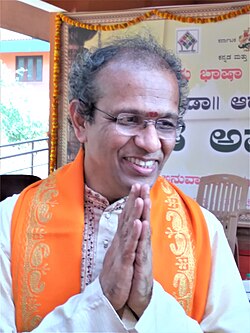
This rigorous exercise serves as a comprehensive test of a scholar's creativity, memory, wit, and scholarship. Among the most prominent practitioners of this art is Ganesh, who has dedicated his career to the mastery and revival of this tradition.
Key Facts
- Avadhana is a performance of simultaneous poetic composition and mental focus.
- Aṣṭāvadhāna involves eight pṛcchakas, while Śatāvadhāna involves one hundred.
- Ganesh is credited with reviving the tradition of avadhana in the Kannada language.
- He introduced chitrakavya (pattern poetry) into avadhana performances.
- Ganesh has performed in eight different languages, including Sanskrit, Kannada, and Telugu.
The Evolution of Ganesh's Practice
While records indicate that Bellave Narahari Sastry performed avadhana in Kannada between 1933 and 1936 after learning from Telugu scholar Pisupati Chidambara Shastri, the tradition had largely vanished by the late 20th century. Ganesh entered the field in 1981 after witnessing a performance by Lepakshi Medavaram Mallikarjuna Sharma.
Between 1981 and 1987, Ganesh performed 13 astavadhanas. A pivotal moment in his career occurred in 1987 at Kolar during the centenary year of D. V. Gundappa, where he performed before thousands of attendees and distinguished scholars. His popularity grew significantly, leading to hundreds of performances—some of which drew crowds even in torrential rain. He eventually reached milestones of 100 and 200 astavadhanas in his hometown of Kolar.
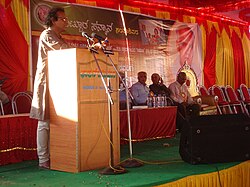
Expanding the Art Form
Ganesh has pushed the boundaries of the tradition by introducing chitrakavya, a form of constrained poetry where the letters form a visual pattern, into avadhana—a feat previously considered impossible. His reach extends globally, with more than 20 performances conducted across Europe and America.
The Transition to Shatavadhana
Beyond the eight-person challenge, Ganesh has mastered the Shatavadhana, involving one hundred pṛcchakas. He performed his first Shatavadhana at the Bharatiya Vidya Bhavan in Bangalore on December 15, 1991. Following this, he performed another 15 days later, and subsequent ones in 1992 and 1993. In 2012, he achieved a significant milestone by conducting his fifth Shatavadhana entirely in the Kannada language.
Academic and Educational Contributions
To ensure the survival of this art, Ganesh has focused heavily on documentation and pedagogy. He authored a D. Litt thesis titled The Art of Avadhana in Kannada and is working on a forthcoming volume, Avadhana Sahasra.
To groom future avadhanis, he has written several instructional books, including:
- Shatavadhana Sharade
- Shatavadhana Srividye
- Sataavadhaana Shaashvati
Furthermore, he provides educational resources on poetics, prosody (the study of poetic meters), and poetry composition through the "Padyapaana" organization's website.
| Variant | Number of Pṛcchakas | Ganesh's Key Milestones |
|---|---|---|
| Aṣṭāvadhāna | 8 | Hundreds of performances; 100th and 200th held in Kolar. |
| Śatāvadhāna | 100 | First performed Dec 15, 1991; first full Kannada version in 2012. |
Frequently Asked Questions
What is the primary goal of an avadhana performance?
The goal is to compose extempore metrical verse to solve problems posed by pṛcchakas while maintaining concentration despite deliberate interruptions.
How did Ganesh contribute to the Kannada language?
Ganesh is credited with reviving the living tradition of avadhana in Kannada and performing the first Shatavadhana entirely in the language in 2012.
What is chitrakavya and why is it significant in avadhana?
Chitrakavya is a form of pattern poetry. Its introduction into avadhana by Ganesh was significant because it was previously believed to be impossible to execute during such a performance.
In which languages has Ganesh performed avadhana?
He has performed using eight different languages, which include Sanskrit, Kannada, and Telugu.
How can aspiring avadhanis learn the art?
Aspiring practitioners can study Ganesh's books, such as Shatavadhana Sharade, or access his lectures on prosody and poetics via the Padyapaana website.