Austria National Football Team: A Legacy of European Football
Known affectionately as Das Team (The Team) or Burschen (The Boys), the Austria men's national football team represents the nation on the global stage under the governance of the Österreichischer Fußball-Bund (ÖFB). From the early days of the 20th century to the modern tactical innovations of the 2020s, Austria has remained a significant presence in UEFA competitions.
The team's journey is marked by dramatic peaks and valleys, ranging from a historic third-place finish in the World Cup to periods of rebuilding. Today, led by head coach Ralf Rangnick and captain David Alaba, the team continues to strive for consistency in the world's most prestigious tournaments.
Key Facts
- Highest FIFA Ranking: 10th (March–June 2016).
- World Cup Best: Third place in 1954.
- Olympic Success: Silver medal at the 1936 Berlin Games.
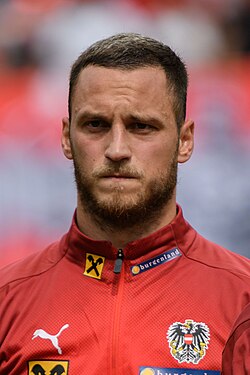
- All-Time Legend: Marko Arnautović holds the records for both most caps (137) and most goals (49).
- Current Leadership: Managed by Ralf Rangnick with David Alaba as captain.
Historical Evolution
Pre-World War II and the Golden Era
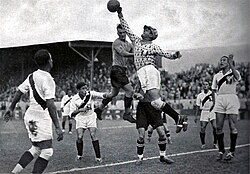
Austria's international journey began on October 12, 1902, with a dominant 5–0 victory over Hungary in Vienna. The early 20th century saw the rise of a highly technical style of play, culminating in a silver medal at the 1936 Olympic Games and a fourth-place finish at the 1934 FIFA World Cup.
Post-War Success and the 1954 World Cup
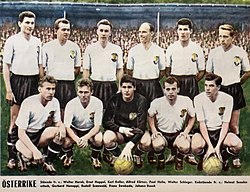
The post-war era brought one of the greatest achievements in the team's history. In 1954, Austria secured a third-place finish at the FIFA World Cup in Switzerland, cementing their status as a global footballing power during that period.
The 21st Century: Decline and Revival
The early 2000s were a period of struggle, with the team hitting a lowest FIFA ranking of 105th in July 2008. However, co-hosting the 2008 European Championship sparked a revival. While the 2008 tournament was a group-stage exit, the team eventually qualified for the 2016 European Championship on their own merit for the first time under Marcel Koller.
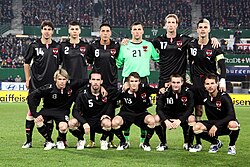
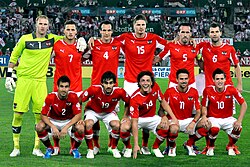
The 2020s have seen further breakthroughs, with the team reaching the Round of 16 in both the 2020 and 2024 European Championships, signaling a return to competitive stability.
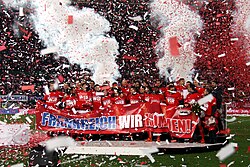
Modern Era and Recent Performance
Under the guidance of Ralf Rangnick, Austria has implemented a modern, high-pressing tactical approach. This era has been characterized by strong qualification campaigns and a commitment to developing a cohesive team identity.
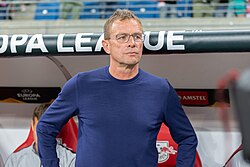
The team's current success is heavily anchored by individual brilliance, most notably from Marko Arnautović, who stands as the most capped player and top scorer in the nation's history.
Tournament and Performance Summary
| Competition | Appearances | Best Result | Notable Achievement |
|---|---|---|---|
| FIFA World Cup | 8 | Third Place | 1954 Switzerland |
| UEFA European Championship | 4 | Round of 16 | 2020, 2024 |
| Olympic Games | 4 | Silver Medal | 1936 Berlin |
| Central European International Cup | Multiple | Champions | 1931–32 |
Frequently Asked Questions
Who is the all-time leading scorer for Austria?
Marko Arnautović is the top scorer for the Austria national team, having scored 49 goals in 137 appearances.
What is Austria's best ever finish in the FIFA World Cup?
Austria's best result in the FIFA World Cup was third place, achieved during the 1954 tournament in Switzerland.
Who is the current head coach of the team?
The team is currently managed by Ralf Rangnick.
When did Austria first qualify for the European Championship on its own?
After co-hosting in 2008, Austria managed to qualify for the European Championship on their own merit for the first time for the 2016 tournament.
What is the team's biggest international victory?
Austria's biggest win was a 10–0 victory against San Marino on October 9, 2025, in Vienna.