Auguste Piccard: The Pioneer of the Stratosphere and Deep Ocean
Auguste Antoine Piccard was a visionary Swiss physicist, inventor, and explorer who dedicated his life to pushing the boundaries of human reach. From the thin air of the upper atmosphere to the crushing pressures of the deep sea, Piccard's relentless curiosity led to breakthroughs that redefined our understanding of the Earth's extremes.
Born in Basel, Switzerland, in 1884, Piccard's academic journey began at the Swiss Federal Institute of Technology (ETH) in Zürich. By 1922, he had become a professor of physics at the Free University of Brussels. His intellectual stature was recognized globally, as evidenced by his participation in the prestigious Solvay Congresses between 1922 and 1933, where he interacted with the leading scientific minds of his era, including Albert Einstein.
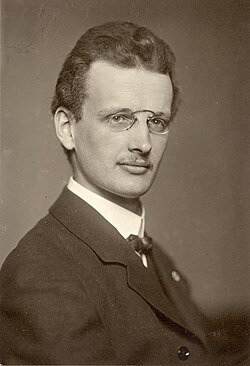
Key Facts
- First Human in the Stratosphere: Reached a record altitude of 15,781 meters (51,775 ft) in 1931.
- Bathyscaphe Inventor: Created the FNRS-2, the first deep-sea submersible of its kind.
- Scientific Focus: Conducted critical measurements of cosmic radiation to test theories of physics.
- Family Legacy: Part of a multi-generational dynasty of explorers, including his son Jacques and grandson Bertrand.
Conquering the Stratosphere
In 1930, Piccard turned his attention to the upper atmosphere. To survive the extreme conditions of high altitude, he designed a spherical, pressurized aluminum gondola. This innovation allowed him to ascend without the need for a cumbersome pressure suit. His research was driven by a desire to measure cosmic radiation—high-energy particles from space—to provide experimental evidence for the theories of Albert Einstein.
On May 27, 1931, Piccard and Paul Kipfer launched a hydrogen balloon from Augsburg, Germany. They shattered all existing aircraft altitude records, reaching an estimated height of over 52,000 feet. This flight marked the first time human beings entered the stratosphere (the second major layer of Earth's atmosphere), providing invaluable data on atmospheric conditions.
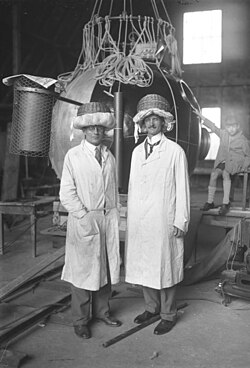
Descending into the Deep
By the mid-1930s, Piccard realized that the same principles used to keep pressure out of a high-altitude cabin could be used to keep pressure from crushing a cabin in the deep ocean. This led to the invention of the bathyscaphe, a specialized deep-sea submersible.
The FNRS-2 featured a bubble-shaped steel cockpit designed to maintain normal internal air pressure even when external water pressure exceeded 46 MPa (6,700 psi). To achieve buoyancy, Piccard attached a large flotation tank filled with gasoline, a low-density liquid that is relatively incompressible. To descend, the craft used iron weights that could be released to allow the vessel to resurface.
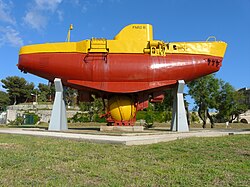
While the FNRS-2 performed unmanned dives in 1948 and later reached 4,176 meters under the French Navy in 1954, Piccard also collaborated with his son, Jacques. Together, they built a second bathyscaphe and reached a record depth of 3,150 meters in 1953.
Legacy and Cultural Impact
The Piccard family became synonymous with exploration. Beyond Auguste, his twin brother Jean Felix, son Jacques, and grandson Bertrand all made significant contributions to aeronautics and oceanography.
Auguste's unique appearance and intellect also left a mark on popular culture. He served as the inspiration for Professor Cuthbert Calculus in The Adventures of Tintin, as the cartoonist Hergé encountered Piccard in Brussels. Additionally, Gene Roddenberry is credited with naming Captain Jean-Luc Picard from Star Trek after the Piccard brothers.
| Domain | Innovation/Achievement | Key Milestone | Result |
|---|---|---|---|
| Atmosphere | Pressurized Aluminum Gondola | 1931 Flight | First human to enter the stratosphere |
| Ocean | Bathyscaphe (FNRS-2) | 1948/1954 Dives | Pioneered deep-sea pressure hulls |
| Physics | Cosmic Radiation Study | Solvay Congresses | Experimental evidence for physics theories |
Frequently Asked Questions
What was the purpose of the gasoline in the bathyscaphe?
Gasoline was used in the flotation tank because it is a low-density liquid that is relatively incompressible. This provided the necessary buoyancy to keep the craft afloat without collapsing under the immense pressure of the deep ocean.
How did Auguste Piccard reach the stratosphere without a pressure suit?
He designed and built a spherical, pressurized aluminum gondola that maintained a livable internal environment, protecting him from the low pressure of the upper atmosphere.
Who was the inspiration for Professor Calculus in Tintin?
Auguste Piccard was the inspiration for Professor Cuthbert Calculus. The creator, Hergé, based the character on Piccard's tall stature and distinctive appearance after seeing him in Brussels.
What scientific goal drove Piccard's high-altitude flights?
Piccard aimed to measure cosmic radiation in the upper atmosphere to provide experimental data that would support the theoretical physics of Albert Einstein.
Which family members continued the tradition of exploration?
His twin brother Jean Felix, his son Jacques, and his grandson Bertrand all became notable figures in the fields of aeronautics, ballooning, and ocean exploration.