Augmented Reality: Bridging the Gap Between Digital Graphics and the Physical World
Augmented reality (AR), often referred to as mixed reality (MR), represents a sophisticated form of 3D human-computer interaction. Unlike technologies that isolate a user from their surroundings, AR overlays real-time, 3D-rendered computer graphics onto the real world. This is achieved through various displays, ranging from handheld smartphones to specialized head-mounted displays. When executed effectively, these digital elements are seamlessly interwoven with the physical environment, creating an immersive experience that alters a user's perception of reality without replacing it.
While AR is primarily a visual medium, it can extend to multiple sensory modalities, including auditory (sound), haptic (touch), and somatosensory (body position and movement) feedback.

Key Facts
- Core Function: Overlays digital 3D graphics onto the real-world environment.
- Distinction: Unlike Virtual Reality (VR), which replaces the real world, AR enhances it.
- Origins: Early functional systems emerged in the early 1990s.
- Primary Modalities: Primarily visual, but can include audio and touch.
- Common Hardware: Includes smartphones, smartglasses, and head-mounted displays.
The Evolution of Augmented Reality
The journey of AR began in the early 1990s. One of the earliest functional systems to provide immersive mixed reality experiences was the Virtual Fixtures system, developed at the U.S. Air Force's Armstrong Laboratory in 1992.
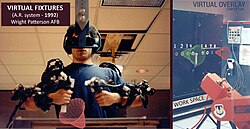
Following these foundational developments, commercial applications first gained traction within the entertainment and gaming sectors. Over time, the technology has matured and expanded into critical professional industries, including medicine, education, communications, and industrial manufacturing.
Hardware and Display Technologies
To bring digital overlays into our physical space, several types of hardware and display methods are utilized:
Head-Mounted Displays and AR Glasses
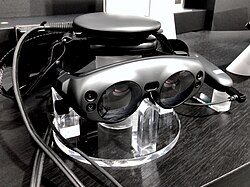
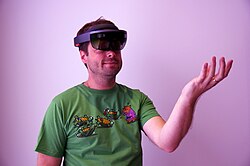
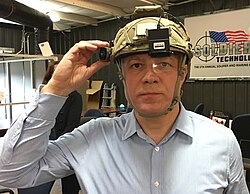
Head-mounted displays (HMDs) are wearable devices that place the digital interface directly in the user's field of vision. Notable commercial examples include the Magic Leap 1 and the Microsoft HoloLens. Additionally, many companies are developing smartglasses, which aim to provide AR capabilities in a more lightweight, everyday form factor.

Handheld and Projection Mapping
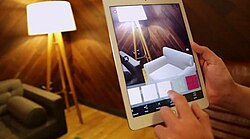
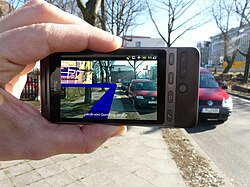
Not all AR requires wearable hardware. Handheld devices, such as smartphones and tablets, use their screens and cameras to view augmented environments. Another method is projection mapping, which projects light directly onto physical objects to alter their appearance.
Diverse Applications of AR
The versatility of AR allows it to solve complex problems across various sectors:
Education, Training, and Navigation
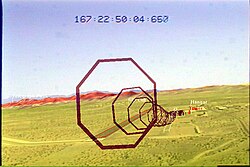
In educational settings, AR provides interactive learning experiences. For navigation, AR can overlay digital markers onto real-world maps to assist with wayfinding. This includes applications that provide visual overlays for maps during flight or ground travel.
Medicine and Surgery
In the medical field, AR is used for surgical navigation and training, allowing practitioners to visualize anatomical structures overlaid on a patient during procedures.
Military and Industrial Use
The military utilizes AR for enhanced situational awareness and training. In industrial environments, it assists with complex tasks such as human-in-the-loop robot operations and functional mockups.

Comparison of Reality Technologies
Understanding where AR fits requires comparing it to other immersive technologies.
| Technology | Environment | Primary Experience |
|---|---|---|
| Augmented Reality (AR) | Real World | Digital elements overlaid on physical reality |
| Virtual Reality (VR) | Simulated World | Complete replacement of the real environment |
| Mixed Reality (MR) | Hybrid | Seamless interaction between real and digital objects |
Frequently Asked Questions
What is the main difference between AR and VR?
The primary difference lies in the environment. Augmented Reality (AR) enhances the real world by adding digital layers to it, whereas Virtual Reality (VR) completely replaces the user's physical surroundings with a fully simulated digital environment.
Is augmented reality only visual?
While most current AR experiences are visual, the technology can incorporate other sensory modalities, such as sound (auditory), touch (haptic), and body position (somatosensory).
What are some common AR frameworks used today?
Developers often use frameworks such as ARKit and ARCore to build augmented reality applications for mobile devices and other platforms.
Can AR be used on a smartphone?
Yes, handheld devices like smartphones are a common way to experience AR, using the device's camera and screen to display digital graphics over the real world.
What was the first AR system?
One of the earliest functional AR systems was the Virtual Fixtures system, developed at the U.S. Air Force's Armstrong Laboratory in 1992.