Audio Interfaces: The Bridge Between Analog Sound and Digital Recording
At its core, an audio interface is a specialized piece of computer hardware that facilitates the movement of audio signals between an external source and a host computer or recording device. Whether you are capturing a vocal performance or monitoring a complex mix, the interface serves as the essential gateway for audio data.
Audio Interfaces vs. Computer Sound Cards
While audio interfaces are closely related to standard computer sound cards, they serve very different primary purposes. Sound cards are generally optimized for audio playback, such as listening to music or system alerts. In contrast, an audio interface is engineered for professional audio applications, focusing on providing low-latency analog-to-digital and digital format conversion. Low latency refers to the minimal delay between the time an audio signal enters the system and the time it is processed and heard.
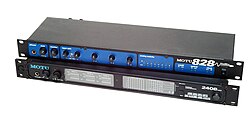
Hardware Capabilities and Connectivity
Professional audio interfaces are designed to handle a variety of signal types to accommodate different recording needs. Many units include microphone preamps, which amplify the quiet signal of a microphone to a usable level, as well as analog line inputs and DI (Direct Injection) inputs for instruments.
For digital connectivity, interfaces often support formats such as ADAT (Alesis Digital Audio Tape) or S/PDIF (Sony/Philips Digital Interface), allowing for the transmission of high-quality digital audio between devices.
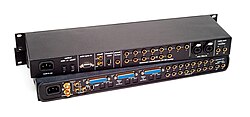
Output Options and Form Factors
On the output side, these devices typically provide analog line outputs, dedicated headphone jacks, and digital outputs. Depending on the scale of the project, interfaces are available in various physical formats, ranging from compact desktop devices to professional 19-inch rackmount units. Their capacity also varies significantly, with options ranging from simple two-channel configurations to expansive systems supporting over 30 channels of input and output.
Key Facts
- Primary Function: Converts analog audio signals to digital data and vice versa.
- Key Advantage: Offers lower latency than standard consumer sound cards.
- Input Variety: Supports microphone preamps, analog line, DI, ADAT, and S/PDIF.
- Physical Formats: Available as desktop units or 19-inch rackmount hardware.
- Scalability: Channel counts range from 2 to over 30.
| Feature | Description |
|---|---|
| Input Types | Microphone, Analog Line, DI, ADAT, S/PDIF |
| Output Types | Analog Line, Headphones, Digital |
| Form Factors | Desktop, 19-inch Rackmount |
| Channel Range | 2 to 30+ channels |
Frequently Asked Questions
How does an audio interface differ from a sound card?
While sound cards are optimized for playback, audio interfaces are designed for professional recording, prioritizing low-latency conversion between analog and digital formats.
What are DI inputs used for?
DI (Direct Injection) inputs allow instruments to be plugged directly into the interface, bypassing the need for an external amplifier.
What is the purpose of a microphone preamp?
A microphone preamp boosts the low-level signal from a microphone to a line-level signal that the computer can record effectively.
What are ADAT and S/PDIF?
ADAT and S/PDIF are digital audio formats used to send and receive high-quality digital signals between an interface and other digital audio equipment.
Can I choose an interface based on the number of instruments I have?
Yes, interfaces are available in various sizes to suit different needs, ranging from basic 2-channel units to large-scale interfaces with over 30 channels.