Assyrians in Syria: History, Culture, and Modern Struggles
The Assyrian people represent one of the oldest continuous ethnic and cultural presences in the Middle East. In modern-day Syria, this community maintains a deep-rooted connection to the land, spanning over 4,000 years of history. From the grandeur of ancient empires to the challenges of the modern era, the Assyrians have preserved their unique identity through language, faith, and a resilient spirit.
Key Facts
- Estimated Population: Between 400,000 and 877,000 (2026 estimate).
- Primary Regions: Al-Hasakah Governorate, Damascus, Homs, and Aleppo.
- Languages: Turoyo, Sureth, and North Mesopotamian Arabic.
- Religious Affiliations: Primarily Chaldean Catholic, Syriac Catholic, and Syriac Orthodox.
- Ancient Roots: Presence in northeastern Syria dates back to the Old Assyrian Empire (2000–1750 BC).
Ancient Foundations and Early History
The presence of Assyrians in Syria is inextricably linked to the great empires of Mesopotamia. During the Old, Middle, and Neo-Assyrian Empires (2000–599 BC), much of modern Syria was under Assyrian rule. The northeastern region became an integral part of the Assyrian heartland during the 2nd millennium BC, where Akkadian and later Eastern Aramaic speakers lived alongside groups such as the Hittites, Hurrians, and Amorites.
Archaeological evidence of this era remains visible at sites such as Til-Barsip, Carchemish, Guzana, Shubat-Enlil, and Dur-Katlimmu. Following the fall of the Neo-Assyrian state, the region transitioned through the Achaemenid Empire (as Athura), Seleucid Syria, and the Parthian and Sassanid Empires. It was during this time that Christianity took root in the 1st century AD, establishing the region as a birthplace of Eastern Christianity and Syriac literature—the literary tradition using the Syriac language, a dialect of Aramaic.
The Middle Ages to the Early 20th Century
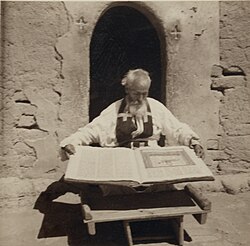
The modern era brought significant upheaval for the Assyrian community. During the Ottoman Empire, Assyrians faced severe persecution and ethnic cleansing, often carried out by Kurdish tribes in cooperation with Ottoman authorities. These atrocities were part of the broader genocides against Armenian and Assyrian Christians in Upper Mesopotamia.
Displaced from regions like Hakkari, many Assyrians sought refuge in Syria. In the 1930s and 1940s, a significant resettlement occurred in the Al-Hasakah Governorate, specifically in towns such as Qamishli, Al-Malikiyah, Al-Darbasiyah, Al-Qahtaniyah, and Tel Tamer.
The Khabur River Settlements
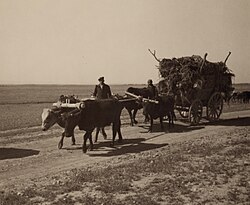
A defining feature of the Assyrian presence in Syria is the settlement along the Khabur River. Following the Simele massacre of 1933 in Iraq, approximately 9,000 Assyrians migrated to the Jazirah region near Tall Tamir. With the assistance of the League of Nations, the French established a network of about 20 primarily agricultural villages.
By 1994, reports identified over 30 Assyrian villages in this area, including Tell Tamer, Tell Baz, and Tell Wardiat. Despite owning irrigated lands, these communities have faced long-term economic pressures, leading many to emigrate to the United States.
Religion and Cultural Identity
Faith is a cornerstone of Assyrian identity in Syria, with the community adhering to both the East and West Syriac Rites. The religious landscape is divided between Catholic and Orthodox traditions.
Catholic Assyrians
The community includes the Chaldean Catholic Church and the Syriac Catholic Church. The latter maintains four dioceses in Syria: Damascus, Homs (vacant since 2013), Aleppo, and Hassaké-Nisibi.
Orthodox Assyrians
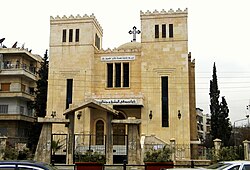
The Syriac Orthodox Church is a major pillar of the community. In the mid-1970s, it was estimated that 82,000 Syriac Orthodox Christians lived within the country.

Political Organization and Modern Conflict
Political mobilization began in earnest with the founding of the Assyrian Democratic Organization (ADO), known as Mtakasto, in 1957. As the oldest Assyrian political party in Syria, it emphasizes huyodo (unity). Other active groups include the Assyrian Democratic Party and the Syriac Union Party.

The Syrian Civil War brought renewed violence. To protect their communities, several militias emerged, including the Gozarto Protection Force, the Sutoro, and the Khabour Guards. The latter eventually merged with the Syriac Military Council to form the Syriac-Assyrian Military Council.
![An unofficial flag of Assyrians in the Jazira Region, used by the Syriac Military Council[40]](/images/54/fd/54fd77ca1609b56c1d06a6cb63ea37452ee7f2d84ccdbbf8619b6926be7d8aa7.webp)
Persecution by ISIL
The rise of ISIL led to targeted attacks. On February 23, 2015, ISIL abducted 232 Assyrians from villages near Tell Tamer, including 84 women and 51 children. While some were executed, the remaining hostages were eventually freed in 2016 following ransom negotiations mediated by the Assyrian Church of the East.
Current Status and Human Rights
Today, the community faces a demographic crisis. Bishop Jules Boutros of the Syriac Catholic Church has noted that young men are leaving Syria in large numbers to avoid lengthy mandatory military service, which can last 9 to 10 years.
In the Autonomous Administration of North and East Syria, there have been efforts to preserve the culture. In 2016, the Ourhi Centre in Qamishli began training teachers to introduce Syriac-Aramaic into public school curriculums alongside Kurdish and Arabic.
| Category | Details |
|---|---|
| Estimated Population | 400,000 – 877,000 |
| Key Languages | Turoyo, Sureth, Arabic |
| Major Religious Bodies | Syriac Orthodox, Syriac Catholic, Chaldean Catholic |
| Primary Settlement Hub | Khabur River Valley (Al-Hasakah) |
| Oldest Political Party | Assyrian Democratic Organization (Mtakasto) |
Frequently Asked Questions
What is the estimated population of Assyrians in Syria?
Estimates vary, but current projections for 2026 suggest a population between 400,000 and 877,000 people.
Which languages do Assyrians in Syria speak?
The community primarily speaks Turoyo and Sureth, as well as North Mesopotamian Arabic.
What is the significance of the Khabur River valley?
The Khabur River valley is home to over 30 Assyrian villages, many of which were established in the 1930s by refugees fleeing the Simele massacre in Iraq.
What are the main Christian denominations among Syrian Assyrians?
The majority belong to the Syriac Orthodox Church, the Syriac Catholic Church, or the Chaldean Catholic Church.
How is the Syriac language being preserved in modern Syria?
In the Jazira Region, the Ourhi Centre has worked to integrate Syriac-Aramaic into public school curriculums as an additional language of instruction.