Discovering Asan: A Hub of Industry, History, and Relaxation
Located in South Chungcheong Province, Asan is a dynamic city that serves as a vital link to the Seoul Capital Area. Known widely as a "city of spas" due to its abundant hot springs, Asan offers a unique blend of high-tech industrial power and tranquil wellness retreats. Whether you are drawn to its Mediterranean-style architecture, its deep historical roots, or its role as a manufacturing powerhouse, Asan is a cornerstone of South Korean regional development.
Key Facts
- Primary Industry: Major manufacturing hub for semiconductors, electronics, and automotive parts.
- Famous For: Natural hot springs and spa tourism.
- Major Employers: Samsung Electronics, Samsung Display, Hyundai Motor, and Hyundai Mobis.
- Transportation: Connected to Seoul via KTX (approx. 30 minutes) and the Seoul Metropolitan Subway.
- Historical Significance: Home to Hyeonchungsa, a shrine dedicated to Admiral Yi Sun-sin.
Geography and Climate
Asan covers a municipal area of 542.25 km², with an urban core of approximately 42.29 km². The city is characterized by a humid continental climate (Köppen classification: Dwa), though it sits on the borderline of a humid subtropical climate. This means the city experiences distinct seasonal shifts.
Summers are warm and humid, with July and August seeing the highest temperatures and most significant rainfall. Winters can be quite cold, with mean daily minimums dropping below freezing. The city receives an average annual precipitation of approximately 1,132.9 mm, with much of that falling during the summer months.
A Powerhouse of Industry and Economy
Asan stands as the largest manufacturing base in the Chungnam region. The city's economy is driven by massive industrial complexes that house global leaders in technology and transport. In the Tangjeong area, Samsung Electronics (semiconductor division) and Samsung Display maintain significant operations, alongside Corning Precision Materials. Meanwhile, the Inju Industrial Complex is a vital center for automotive manufacturing, anchored by the Hyundai Asan Plant.
Beyond these giants, the city supports a robust ecosystem of medium-sized enterprises, including companies such as Nongshim, HL Mando, and Dongseong Pharmaceuticals. While the manufacturing sector dominates, agriculture remains present, with rice being the most prolific crop. The livestock industry is also highly active, characterized by a trend toward larger, more professionalized farming operations.
Industrial and Commercial Overview
| Category | Details |
|---|---|
| Population (Sept 2024) | 353,603 |
| Major Sectors | Semiconductors, Automotive, Electronics, Spas |
| Key Corporations | Samsung, Hyundai, KCC, Hanwha Group |
| Administrative Divisions | 2 eup, 9 myeon, 6 dong |
Culture, Tourism, and Education
For those looking to escape the industrial pace, Asan offers diverse cultural experiences. The Blue Crystal Village in Tangjeong-myeon provides an exotic escape, featuring white walls and blue roofs inspired by the Mediterranean architecture of Santorini, Greece. This unique landscape was originally developed from a vineyard.
History enthusiasts can visit Hyeonchungsa, a shrine dedicated to the legendary Admiral Yi Sun-sin. The city honors his legacy annually through the Great Admiral Yi Sun-sin Festival. Additionally, the city's connection to Onyang-dong provides access to famous hot springs, making it a premier destination for spa tourism.
Education and Sports
Asan is a significant educational center, hosting five universities, including Hoseo University and Soonchunhyang University. The city also features the Korean National Police University.
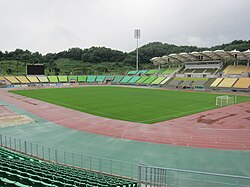
In the realm of sports, Asan is home to the Asan Woori Bank Woori Won women's basketball team. The city also supports professional football through Chungnam Asan FC, which competes in the K League 2.
Transportation and Connectivity
Asan is exceptionally well-connected to the rest of South Korea. The Cheonan-Asan Station serves the KTX high-speed rail, allowing travelers to reach Seoul in just 30 minutes. For those arriving via Incheon International Airport, the city is reachable within two hours by car. The local infrastructure is further bolstered by the Seoul Metropolitan Subway extension and major highways, including the Seoul-Busan and West Coast expressways.
Frequently Asked Questions
What is Asan most famous for?
Asan is most famous for its natural hot springs and spa culture, as well as its massive industrial presence in the semiconductor and automotive sectors.
How do I get to Asan from Seoul?
The fastest way is via the KTX high-speed train from Cheonan-Asan Station, which takes approximately 30 minutes. You can also use the Seoul Metropolitan Subway or major expressways.
Is Asan a good place for tourism?
Yes. Visitors can enjoy the Mediterranean-style Blue Crystal Village, visit historical sites like the Yi Sun-sin shrine, or relax in the city's many famous hot springs.
What major companies are located in Asan?
Asan is home to major global companies including Samsung Electronics, Samsung Display, Hyundai Motor, and Hyundai Mobis.
What is the climate like in Asan?
Asan has a humid continental climate with distinct seasons. It features warm, rainy summers and cold winters.