Artificial Intelligence: Foundations, Techniques, and Societal Impact
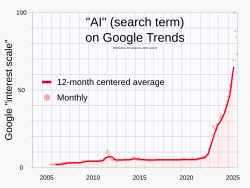
Artificial intelligence (AI) is the capability of computational systems to perform tasks that typically require human intelligence. These tasks include learning, reasoning, problem-solving, perception, and decision-making. As a multidisciplinary field spanning engineering, mathematics, and computer science, AI focuses on developing software and methods that allow machines to perceive their environment and take actions to maximize the chances of achieving specific goals.
From the advanced web search engines we use daily to the autonomous vehicles navigating our streets, AI has integrated itself into the fabric of modern technology. While many current systems are designed for specific tasks, some organizations—such as OpenAI, Google DeepMind, and Meta—are striving toward artificial general intelligence (AGI), a theoretical form of AI capable of completing nearly any cognitive task as well as a human being.
![Deep learning is a subset of machine learning, which is itself a subset of artificial intelligence.[116]](/images/7b/8c/7b8c1212a680faf93bbcc581bf4df09eff715c2b5ee742af62d874868e6bf504.webp)
Key Facts
![Street art in Tel Aviv[199][200]](/images/f0/e0/f0e0859f19111f6ea2b60f3702bec07b6a939ae0306c40fd0a563f66d80a2aa8.jpg)
- Core Capabilities: AI encompasses learning, reasoning, knowledge representation, planning, and natural language processing.
- Broad Application: Used in everything from facial recognition (FaceID) and virtual assistants (Siri, Alexa) to financial systems and military technology.
- Global Leadership: In 2024, the US and China held over 75% of the world's AI patents.
- Interdisciplinary Nature: AI draws from psychology, linguistics, philosophy, neuroscience, and economics.
- Environmental Cost: The growth of AI has significantly increased the power demand for data centers in the 2020s.
Core Goals and Capabilities
Reasoning and Problem-Solving
AI aims to replicate the human ability to process information logically to reach conclusions or solve complex problems. This involves using mathematical optimization and formal logic to navigate various possibilities.
Knowledge Representation
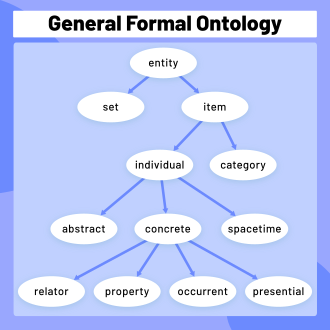
For an AI to function, it must have a way to represent information about the world. An ontology is often used here, representing knowledge as a set of concepts within a domain and the relationships between them.
Natural Language Processing (NLP)
NLP allows machines to understand, interpret, and generate human language. This technology powers automatic translation services like Google Translate and Microsoft Translator, as well as modern chatbots.
Perception and Robotics
Perception involves interpreting sensory inputs, such as vision or sound. This is critical for robotics and computer vision, enabling machines to recognize faces or navigate physical spaces autonomously.
![Kismet, a robot head made in the 1990s, is a machine that can recognize and simulate emotions.[68]](/images/1a/e3/1ae35168a020a9435007c4c8da2dceb50456651fb35ff929f49289f3e7e51b16.webp)
Technical Approaches to AI
![The Turing test can provide some evidence of intelligence, but it penalizes non-human intelligent behavior.[409]](/images/a2/2e/a22e5130cf3fd42c90d77912b6577fe7a66e2eda77569d46cf991af9a0cf9377.webp)
Search and Optimization
AI researchers use different search methods to find solutions. State space search explores all possible states to find a goal, while local search focuses on optimizing a current state to find the best possible solution.

Machine Learning and Deep Learning
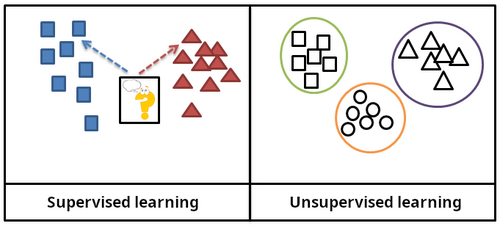
Machine learning is a method where systems learn from data rather than following explicit programming. This is divided into supervised learning, where data is labeled with expected answers, and unsupervised learning, where the model identifies hidden patterns in unlabeled data.
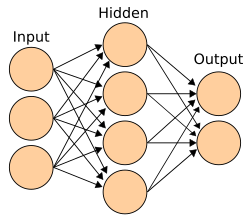
Deep learning, a subset of machine learning, utilizes artificial neural networks—interconnected groups of nodes inspired by the human brain—to process data in complex layers. This approach is the foundation for GPT and other generative AI models.
Probabilistic and Statistical Methods
To handle uncertainty, AI uses probabilistic methods. Bayesian networks use conditional probability tables to reason under uncertainty, while classifiers and statistical learning methods help categorize data based on patterns.

Another example is expectation–maximization clustering, which can take a random guess and converge on accurate clusters of distinct data modes.
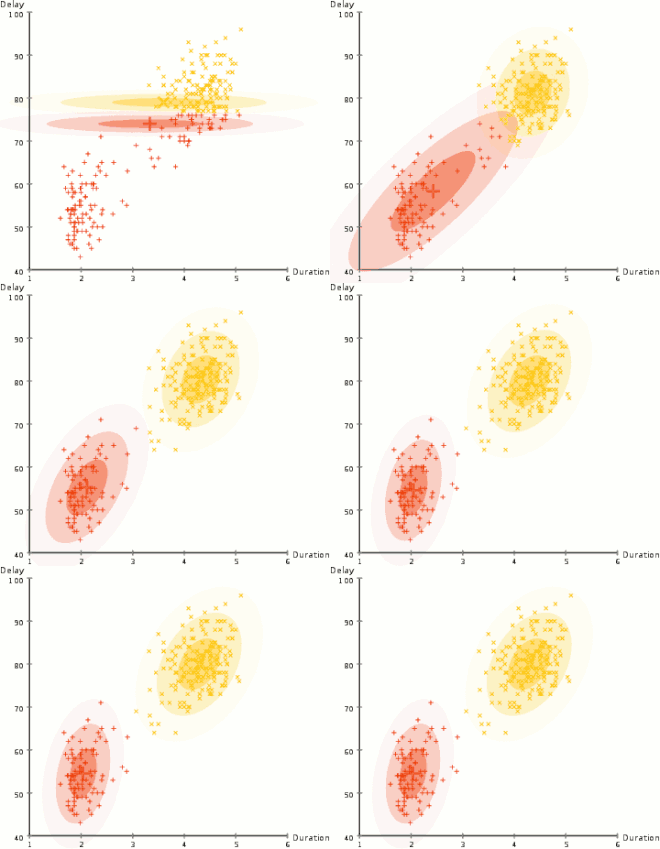
Real-World Applications
AI technology is now essential to the digital economy. It drives internet traffic through recommendation systems on platforms like Netflix, YouTube, and Amazon, and powers targeted advertising via AdSense and Facebook.

Beyond the web, AI is utilized in:
- Healthcare: Assisting in medicine and diagnostics.
- Transportation: Powering drones, Advanced Driver Assistance Systems (ADAS), and self-driving cars.
- Security: Implementing facial recognition through systems like Apple's FaceID and Google's FaceNet.
- Development: AI-assisted software development and the creation of autonomous agents.

Ethics, Risks, and Regulation
The rapid ascent of AI has introduced significant ethical challenges. Concerns include algorithmic bias, where AI reflects human prejudices, and a lack of transparency in "black box" systems. There are also fears regarding technological unemployment and the substitution of human-to-human interaction.
Environmental impacts are also a concern, as the massive computing power required for AI increases the energy consumption of data centers.
![Fueled by a growth in AI, data centers' demand for power increased in the 2020s.[224]](/images/5b/1e/5b1ee70d40b10f48bd3aaae75f126f49837e51975feafa1f29bce4446d9bc94d.webp)
To mitigate these risks, international cooperation has increased. The first global AI Safety Summit was held in the UK in November 2023, resulting in a declaration for international cooperation on AI safety.

AI Summary Table
| Concept | Primary Focus | Example/Technique |
|---|---|---|
| Narrow AI | Specific tasks | Facial Recognition, Siri |
| AGI | Human-level general cognition | Theoretical/Research Goal |
| Supervised Learning | Labeled data patterns | Spam detection |
| Unsupervised Learning | Unlabeled data structures | Customer segmentation |
| Deep Learning | Multi-layered neural networks | GPT, Image Generation |
Frequently Asked Questions
What is the difference between AI, Machine Learning, and Deep Learning?
Artificial Intelligence is the broad field of creating intelligent machines. Machine Learning is a subset of AI that allows systems to learn from data. Deep Learning is a further subset of machine learning that uses multi-layered artificial neural networks to solve complex problems.
What is Artificial General Intelligence (AGI)?
AGI refers to a type of AI that possesses the ability to understand, learn, and apply its intelligence to any cognitive task at a level equal to or greater than a human being.
How does AI impact the environment?
AI impacts the environment primarily through the high energy demands of the data centers required to train and run large-scale models, leading to increased power consumption.
What is the Turing test?
The Turing test is a method used to provide evidence of machine intelligence, though critics argue it may penalize intelligent behavior that does not specifically mimic human behavior.
Who coined the term "robot"?
The word "robot" was coined by Karel Čapek in his 1921 play R.U.R. (Rossum's Universal Robots).

Which countries lead in AI patents?
As of 2024, China and the United States hold more than three-fourths of all AI patents worldwide. While China has a higher total number of patents, the US has a higher number of patents per AI patent-applicant company.
![In 2024, AI patents in China and the US numbered more than three-fourths of AI patents worldwide.[365] Though China had more AI patents, the US had 35% more patents per AI patent-applicant company than China.[365]](/images/9e/11/9e1143035b0019ba5d68a55dec589fca867b7d9cc6de973a8a0056da33e98246.webp)