Artificial Heart Technology: Evolution, Devices, and Clinical Milestones
The quest to replace the human heart with a mechanical alternative has been one of the most ambitious journeys in modern medicine. From early experimental pumps to sophisticated bioprosthetic devices, the development of the artificial heart aims to provide a lifeline for patients suffering from end-stage heart failure. These devices generally fall into two categories: those that support a failing heart and those that replace it entirely.
Key Facts
- First LVAD: The first clinical Left Ventricular Assist Device (LVAD) was implanted in 1966 by Michael DeBakey and Liotta.
- SynCardia: The first total artificial heart approved by the US FDA in 2004.
- Carmat Aeson: A bioprosthetic heart approved for use in the European Union as a bridge-to-transplant.
- BiVACOR: A modern titanium heart currently undergoing human clinical trials with FDA authorization.
- Bridge-to-Transplant: A common clinical use where a device keeps a patient alive while they wait for a human donor heart.
The Origins of Mechanical Heart Support
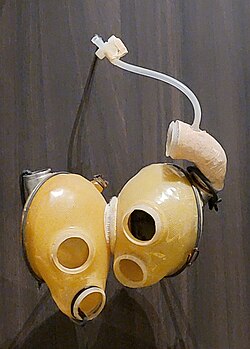
The journey began not with a full replacement, but with assistive devices. On April 21, 1966, Michael DeBakey and Liotta performed the first clinical implantation of an LVAD—a device designed to help the left ventricle pump blood—in a paracorporeal position, meaning the pump remained outside the patient's body. While the first patient succumbed to complications, a second implantation in October 1966 was a success, with the patient discharged after 10 days of support.
![1966 DeBakey ventricular assist device.[29]](/images/02/5c/025cc5de447d03715216e3e33144e805faa39f020b418a8135a322af565b1f4b.jpg)
Total Artificial Hearts (TAH)
A Total Artificial Heart (TAH) is a device that completely replaces the two lower chambers of the heart. One of the most significant milestones in this field was the development of the Jarvik-7. Although it faced various regulatory and corporate hurdles, its legacy continued through CardioWest, which later became SynCardia.
SynCardia Systems
SynCardia currently offers two models of its artificial heart: a 70cc version for adult men and a 50cc version for women and children. Approved by the FDA in 2004, it is primarily used as a bridge to heart transplant. By 2014, more than 1,250 patients had received these devices.
Carmat Aeson Bioprosthetic Heart
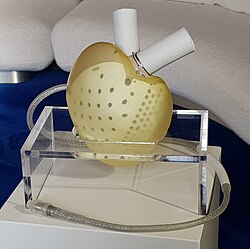
The Carmat Aeson represents a shift toward bioprosthetic materials. First implanted in Paris in December 2013, the device received its CE marking for sale in the European Union on December 22, 2020. In Europe, it is available as a bridge-to-transplant for up to 180 days; in the United States, it remains limited to clinical trials.
Modern Innovations and Prototypes
Recent advancements have focused on materials and pump mechanisms to reduce complications and improve longevity.
The BiVACOR Heart
The BiVACOR artificial heart is a titanium device that received FDA authorization for human trials in November 2023. Early results have been promising: a 57-year-old man received an implant in July 2024, and a 34-year-old man used the device as a successful bridge to a transplant shortly after. By December 2024, the FDA authorized the expansion of its study to 15 patients following five successful transplantations.
Experimental and Hybrid Approaches
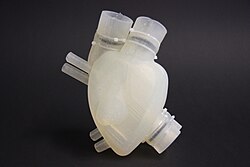
Researchers at ETH Zürich have developed a Soft Total Artificial Heart using functional materials and wax casting techniques to create a pulsing, 3D-printed heart. Additionally, hybrid devices like the Berlin Heart have shown remarkable results in pediatric care. In one instance, a 15-year-old girl's heart healed naturally while supported by a Berlin Heart, allowing the device to be removed after 146 days.
Comparison of Notable Artificial Heart Devices
| Device | Primary Use | Key Feature | Regulatory Status |
|---|---|---|---|
| SynCardia TAH | Bridge-to-transplant | Available in 50cc and 70cc sizes | FDA Approved (2004) |
| Carmat Aeson | Bridge-to-transplant | Bioprosthetic materials | CE Marked (EU) |
| BiVACOR | End-stage heart failure | Titanium construction | FDA Investigational/Trials |
| Berlin Heart | Pediatric support | Temporary assistive fixture | FDA Approved (2011) |
Frequently Asked Questions
What is the difference between an LVAD and a Total Artificial Heart?
An LVAD (Left Ventricular Assist Device) is a pump that supports the existing left ventricle of the heart, whereas a Total Artificial Heart (TAH) completely replaces the ventricles of the biological heart.
What does "bridge-to-transplant" mean?
This refers to the use of a mechanical heart or assist device to keep a patient alive and stable while they are on a waiting list for a human donor heart transplant.
Is the BiVACOR heart permanently available?
No, the BiVACOR heart is currently under an FDA investigational device exemption and is being used in clinical trials to evaluate its safety and efficacy.
Can a mechanical heart ever be a permanent replacement?
While some devices are designed for long-term use, many current approved models, such as the Carmat and SynCardia, are primarily used as temporary bridges to a human transplant.
Has anyone recovered their natural heart function while using an artificial device?
Yes, there are documented cases, such as a 15-year-old girl using a Berlin Heart, where the natural heart healed sufficiently to allow the removal of the mechanical support.