Arizona Public Service: A History of Power and Evolution
The story of electricity in Phoenix is a narrative of rapid growth, corporate restructuring, and the challenges of managing a critical utility in one of the harshest climates in North America. From its humble beginnings in the late 19th century to its current status as a major energy provider, Arizona Public Service (APS) has mirrored the development of the region it serves.
Foundations and Early Growth
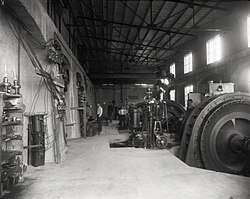
The journey began in 1886 with the formation of the Phoenix Light and Fuel Company, established to provide essential heat and electricity to the fledgling town of Phoenix. As the region expanded, so did the company's infrastructure. By 1901, the company had constructed two hydroelectric power stations to meet the growing demand of the city.
The company underwent several name changes during its early years, becoming the Pacific Gas and Electric Company in 1906 and Central Arizona Light and Power in 1920. To support the burgeoning local mining industry, the Childs-Irving Hydroelectric Facilities began producing power in 1909.
Corporate Transitions and Financial Peaks
The mid-20th century was marked by mergers and shifts in ownership. In 1925, the company became a subsidiary of the conglomerate American Power and Light, regaining its independence in 1945. Following a merger with Northern Arizona Power and Light in 1949 and a subsequent merger with Arizona Edison in 1952, the entity officially became Arizona Public Service.
Financially, the company enjoyed a period of remarkable stability, paying annual dividends without interruption from 1920 until 1989. Even during the bear market of the 1970s, the stock price doubled while maintaining a 10% dividend yield. By this era, the utility's energy mix was heavily reliant on fossil fuels, consisting of 94.4% coal, 5.2% natural gas, and 0.4% oil.
The 1980s Boom and Debt Accumulation
The early 1980s saw APS reach peak earnings of over US$255 million in 1983. However, this growth came with a cost: the company had accumulated more than US$2.1 billion in long-term debt. To manage capital, APS issued several preferred stocks between 1976 and 1983 with varying dividend rates.
In February 1985, the company reorganized into a holding company called AZP Group Inc., with APS as its primary subsidiary. This transition preceded another name change in 1987 to Pinnacle West Capital Corporation (trading as PNW).
Diversification and Economic Turmoil
Pinnacle West attempted to diversify its portfolio, most notably by acquiring MeraBank in 1986. The thrift grew to become the largest in Arizona with $6.5 billion in assets. However, the venture ended poorly when federal regulators seized the bank in January 1990, driven by a crash in the Arizona real estate market.
The combination of the 1990-1991 recession and failed diversification efforts led to a severe financial crisis. By 1991, the company faced a loss of nearly US$190 million and was forced to discontinue its dividend for the first time since 1920. The stock price plummeted 85% from its 1987 peak, and long-term debt climbed above US$2.5 billion.
Recovery and Modern Challenges
The company returned to profitability by 1992, with earnings recovering to over US$150 million. By 1993, the dividend was reinstated. The mid-to-late 1990s saw further milestones, including the addition of Pinnacle West to the S&P MidCap 400 index in 1995 and the opening of Arizona's first solar plant in Flagstaff in 1997.
Despite the recovery, the company faced various setbacks, including a US$13 million loss following the Enron scandal and regulatory disputes regarding the Palo Verde plant and the treatment of whistleblowers, which resulted in court-ordered compensation payments.
Grid Failures and Policy Shifts
On September 8, 2011, a significant power outage affected a region from Yuma, Arizona, to San Diego, California, and parts of Northern Mexico. The blackout was caused by the actions of an APS employee at the North Gila substation. In 2014, APS agreed to a $3.25 million settlement with the North American Electric Reliability Corporation (NERC) and the Federal Energy Regulatory Commission (FERC) regarding the incident.
A more personal tragedy occurred in September 2018, when 72-year-old Stephanie Pullman died from heat exposure after her power was disconnected over a $51 overdue bill during a 107 °F heatwave. This event led to a significant policy change, with Arizona regulators banning power shutoffs during hot summer days (specifically from June 1 to October 15).
Key Facts
- Founded: 1886 as Phoenix Light and Fuel Company.
- Dividend Streak: Uninterrupted annual dividends from 1920 to 1989.
- Energy Mix (1970s): 94.4% coal, 5.2% natural gas, 0.4% oil.
- Peak Debt: Long-term debt exceeded US$2.5 billion by 1991.
- Solar Milestone: Opened Arizona's first solar plant in Flagstaff in 1997.
- Regulatory Impact: Power shutoffs are now banned in Arizona from June 1 to October 15.
| Year | Entity Name / Event | Key Detail |
|---|---|---|
| 1886 | Phoenix Light and Fuel Company | Company formed |
| 1952 | Arizona Public Service | Formed via merger with Arizona Edison |
| 1985 | AZP Group Inc. | Reorganized as a holding company |
| 1987 | Pinnacle West Capital Corporation | Current corporate name adopted |
| 1990 | MeraBank Seizure | Diversification failure due to real estate crash |
| 2011 | North Gila Substation Incident | Widespread regional power outage |
Frequently Asked Questions
When did Arizona Public Service start paying dividends?
The company began paying an annual dividend in 1920 and continued to do so without interruption until 1989.
What caused the 2011 power outage in the Southwest?
The outage was caused by the actions of an APS employee at the North Gila substation, leading to a series of events across five power grids in 11 minutes.
Why did the company stop paying dividends in 1991?
The suspension was due to a combination of the 1990-1991 recession and financial losses resulting from failed attempts to diversify, including the seizure of MeraBank.
What is the current rule regarding power shutoffs in Arizona?
Following the death of Stephanie Pullman in 2018, Arizona regulators banned power shutoffs on hot summer days, a restriction that now covers all days between June 1 and October 15.
How did APS transition its energy sources?
While the company was historically dominated by coal (94.4% in the 1970s), it began diversifying into renewables, opening Arizona's first solar plant in Flagstaff in 1997.