Argentine Revolution of 1943: The Rise of Peronism and Military Rule
On June 4, 1943, Argentina underwent a seismic political shift known as the Revolution of '43. This military coup d'état ended the presidency of Ramón Castillo and brought a close to the period known as the Infamous Decade. More than just a change in leadership, this event served as the incubator for Peronism, the political movement that would dominate Argentine society for decades to come.
The coup was orchestrated by the United Officers' Group (GOU), a secret military lodge composed of nationalists. While the GOU included a diverse array of ideologies—ranging from Catholic nationalists and Radicals to pragmatists and fascists—they were united in their opposition to Governor Robustiano Patrón Costas, Castillo's intended successor and a powerful sugar industry magnate.
The Road to Revolution: The Infamous Decade
To understand the 1943 coup, one must look back to September 6, 1930, when General Jose Felix Uriburu overthrew the democratically elected President Hipólito Yrigoyen. This ushered in the Infamous Decade (1930–1943), a period characterized by electoral fraud and the rule of the Concordancia, a conservative political alliance.
During this era, Argentina began shifting its economic foundation through import substitution industrialization—a policy of replacing foreign imports with domestic production to reduce external dependency. This economic pivot created a new social class: the industrial working class.
Economic and Social Transformation
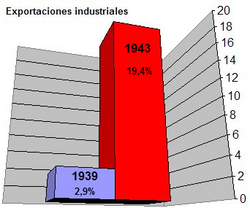
The Second World War acted as a catalyst for rapid industrial growth. By 1943, industrial production surpassed agricultural production for the first time. The textile industry led this surge, with industrial exports jumping from 2.9% of the total in 1939 to 19.4% in 1943.
This economic shift triggered a massive demographic movement. As the Great Depression limited European immigration, rural flight became the primary driver of urban growth. Between 1943 and 1947, an average of 117,000 people migrated from the provinces to Buenos Aires annually, fundamentally altering the culture and composition of the urban working class.
![The technical schools created by Juan Perón were part of a demand by the unions and a policy of industrialization. From 1941 to 1946 the industrial working class had increased 38%, from 677,517 to 938,387 workers.[11]](/images/01/f1/01f1d060d2d9b14b446d3bf95add10f0bd2d8dc784ddb92c0c2f69e707fbe0de.jpg)
The Coup of June 4, 1943
The revolution began at dawn on June 4, when 8,000 soldiers marched from Campo de Mayo. The only significant resistance came from the Argentine Navy at the Navy Petty-Officers School of Mechanics, resulting in 30 deaths and 100 injuries. President Castillo eventually fled to Uruguay aboard the minesweeper ARA Drummond.
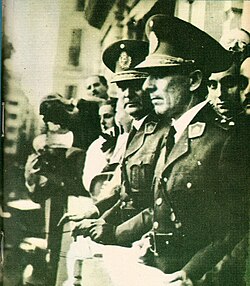
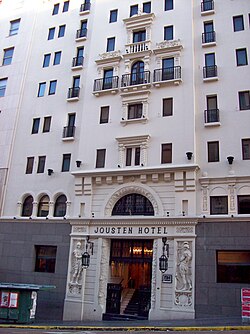
The conspirators, often referred to as the "Jousten Generals" after their meeting place at the Hotel Jousten, quickly established a new military government.
The Ramírez Administration
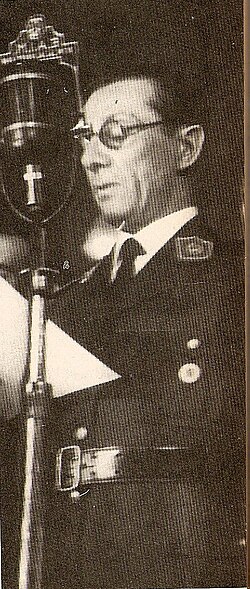
General Pedro Pablo Ramírez took office on June 7, 1943. His administration initially focused on fighting corruption, notably investigating the CHADE scandal involving the Hispano-American Electrical Company. However, his tenure was marked by tension over Argentina's neutrality in World War II.
The Rise of Juan Perón
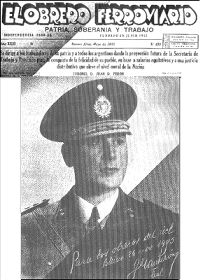
Within this military framework, Colonel Juan Perón began building a power base. By November 1943, Perón established a strategic alliance with various labor unions, creating a "labor-nationalist" current. He implemented unprecedented labor reforms, including collective bargaining, which secured the loyalty of millions of workers.
The Farrell Dictatorship and International Pressure
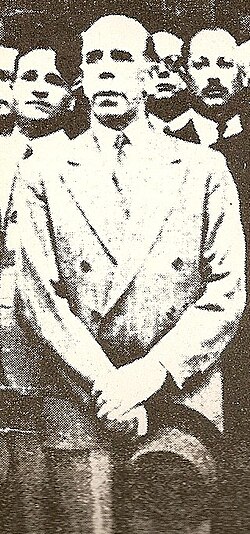
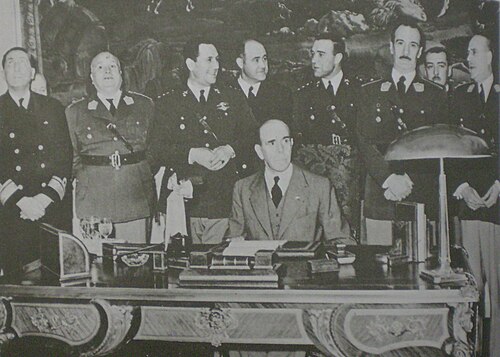
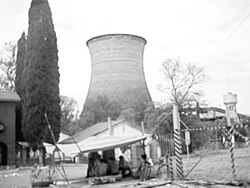
General Edelmiro Farrell eventually assumed the presidency, maintaining a close alliance with Perón. Under Farrell, the government aggressively pursued industrial policy, creating a Secretary of Industry and an Industrial Credit Bank, and completing the country's first blast furnace at Altos Hornos Zapla.
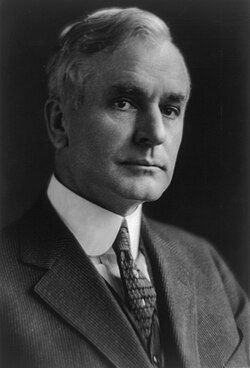
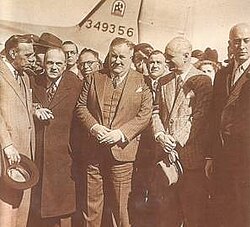
However, relations with the United States soured. U.S. Secretary of State Cordell Hull pressured Argentina to abandon its neutrality, leading to the resignation of the pro-Allied Admiral Segundo Storni. Later, the arrival of U.S. Ambassador Spruille Braden in May 1945 intensified the conflict, as Braden became a leading figure in the anti-Peronist movement.
The Path to Democracy: October 17 and the 1946 Election
The tension peaked in 1945. Following Perón's arrest and detention, a massive popular uprising occurred on October 17, 1945, known as Loyalty Day. Thousands of workers flooded the Plaza de Mayo, demanding Perón's release.
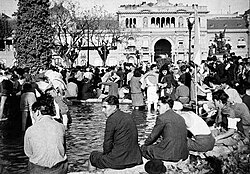
This overwhelming show of support propelled Perón into the 1946 elections. Despite a united opposition including the Radical Civic Union (UCR) and the Socialist Party, Perón won a decisive victory with 55% of the vote, winning in every province except Corrientes.
Key Facts
- Date of Coup: June 4, 1943.
- Primary Organizers: The United Officers' Group (GOU).
- Economic Shift: Industrial production surpassed agricultural production for the first time in 1943.
- Labor Growth: The industrial workforce grew by 38% between 1941 and 1946.
- Election Result: Juan Perón won the 1946 presidency with 1,527,231 votes (55%).
| Feature | Details |
|---|---|
| Preceding Period | The Infamous Decade (1930–1943) |
| Key Military Leaders | Rawson, Ramírez, Farrell, Perón |
| Economic Policy | Import Substitution Industrialization |
| Major Social Outcome | Rise of organized labor and Peronism |
| International Conflict | Tensions with the U.S. over WWII neutrality |
Frequently Asked Questions
What was the GOU?
The GOU (United Officers' Group) was a secret military lodge of nationalist officers who orchestrated the 1943 coup to prevent the presidency from falling to Robustiano Patrón Costas.
How did the Second World War affect Argentina?
The war boosted domestic industrialization because imports were limited, leading to a surge in the industrial working class and creating political tension over whether Argentina should remain neutral or join the Allies.
What is the significance of October 17, 1945?
Known as Loyalty Day, it was a massive demonstration of working-class support that forced the military government to release Juan Perón, effectively launching him toward the presidency.
Who was Spruille Braden?
Spruille Braden was the U.S. Ambassador to Argentina who openly opposed Juan Perón and the industrialization of the country, becoming a central figure in the anti-Peronist campaign.
What was the "Infamous Decade"?
The Infamous Decade (1930–1943) was a period of conservative rule characterized by electoral fraud and the exclusion of the Radical Civic Union from power following a 1930 military coup.