Argentine Departments: Administrative Divisions and Population Distribution
Argentina is organized into a hierarchical administrative structure where provinces are further subdivided into departments (departamentos). These departments serve as the primary local administrative units, each typically governed from a designated capital city. This system allows for more localized governance and resource management across the country's diverse geography.
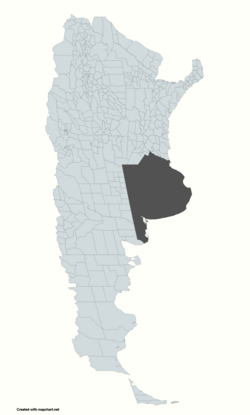
While the province of Buenos Aires uses a different system called partidos and the Autonomous City of Buenos Aires is divided into comunas, the rest of the provinces follow the departmental model. These divisions vary significantly in terms of population density, ranging from bustling urban centers to sparsely populated rural frontiers.
Key Facts
- Administrative Structure: Departments are the secondary level of administrative division below the provincial level.
- Population Variance: Population sizes vary drastically, from the highly populated Capital of Córdoba (over 1.2 million) to the sparsely populated Antártida Argentina (469).
- Naming Conventions: Many departments are named after national heroes, such as José de San Martín and Manuel Belgrano.
- Geographic Scope: The system covers all provinces except for the specific structures used in Buenos Aires province and the capital city.
Population and Distribution
The distribution of people across Argentine departments reflects the country's economic and urban hubs. The largest concentrations of people are found in the capital departments of the major provinces. For instance, the Capital of Córdoba is the most populous department listed, with 1,284,582 residents, followed by the city of Rosario in Santa Fe with 1,342,301 residents.
Conversely, the southern and remote regions exhibit much lower population densities. The Antártida Argentina department, for example, records only 469 inhabitants, highlighting the extreme contrast between the urbanized interior and the frontier territories.
Major Population Centers
Several departments stand out as significant regional hubs due to their high populations:
- Santa Fe: Home to Rosario (1,342,301) and the Capital of Santa Fe (489,505).
- Córdoba: Centered around the Capital of Córdoba (1,284,582) and Río Cuarto (292,293).
- Tucumán: Led by the Capital of Tucumán (567,607).
- Salta: Centered in the Capital of Salta (535,303).
The Challenge of Similar Names
One of the most complex aspects of Argentine administrative geography is the prevalence of departments with identical or similar names across different provinces. This often necessitates specifying the province to avoid confusion.
Recurring Names
Many departments are named in honor of historical figures. For example, there are 10 different departments referencing José de San Martín, including various iterations of "General San Martín," "Libertador General San Martín," and simply "San Martín." Similarly, Manuel Belgrano is honored in seven different departments.
Cross-Province Duplicates
Several names are repeated across different provinces. Common examples include:
- Nueve de Julio: Found in Chaco, Río Negro, San Juan, and Santa Fe.
- Rivadavia: Found in Mendoza, Salta, San Juan, and Santiago del Estero.
- Veinticinco de Mayo: Found in Chaco, Misiones, Río Negro, and San Juan.
- La Paz: Found in Catamarca, Entre Ríos, and Mendoza.
Summary of Selected Departments
| Department | Province | Capital | Population |
|---|---|---|---|
| Capital (Córdoba) | Córdoba | Córdoba | 1,284,582 |
| Rosario | Santa Fe | Rosario | 1,342,301 |
| Antártida Argentina | Tierra del Fuego | N/A | 469 |
| General Roca | Río Negro | General Roca | 380,525 |
| Capital (Misiones) | Misiones | Posadas | 392,919 |
Frequently Asked Questions
What is a department in Argentina?
A department is a secondary administrative subdivision of a province, similar to a county in other countries, used for local governance and organization.
Which province uses a different system than departments?
The province of Buenos Aires uses partidos instead of departments, and the Autonomous City of Buenos Aires is divided into comunas.
Why are there so many departments with the same name?
Many departments are named after the same national heroes (like San Martín or Belgrano) or common Spanish place names, leading to duplicates across different provinces.
Which is the most populous department based on the data?
Based on the provided data, the department of Rosario in Santa Fe is among the most populous, with 1,342,301 residents, alongside the Capital of Córdoba.
What is the least populated department?
The Antártida Argentina department in Tierra del Fuego is the least populated, with only 469 residents.