Argentina 1973 Presidential Election: The Return of Juan Perón
The presidential election of September 23, 1973, stands as a pivotal moment in Argentine history, marking the definitive return of Juan Perón to power. Following over six years of military rule, the nation's transition back to democracy was fraught with internal conflict, paramilitary violence, and a volatile struggle between the political left and right.
The Path to the September Polls
Argentina's return to democracy began in May 1973 with the presidency of Héctor Cámpora. His administration was characterized by a lean toward the left, evidenced by a blanket amnesty for political prisoners and the appointment of figures linked to the Montoneros—a violent left-wing guerrilla group. These moves sparked a fierce reaction from the far right.
Central to this tension was José López Rega, the Minister of Social Policy and a close confidant of Juan Perón. López Rega utilized his control over nearly 30 percent of the national budget to establish the Argentine Anticommunist Alliance (Triple A), a paramilitary force dedicated to targeting left-wing activists and policymakers.
The volatility peaked on June 20, 1973, during Perón's return from exile. A violent clash between left-wing and right-wing factions at Ezeiza International Airport resulted in over a hundred deaths. In the aftermath, Perón suggested that President Cámpora resign.
A strategic move by López Rega led to the resignations of Vice President Vicente Solano Lima and Senate President Alejandro Díaz Bialet, creating a constitutional vacuum known as acephaly (the lack of a head of state). This left the presidency to Raúl Lastiri, the President of the Chamber of Deputies and López Rega's son-in-law, who subsequently called for new elections.
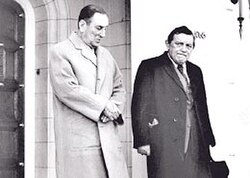
The Campaign and Candidates
By September, the Argentine armed forces and many citizens believed that only Juan Perón possessed the authority to quell the escalating violence from both the Montoneros and the Trotskyist People's Revolutionary Army (ERP).
The Justicialist Party faced internal friction when nominating a running mate. Ultimately, Perón chose his wife, Isabel Perón. This choice was strategic; as she was not publicly aligned with any specific faction of the fractious Peronist movement, she served as a neutral figure.
The main opposition came from Ricardo Balbín of the centrist Radical Civic Union (UCR) and Francisco Manrique of the conservative Federalist Popular Alliance (APF).
Election Results
The election resulted in a record landslide victory for the Perón-Perón ticket under the FREJULI umbrella. Juan Perón secured over 61% of the popular vote, reflecting a national desire for stability and leadership.
| Candidate | Party/Alliance | Running Mate | Votes | Percentage |
|---|---|---|---|---|
| Juan Perón | Justicialist Liberation Front (FREJULI) | Isabel Perón | 7,359,252 | 61.86% |
| Ricardo Balbín | Radical Civic Union (UCR) | Fernando de la Rúa | 2,905,719 | 24.42% |
| Francisco Manrique | Federalist Popular Alliance (APF) | Rafael M. Raymonda | 1,450,996 | 12.20% |
| Juan Carlos Coral | Workers' Socialist Party | José Francisco Páez | 181,474 | 1.53% |
Key Facts
- Winner: Juan Perón won with 61.86% of the vote.
- Running Mate: Isabel Perón was elected Vice President.
- Voter Turnout: 84.44% of registered voters participated.
- Political Vacuum: The period of "acephaly" occurred after the resignations of Cámpora, Solano Lima, and Díaz Bialet.
- Paramilitary Influence: The Triple A was funded through the Ministry of Social Policy.
Frequently Asked Questions
Why were new elections called in September 1973?
New elections were triggered by a constitutional vacuum (acephaly) following the resignations of President Héctor Cámpora, Vice President Vicente Solano Lima, and Senate President Alejandro Díaz Bialet.
Who was the Triple A?
The Argentine Anticommunist Alliance (Triple A) was a well-funded paramilitary force created by José López Rega to target left-wing organizations and political opponents.
Why did Juan Perón choose Isabel Perón as his running mate?
Isabel Perón was chosen because she was the only prominent Peronist, other than Juan Perón himself, who was not publicly associated with any of the warring factions within the movement.
What was the significance of the Ezeiza massacre?
The clash at Ezeiza International Airport on June 20, 1973, highlighted the violent divide between the left and right wings of Peronism and led to the eventual resignation of President Cámpora.
Who was Raúl Lastiri?
Raúl Lastiri was the President of the Argentine Chamber of Deputies and the son-in-law of José López Rega. He served as the interim president before the September 23 elections.