Argentina 1916 Presidential Election: The Dawn of Democracy
On April 2, 1916, Argentina underwent a seismic political shift. For the first time in the nation's history, citizens participated in a mandatory presidential election conducted via secret ballot. This landmark event marked the end of six decades of dominance by the National Autonomist Party (PAN) and ushered in the country's first pluralist government.
The victory of the Radical Civic Union (UCR) was not merely a change in leadership, but the culmination of a long struggle for electoral transparency and fairness. The election is widely characterized as the first truly free and fair presidential contest in Argentine history.
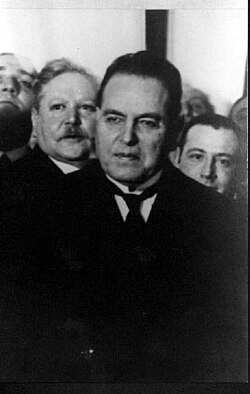
The Path to Reform: The Sáenz Peña Law
The transition to democracy was made possible by the Sáenz Peña Law of 1912. Passed by President Roque Sáenz Peña despite fierce opposition from his own social class and conservative members of Congress, this law mandated universal male suffrage and the secret ballot.
This legislative victory was the result of a pact between President Sáenz Peña and Hipólito Yrigoyen, the leader of the UCR. In exchange for these reforms, Yrigoyen ended his party's twenty-year boycott of the electoral system. The impact of the law was felt almost immediately; in the 1914 mid-term elections, the UCR secured 19 of the 60 available Lower House seats and won the governorship of Santa Fe Province.
The 1916 Campaign and Candidates
As the 1916 election approached, the political landscape was fractured. The formerly dominant PAN had split into the Conservative Party and the Democratic Progressive Party. Meanwhile, the Socialist Party, led by Juan B. Justo, emerged as a significant voice for reform.
Hipólito Yrigoyen campaigned as a champion of the marginalized, pledging to donate his presidential salary to charity and earning the moniker "the father of the poor." His opposition, the Conservative Party, nominated Ángel Rojas, the Governor of San Juan, in an attempt to appeal to moderate voters and those in the rural hinterlands.
Major Presidential Nominees
- Hipólito Yrigoyen (UCR): A populist leader from Buenos Aires.
- Ángel Rojas (Conservative): Governor of San Juan Province.
- Lisandro de la Torre (PDP): A reformist Deputy from Santa Fe.
- Juan B. Justo (Socialist): A Deputy from Buenos Aires.
Election Results and the Electoral College
The popular vote on April 2 showed a decisive lead for Yrigoyen, who captured 47.25% of the vote. However, the final result depended on the Electoral College, a body of 300 members where 151 votes were required to win the presidency.
The process was fraught with tension. Yrigoyen initially obtained only 133 electors, partly due to dissent within the UCR in Santa Fe. However, through strategic shifts and the behavior of "faithless electors" (those who vote against their pledged candidate), Yrigoyen eventually secured 152 electoral votes, winning the presidency.
| Candidate | Party | Popular Vote | Percentage | Electoral Votes |
|---|---|---|---|---|
| Hipólito Yrigoyen | UCR | 340,802 | 47.25% | 152 |
| Ángel Rojas | Conservative | 150,245 | 20.83% | 104 |
| Lisandro de la Torre | PDP | 135,308 | 18.76% | 20 |
Legislative Impact: The Chamber of Deputies
Parallel to the presidential race, elections were held for the Chamber of Deputies. The UCR's momentum carried over into the legislature, where they won 26 of the 62 seats contested in 1916, increasing their presence by six seats. The Conservative Concentration followed with 18 seats, while the Democratic Progressive Party and Socialist Party also secured representation.
Key Facts
- First Secret Ballot: 1916 marked the first time Argentina used a secret ballot for presidential elections.
- Turnout: Voter turnout was approximately 63% for the presidency and 65% for the Chamber of Deputies.
- End of an Era: The election ended 60 years of National Autonomist Party (PAN) dominance.
- Legal Foundation: The Sáenz Peña Law of 1912 established the framework for universal male suffrage.
- Winner: Hipólito Yrigoyen (UCR) became the first democratically elected president.
Frequently Asked Questions
What was the Sáenz Peña Law?
The Sáenz Peña Law was a 1912 reform that mandated universal male suffrage and the secret ballot in Argentina, ending the era of open, often fraudulent voting.
Who was Hipólito Yrigoyen?
Hipólito Yrigoyen was the leader of the Radical Civic Union (UCR) and the winner of the 1916 election, known as "the father of the poor" for his appeal to the impoverished majority.
How did the Electoral College work in 1916?
The Electoral College consisted of 300 members. To win the presidency, a candidate needed a majority of 151 votes. Yrigoyen eventually won with 152 votes.
Which party previously dominated Argentine politics?
The National Autonomist Party (PAN) had dominated Argentine politics for six decades prior to the 1916 election.
What was the voter turnout for the 1916 election?
The turnout for the presidential election was 63%, while the turnout for the Chamber of Deputies election was slightly higher at 65%.