Archive.today: The Controversial Web Archiving Service
In an era of ephemeral digital content and frequent "link rot"—the phenomenon where URLs cease to function—web archiving services provide a critical safety net. Among these, archive.today stands out as a powerful, albeit controversial, tool for preserving snapshots of the internet. Launched on May 16, 2012, the service allows users to save permanent copies of webpages, ensuring that information remains accessible even if the original source is deleted or altered.
Operating through a variety of mirror domains to maintain availability, archive.today has grown into a massive repository. By 2021, the site had saved approximately 500 million pages, totaling roughly 700 terabytes of data.
Key Facts
- Founded: May 16, 2012.
- Scale: Approximately 500 million pages archived as of 2021.
- Infrastructure: Uses multiple mirrors including .today, .fo, .li, .vn, .md, .ph, and a .onion address.
- Legal Status: Blocked in several countries, including China and Russia.
- Key Controversy: Blacklisted by Wikipedia in 2026 following an alleged DDoS attack.
Evolution and Technical Infrastructure
Originally branded as archive.today, the service shifted its primary mirror to archive.is in May 2015 before deprecating that domain in January 2019 in favor of a broader array of mirrors. This strategy helps the service remain resilient against regional blocks and technical failures.
Technically, the service integrated with the Memento Project at Los Alamos National Laboratory (LANL) in July 2013. Memento is a web preservation API designed to standardize how archived versions of pages are accessed. Archive.today remained one of the last major active users of this protocol until the Memento infrastructure at LANL was disestablished in September 2025 due to budget constraints.
Legal Challenges and Government Scrutiny
Due to its nature as an anonymous archive, archive.today has frequently clashed with governments and legal entities. Since the late 2010s, the site has faced bans in China and Russia. In October 2025, the US Federal Bureau of Investigation (FBI) issued a subpoena to the domain registrar Tucows to identify the owner of the archive.today domain as part of an undisclosed criminal investigation.
Further complications arose in November 2025 when the Web Abuse Association Defense (WAAD), a French organization, pressured AdGuard DNS to block the service, alleging the presence of illegal material. While archive.today removed the cited URLs, AdGuard later expressed suspicion regarding WAAD's legitimacy, citing evidence of possible impersonation of a French lawyer.
The 2026 DDoS Controversy and Wikipedia Ban
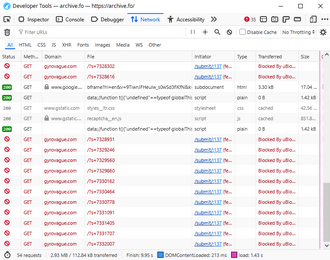
The service's relationship with the wider web community soured significantly in early 2026. Following a dispute with a blogger named Patokallio, it was discovered on January 14, 2026, that archive.today had modified its CAPTCHA page. This modification caused unsuspecting visitors to send repeated requests to Patokallio's site, effectively launching a Distributed Denial of Service (DDoS) attack—a malicious attempt to disrupt normal traffic of a targeted server by overwhelming it with a flood of Internet traffic.
This incident led to a major crackdown by the Wikimedia Foundation. Although archive.today had been the second-largest archiving service used across Wikimedia projects—with over 695,000 links—Wikipedia blacklisted the service in February 2026, removing hundreds of thousands of links.
Academic Insights and Usage Patterns
Research has highlighted the specific ways users employ archive.today. A 2018 study from University College London and other institutions found that the service is frequently used in "fringe" online communities to preserve controversial content and deny advertising revenue to news outlets. For example, the study estimated that The Washington Post lost roughly $70,000 annually in ad revenue due to Reddit users sharing archived links instead of direct ones.
Conversely, a 2023 study by the University of Amsterdam found that fact-checkers rely heavily on the service. In a dataset regarding the war in Ukraine, archive.today was the most used archiving tool (44.1%), preferred over the Internet Archive (29.2%) for capturing ephemeral social media posts that are often resistant to standard bot-based archiving.
Service Summary
| Feature | Details |
|---|---|
| Primary Function | Web archiving and snapshot preservation |
| Registration Required | No |
| Total Pages (2021) | ~500 Million |
| Total Size (2021) | 700 Terabytes |
| Key Mirrors | .today, .is (deprecated), .fo, .li, .md, .ph, .vn |
Frequently Asked Questions
What is archive.today?
It is a multilingual web archiving service that allows users to create permanent, static snapshots of webpages to prevent data loss from link rot or intentional deletion.
Why was archive.today banned on Wikipedia?
Wikipedia blacklisted the service in 2026 after it was discovered that the site used its CAPTCHA page to facilitate a DDoS attack against a blogger.
Is archive.today available worldwide?
No. The service has been blocked in mainland China since 2016 and in Russia since 2016 (with further blocks in 2026). It also previously blocked Finnish IP addresses in 2015.
How does it differ from the Internet Archive?
While both preserve the web, academic studies show archive.today is often more effective at capturing platform-restricted content (like certain Facebook posts) and is frequently used to bypass paywalls or preserve controversial social media threads.
Does the service require an account?
No, registration is not required to use the archiving features of the site.