Archdiocese of New Orleans: A History of Faith and Resilience
The Archdiocese of New Orleans serves as a cornerstone of spiritual life in Louisiana, representing the Latin Church's Roman Rite within the United States. From its early days as a frontier mission to its current status as a metropolitan see, the archdiocese has navigated centuries of political upheaval, natural disasters, and social transformation.
Centering its operations at the historic Cathedral Basilica of Saint Louis, the archdiocese oversees a vast ecclesiastical region, providing pastoral care to hundreds of thousands of Catholics across a diverse landscape of parishes and schools.
Key Facts
- Established: April 25, 1793.
- Cathedral: Cathedral Basilica of Saint Louis.
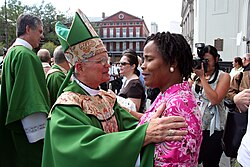
- Current Archbishop: James F. Checchio.
- Catholic Population: 514,847 (approximately 40% of the total population as of 2023).
- Infrastructure: 112 parishes and 290 total priests (193 diocesan and 97 religious).
- Patron Saints: St. Louis and Our Lady of Prompt Succor.
Founding and Early Colonial Era (1718–1799)
Catholicism arrived in New Orleans even before the city's official founding by the French in 1718. Early missionaries provided spiritual guidance to French military outposts and indigenous peoples, operating under the jurisdiction of the Bishop of Quebec. By 1721, Jesuit priest Pierre François Xavier de Charlevoix described the settlement as a small village of roughly one hundred cabins, featuring a wooden warehouse used for Mass and a chapel under construction.
The growth of the church was bolstered by the arrival of the Ursulines of Rouen, France, who were authorized by a royal patent in 1726 to establish a convent. Arriving in August 1727, these religious women opened a school for poor children and a hospital for the sick. That same year, the St. Louis Church was opened.
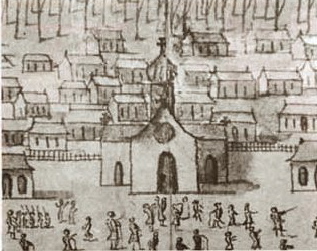
The late 18th century was marked by shifting colonial powers. France ceded the Louisiana Territory to Spain via the Treaty of Paris in 1763. During this Spanish period, the local church suffered a major setback when it was destroyed by fire in 1788.
Transition to American Sovereignty (1800–1899)
The geopolitical landscape shifted again in 1800 when Spain returned Louisiana to France, only for France to sell the territory to the United States in the 1803 Louisiana Purchase. To manage this transition, the Vatican appointed Bishop John Carroll of Baltimore as the apostolic administrator of the Diocese of Louisiana and the Two Floridas in 1805.
Over the next few decades, the diocese underwent several structural changes. In 1826, the title was simplified to the Diocese of New Orleans after the separation of the Florida territories and the creation of a separate see in St. Louis. A major milestone occurred on July 19, 1850, when Pope Pius IX elevated the diocese to an archdiocese.
Under the leadership of Archbishop Antoine Blanc, the first archbishop, the church expanded rapidly, increasing the number of churches from 26 to 73. Blanc also oversaw the rebuilding of the Saint Louis Cathedral after its central tower collapsed during restoration in 1850.
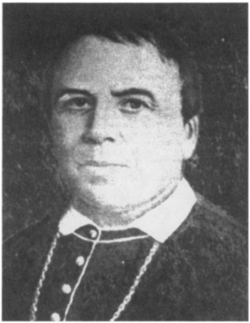
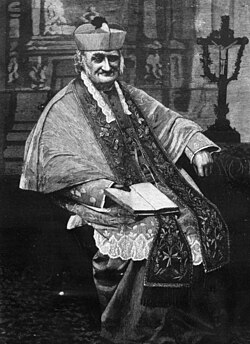
Subsequent leaders continued this growth. Archbishop Napoléon-Joseph Perché expanded the Catholic school system to over 11,000 students, though this growth led to significant debt. Later, Archbishop Francis Xavier Leray and Archbishop Francis Janssens worked to reduce this debt while continuing to establish new schools and institutes, including the Chinchuba Deaf Mute Institute.
The Modern Era and Social Evolution
The 20th century brought further administrative changes as the archdiocese was partitioned to create the Dioceses of Lafayette (1918), Baton Rouge (1961), and Houma–Thibodaux (1977). It also saw the appointment of John W. Shaw, the first American-born archbishop of New Orleans, who founded the Notre Dame Seminary.
A pivotal era of social change occurred under Archbishop Joseph F. Rummel, who ended racial segregation within the archdiocese's churches and schools. While public schools integrated first, the archdiocese began admitting Black students into previously restricted schools in 1962. This transition was noted for having a less intense backlash than the public school integration process.
In more recent history, the archdiocese has faced severe challenges. In May 2020, it filed for Chapter 11 bankruptcy due to the financial strain of the COVID-19 pandemic and mounting litigation costs from sexual abuse cases. This period brought to light the crimes of Lawrence Hecker, a former priest who confessed to abusing multiple minors. Hecker was eventually sentenced to life imprisonment in December 2024, shortly before his death at age 93.
Archdiocesan Overview
The following table summarizes the current state and administrative structure of the Archdiocese of New Orleans.
| Category | Detail |
|---|---|
| Total Population | 1,287,117 |
| Catholic Population | 514,847 (40.0%) |
| Total Parishes | 112 |
| Total Clergy | 290 Priests, 221 Permanent Deacons |
| Land Area | 4,209 sq mi |
| Current Archbishop | James F. Checchio |
Frequently Asked Questions
When was the Archdiocese of New Orleans established?
The diocese was established on April 25, 1793, and was later elevated to an archdiocese on July 19, 1850.
Who is the current leader of the archdiocese?
The current Archbishop is James F. Checchio, who succeeded Gregory M. Aymond.
What is the significance of the Cathedral Basilica of Saint Louis?
It serves as the mother church of the archdiocese and is a historic landmark that was rededicated in 1851 after a major tower collapse.
How did the archdiocese handle desegregation?
Under Archbishop Joseph F. Rummel, the archdiocese ended racial segregation in its churches and schools, with the integration of schools beginning in 1962.
Why did the archdiocese file for bankruptcy in 2020?
The filing was a result of the unforeseen financial impact of the COVID-19 pandemic combined with the high costs of litigation related to sexual abuse cases.