Arachnids: The Diverse World of Spiders, Scorpions, and Mites
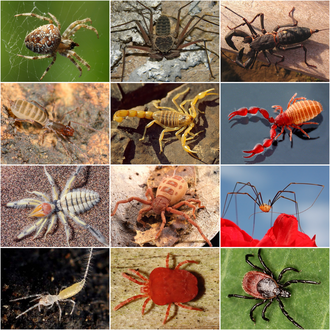
From the tiny mites living in your garden to the formidable scorpions of the desert, Arachnida represents one of the most successful and diverse groups of animals on Earth. With a temporal range stretching back approximately 435 million years, these creatures have survived multiple mass extinctions to become a dominant force in terrestrial ecosystems. While many people immediately think of spiders, the class Arachnida encompasses a vast array of organisms, including harvestmen, whip scorpions, and ticks.
Most arachnids are terrestrial, meaning they live primarily on land. However, they are not strictly limited to soil and vegetation; some species have adapted to freshwater environments, and a few inhabit marine settings, though they are notably absent from the open pelagic zones of the ocean.
Key Facts
- Species Diversity: There are over 110,000 named species of arachnids.
- Spider Dominance: Spiders (Araneae) make up roughly half of all known arachnid species, with 51,000 named species.
- Anatomy: Most arachnids possess four pairs of legs and a body divided into two main sections.
- Evolutionary History: The group has existed for over 435 million years.
- Habitat: While primarily land-dwelling, some species inhabit freshwater and marine environments.
Biological Classification and Taxonomy
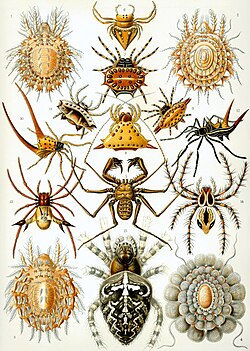
Arachnids belong to the phylum Arthropoda and the subphylum Chelicerata. Within this group, scientists have identified numerous orders, though the exact relationships between them—known as phylogeny—remain a subject of intense scientific study. Recent molecular data has revealed that some orders, such as Acariformes (mites) and Pseudoscorpiones, evolve at much faster rates, which can make tracing their ancestral lineage difficult.
Extant (Living) Orders
The modern world hosts 12 primary orders of arachnids. These include:
- Araneae: The spiders (51,000 species).
- Acariformes: Mites (32,000 species).
- Parasitiformes: Ticks and certain mites (12,000 species).
- Opiliones: Harvestmen or "daddy-long-legs" (6,700 species).
- Pseudoscorpionida: Pseudoscorpions (4,000 species).
- Scorpiones: Scorpions (2,700 species).
- Solifugae: Camel spiders or sun spiders (1,200 species).
- Amblypygi: Tailless whip-scorpions.
- Schizomida: Short-tailed whip-scorpions (350 species).
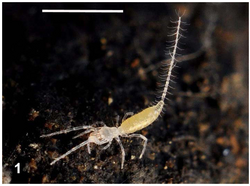
- Palpigradi: Micro-whipscorpions (130 species).
- Ricinulei: Hooded tickspiders (100 species).
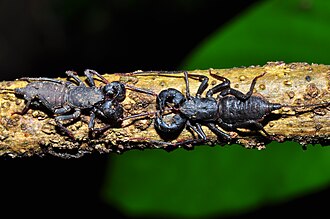
- Uropygi: Vinegaroons.
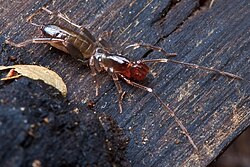
Extinct Lineages
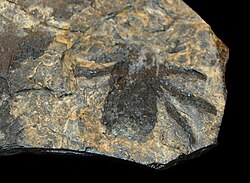
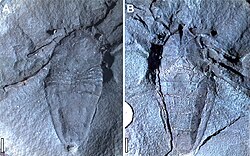
The fossil record provides a window into the ancient history of these animals. Several groups, such as the Trigonotarbida (which lived from the late Silurian to the Early Permian) and the spider-like Uraraneida, are now extinct. The Uraraneida were particularly interesting because, while they resembled spiders, they possessed a "tail" and lacked spinnerets.
Morphology and Physical Characteristics
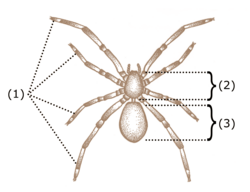
While arachnids vary wildly in appearance, they share fundamental anatomical traits. A defining characteristic is the division of the body into two tagmata (specialized body segments): the cephalothorax (the head and thorax fused together) and the abdomen. Additionally, most species are characterized by having four pairs of walking legs.
| Order | Common Name | Approximate Species Count |
|---|---|---|
| Araneae | Spiders | 51,000 |
| Acariformes | Mites | 32,000 |
| Parasitiformes | Ticks/Mites | 12,000 |
| Opiliones | Harvestmen | 6,700 |
| Pseudoscorpionida | Pseudoscorpions | 4,000 |
| Scorpiones | Scorpions | 2,700 |
| Solifugae | Camel Spiders | 1,200 |
Evolutionary Complexity
Determining the exact "family tree" of arachnids is a complex task. Studies using large sets of molecular data (DNA) have encountered systematic conflicts. For instance, different sets of genes can produce incompatible phylogenetic trees. Scientists often rely on more slowly evolving genes to establish more stable relationships, such as the monophyly of the Arachnida class itself.
Frequently Asked Questions
Are all arachnids spiders?
No. Spiders are just one order (Araneae) within the larger class Arachnida. Other members include scorpions, mites, ticks, and harvestmen.
What is the main difference between an arachnid and an insect?
While both are arthropods, arachnids typically have eight legs and two body segments, whereas insects have six legs and three body segments.
Do all arachnids have venom?
Not all. While many orders, such as spiders and scorpions, use venom for hunting or defense, other groups like harvestmen do not.
Where do arachnids live?
Most are terrestrial and live on land, but some species have adapted to live in freshwater or marine environments.
What are "whip scorpions"?
Whip scorpions refer to several different groups, including the Amblypygi (tailless whip-scorpions) and the Schizomida (short-tailed whip-scorpions).